

Sometimes when certain things in our body don't work properly, we can have various health problems, right? Especially if there is an imbalance in our body's hormonal system, it can have a big impact. In such a case, your doctor may recommend you to do a special test. That is the `ACTH Stimulation Test`. Let's talk about this simply.
What is an ACTH test (ACTH Stimulation Test)?
Simply put, this is a special test that looks at how the adrenal glands in our body respond to a hormone called ACTH. Sometimes this is also called the Cosyntropin Stimulation Test (CST). This is the main test to find out if there is a condition called adrenal insufficiency, which is a decrease in the function of the adrenal glands. This can be primary, secondary or tertiary.
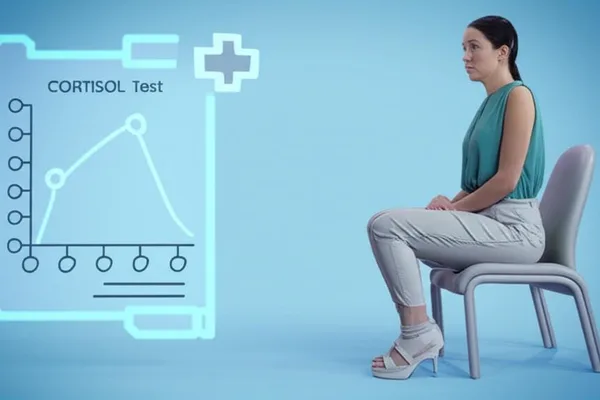
This test involves injecting a synthetic ACTH hormone (Synthetic ACTH - Cosyntropin) into your muscle. Then, every half hour or so, your blood is taken and the level of a hormone called cortisol is tested. This is to see how well your adrenal glands are working.
What are ACTH and Cortisol?
`ACTH`, which stands for `Adrenocorticotropic Hormone`, is a hormone produced by the `Pituitary Gland` in our brain. It has a major impact on how our body responds to stress. When `ACTH` is released, it stimulates the adrenal glands to produce `Cortisol`, also known as the `stress hormone` . Cortisol is an essential hormone that affects almost every organ and tissue in our body.
Types of Adrenal Insufficiency
This can happen in three main ways:
1. Primary Adrenal Insufficiency: This happens when your adrenal glands are damaged and unable to produce cortisol properly. The main cause of this is Addison's disease. It is an autoimmune disease.
2. Secondary Adrenal Insufficiency: This happens when your pituitary gland doesn't produce enough ACTH. Then the adrenal glands aren't stimulated enough to make cortisol.
3. Tertiary Adrenal Insufficiency: This occurs when the hypothalamus in the brain does not produce the hormone `CRH (Corticotropin-Releasing Hormone)` properly. `CRH` is what tells the pituitary gland to produce `ACTH`.
When is an ACTH test needed?
This test can determine whether your adrenal glands and pituitary gland are working properly in terms of producing cortisol. Your doctor may order this test for the following reasons:
- If another test finds that your cortisol levels are low.
- If you have symptoms of adrenal insufficiency (e.g., frequent fatigue, weight loss, stomach ache, nausea, dizziness, dark skin ).
- After you stop using glucocorticoid medications, such as prednisone, for a period of time, check to see if your pituitary and adrenal glands have returned to normal.
Who is doing this test?
Usually, the ACTH injection is done by a nurse. The blood draw, that is, the blood sample, is done by a phlebotomist, that is, someone who has received special training for the purpose. Then these samples are sent to a lab. There, a medical laboratory scientist tests these samples.
This test is often done in a hospital or in the office of an endocrinologist, a doctor who specializes in hormone-related diseases. This involves injecting medication and taking blood samples. An endocrinologist is a doctor who specializes in hormone-related diseases.
Do I need to prepare anything before the test?
Yes, there are some things.
- You may be asked to limit your activity and eat a high-carbohydrate diet 12-24 hours before the test.
- You can also say you'll fast for about six hours. That means you can't eat or drink anything except water.
- If you are taking certain medications that may affect the cortisol test, you may be asked to temporarily stop taking them.
- Since cortisol levels vary throughout the day (highest in the morning), this test is best done in the morning to reduce the risk of false results.
However, your doctor will give you specific instructions on how to prepare for this test. You should follow those instructions exactly.
How is the ACTH test done?
These are the basic steps:
1. First, a blood sample is taken from a vein in your arm. This will check your baseline cortisol levels. Other tests may also be done.
2. Then, a nurse will inject a synthetic hormone called `ACTH (Cosyntropin)` into your muscle. This synthetic `ACTH` works just like the `ACTH` that our body produces, stimulating the adrenal glands to produce cortisol.
3. Then, after 30 minutes and 60 minutes (usually), blood samples are taken from your vein again and cortisol levels are checked.
4. These blood samples are sent to the laboratory.
What kind of experience do you get during the test?
Here are some things you can expect when having your blood drawn:
- You will be seated in a chair and an easy vein in your arm will be found. Most often, it will be on the inside of your arm, just behind your elbow.
- Once a vein is found, the area is cleaned and disinfected.
- Then a small needle is inserted into the vein and a blood sample is taken. This may feel like a slight prick.
- After inserting the needle, a little blood will collect in a test tube.
- After enough blood has been collected for the test, the needle is removed and a piece of cotton or gauze is placed on the site and pressed to stop the bleeding.
- Then a plaster is applied to the area.
When you get Cosyntropin, it's usually injected into your upper arm, just above your shoulder. You may feel a little sore or burning when you get the injection, but it's temporary.
What happens after the test?
After the blood samples are taken, they are sent to the lab. When the results are in, your doctor will tell you about them.
Are there any risks with this test?
Blood tests are a very common thing in medicine. The risks are very low. You may feel a little bruised or sore where the blood was drawn, but that will quickly go away. There's nothing to worry about.
How long does it take to know the results?
It can take up to a week for the results of the ACTH test to come back, because once the lab results come back, the doctor needs to study them carefully and come to a conclusion.
What are the results?
Blood test reports, including cortisol reports from the ACTH test, usually contain information like this:
- The name of the blood test, or what was measured in the blood.
- The number or measurement of your blood test result.
- That is the normal measurement range for the test.
- Information about whether your result is normal, abnormal, high, or low.
What should the average results be like?
Under normal circumstances, your cortisol levels should increase after artificial ACTH stimulation. In a normal result, your cortisol levels should be greater than 12.6 mcg/dL (micrograms per deciliter) after ACTH stimulation.
Remember, these normal ranges can vary from lab to lab, test to test, and person to person. Always check the normal range given on your report.
In the case of an ACTH test, your doctor or endocrinologist will need to thoroughly understand the results before you can see them. If you have any questions about the results, be sure to ask your doctor.
What do abnormal results mean?
Your doctor or endocrinologist will carefully analyze your ACTH test results. There are many factors that can affect the accuracy of the test. The most common cause of a false-positive result is recent use of corticosteroids.
Abnormal ACTH test results usually indicate primary and secondary adrenal insufficiency.
Primary Adrenal Insufficiency
If you have this condition, your adrenal glands either can't make cortisol or don't respond properly to ACTH. Therefore, you may not see a significant increase or any increase in your cortisol levels after an ACTH test. This is because the artificial ACTH doesn't affect your adrenal glands.
Secondary Adrenal Insufficiency
If the pituitary gland is underactive for a long time (hypopituitarism), and ACTH production is impaired, this leads to secondary adrenal insufficiency. As a result, the cells that normally produce ACTH are not stimulated, and the adrenal glands begin to atrophy, that is, they begin to weaken .
Therefore, if you have had hypopituitarism and secondary adrenal insufficiency for a long time, you may see little or no increase in your cortisol levels after the ACTH test.
However, if the hypopituitarism is partial (meaning the pituitary gland is still producing some ACTH), or if the condition is recent, an increase in cortisol levels, meaning a "normal" level, may be seen after the ACTH test.
Final Take-Home Message
The ACTH Stimulation Test is the most important and reliable test to diagnose adrenal insufficiency. Waiting for the results of a diagnostic test can be a bit nerve-wracking. But remember, no matter what the results are, your medical team is there to help you. Don't be afraid to ask your doctor about your test or the results. It's important to be informed about your health.
` ACTH test, cortisol, adrenal glands, pituitary gland, hormones, adrenal insufficiency, medical tests




💬 Comments (0)
No comments yet. Be the first to share your thoughts here.
Add Your Comment