
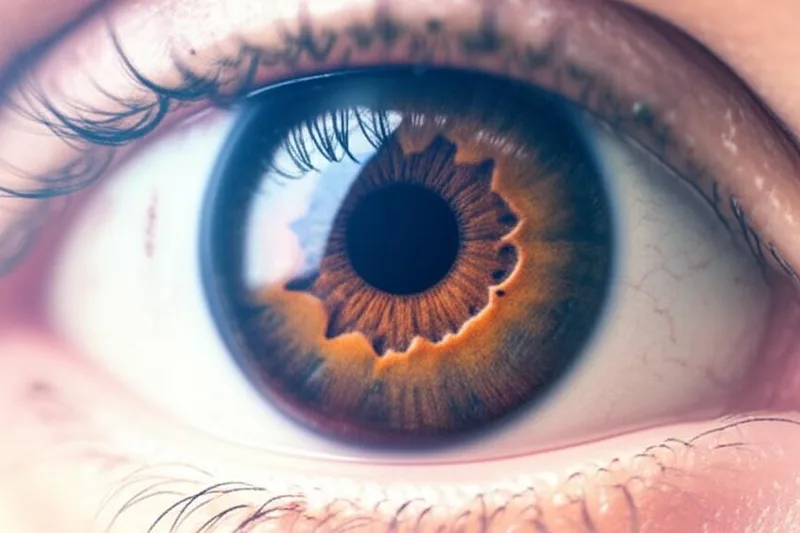
Today we're going to talk about a small part of our eyes that is very important, but we sometimes don't pay much attention to it. We call it the conjunctiva. Have you ever heard of an eye that is red and itchy and is called 'eye disease'? The conjunctiva is often associated with things like that. So, let's see what it is, what it does, and how we can take care of it?
What is the conjunctiva?
Simply put, the conjunctiva is a very thin, clear membrane that protects your eye. Think of it like a sheet of cellophane. It's the inside of your eyelid, covering the white part of your eye (which we medically call the sclera) .
This does a very important job, which is to make mucus, a substance like mucus in our tears. This is what keeps the eye moist and healthy.
So, what service does this conjunctiva provide to the eye?
The main thing is to protect the eye, to keep it moist and smooth . That is, it acts as a barrier that protects the sensitive tissues inside from things that can irritate the eye, such as dust, germs, or things that cause you allergies ( allergens ) .
Remember, the conjunctiva only covers the white part of the eye. The colored part of your eye, the iris , and the small black circle in the middle, the pupil, are covered by another membrane called the cornea .
The conjunctiva doesn't produce tears on its own. The lacrimal glands in our eyes produce the watery part of the tears. This water combines with the mucus produced by the conjunctiva and the oily part produced by the meibomian glands in the eyelids to form a full tear drop. Isn't this an amazing collaboration?
How does the conjunctiva help the eye function properly?
Think of it this way: the conjunctiva is a thin, transparent covering over the white part of the eye. It's like a combination of a raincoat and a plastic wrap. It helps keep things (like allergens or irritants ) from getting into your eye while also keeping the inside of your eye moist and smooth.
Now you understand, if there is a problem with the conjunctiva, you can experience dry eyes or develop eye infections .
Where is the conjunctiva located?
It's very simple. The conjunctiva is the tissue that lines the inside of your eyelids and over the white part of your eyes . If you look in a mirror and pull your eyelid down a little, you'll see a pinkish inner layer, and that's where the conjunctiva is.
What is the structure of the conjunctiva? Does it have parts?
Yes, the conjunctiva is made up of three main parts:
- Palpebra conjunctiva: This is the lining of the inner side of your eyelids.
- Bulbar conjunctiva: This is the layer that covers and protects the white part of the eyeball.
- Conjunctiva fornix: This is where the two parts mentioned above, the palpebra and the bulbar conjunctiva, meet and connect. A small space, like a pocket, is formed there.
What are the common diseases and conditions that affect the conjunctiva?
Two of the most common conditions that affect the conjunctiva are conjunctivitis and subconjunctival hemorrhage .
Eye disease - Conjunctivitis
Conjunctivitis is a very common eye infection. It can be caused by allergens , irritants , bacteria, or viruses. The treatment you need will depend on what is causing the inflammation or irritation of your conjunctiva.
A blood clot in the eye - Subconjunctival hemorrhage
The other is a subconjunctival hemorrhage. Although the medical name for this is a bit long, it simply means that a blood vessel on the surface of the eye bursts . This can cause a red spot to appear on the white part of the eye. These red spots can be a bit scary to see, but in most cases, they do not cause any symptoms and do not require treatment . They usually get better on their own in a few days.
What are the signs or symptoms that indicate a problem with my conjunctiva?
If you notice any of these symptoms in your eyes, you should definitely see an ophthalmologist :
- Eye color change or redness .
- Itching .
- Fluid or discharge from the eye.
- A new pain that doesn't subside in a few days.
- Light sensitivity , which means the eyes feel as if they are turning blue.
- Blurred vision .
- Seeing in two is diplopia .
- If you feel like your vision is getting worse .
Important: If you have one or more of these symptoms, do not ignore them. It is best to seek medical advice immediately.
How do I take good care of my conjunctiva?
This is really not a big deal. It's just general eye health habits that are important.
- If you notice any changes in your vision, tell an eye doctor immediately .
- If you wear glasses or contact lenses, have your eyes checked regularly . Your eye doctor will adjust the power of your lenses as needed.
- Make sure to wear proper eye protection , especially when playing sports or engaging in any activity that could cause eye injury. This is very important.
When should I see my doctor?
See an eye specialist as soon as you notice any changes in your vision. It could be as simple as getting a new pair of glasses, or it could be something more serious. Whatever the case, don't wait for symptoms to get worse before getting your eyes checked .
If you suddenly experience severe eye pain or sudden loss of vision , go to an emergency room immediately.
In summary - things we need to remember
Okay, so the conjunctiva that we talked about today is like an important protective barrier between our eyes and the outside world. It's what keeps our eyes safe and moist.
Usually, if there is any problem or irritation with the conjunctiva, it is easy to recognize it. Because, the white part of the eye may become red, start to itch, or feel dry . Remember, see an ophthalmologist as soon as you notice any of these symptoms in your eyes. Even if it is a minor discomfort, if the disease is not recognized correctly, it can get worse over time. Therefore, it is our responsibility to take care of our eyes. Got it?
` conjunctiva, eyes, eye diseases, conjunctivitis, eye infections, eye protection, tears


💬 Comments (0)
No comments yet. Be the first to share your thoughts here.
Add Your Comment