
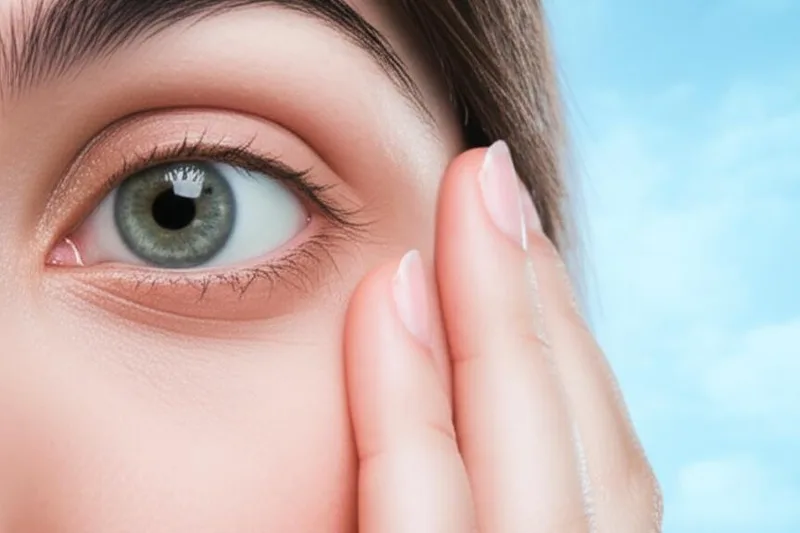
We all have times when we are sad, happy, and sometimes just plain teary-eyed, right? But have you ever wondered how these tears are actually formed, why we have tears, and what is the amazing mechanism behind this? That is the wonderful tear system that protects and moistens our eyes, or as it is called in medical science, the ``Lacrimal Apparatus``, which is what we are going to talk about today.
What is the tear system? Why is it important to us?
Simply put, your tear system is a complex network of glands, sacs, and ducts that make tears for your eyes and remove used tears. You have two of these systems, one for each eye.
Think of it like an irrigation system that keeps your lawn green and lush. Just like there are sprinklers that water your garden, underground pipes, and a drainage system that drains away old water, this tear system also works to keep our eyes healthy and moist.
The tears produced by this system, also known as `lacrimal fluid` in medical terms, moisten and lubricate the surface of our eyes. They protect sensitive areas, especially the outer membrane of the white of the eye `conjunctiva` and the transparent membrane covering the black of the eye `cornea`. Not only that, these tears also wash away dust, dirt, and allergens that enter the eye. A nerve in our face, the `Facial Nerve or Seventh Cranial Nerve`, controls the muscles that pump these tears into the eye and remove them.
How are tears formed and flow?
The main place where tears are produced is in the lacrimal glands, which are located on the outside of your eyelids. These are where the salt and water mixture is produced. When you blink, this fluid spreads throughout your eye. It is then mixed with oily secretions from another type of gland, the meibomian glands, which are located at the edges of your eyelids. That's when the full tear drop is formed.
This oily layer is very important because it stops the water from evaporating too quickly. Also, a small amount of this oil stays on the edge of the eyelid and prevents tears from running down the eyelid.
So, after you've cleaned and moistened your eyes, these old tears need to be drained from your eyes. That's what the tear duct system is for. These tears go through the little holes on the side of your nose and collect at the back of your nose. That's why when you cry a lot, your nose feels stuffy and you get a runny nose. The extra tears go into your nose and into your throat.
What are the main parts of the tear system?
Let's now look at the main parts that make up this entire tear system.
- Lacrimal Glands: These are the main tear-producing factories. They are located just below your upper eyelid, towards the outer corner of your eyelid. They are about the size of a small almond. They produce the salty water in our tears.
- Meibomian Glands: These are located on the edges of your upper and lower eyelids. These glands produce the oily secretions that make up your tears. This oil, mixed with the water from the tear glands, helps to form a tear film on the surface of your eye. This oily layer helps keep your eyes moist longer, preventing your tears from evaporating as quickly.
- Lacrimal Puncta: These are the small holes that drain used tears from your eyes. These holes (punctum - singular, puncta - plural) are located on the inner corners of your upper and lower eyelids, toward your nose. Every time you blink, these holes act like little valves, pulling old tears out of your eyes.
- Lacrimal Sacs: Tears that come out of the tear ducts collect in these lacrimal sacs. These are located at the inner corner of the eye, on either side of the nose. These sacs act like a small temporary tank that stops old tears from flowing back into the tear ducts.
- Nasolacrimal Duct (Tear Ducts): These are what we commonly call the tear ducts. The old tears that come through the tear ducts and tear sacs eventually flow down these ducts on either side of the nose. These ducts end at the back of the nose. As we mentioned earlier, this is why water comes out of your nose when you cry.
Just think, all these parts are connected and work as a team, which is why our eyes are always healthy and clean. If there is a small problem in one part, it can affect the entire system.
What are the common conditions that affect our tear system?
Sometimes, various problems can arise in this tear system. Here are some of the most common conditions we experience when this happens:
- Dry Eyes: This is a common problem for many people. When the eyes do not produce enough tears, or when the quality of the tears they produce decreases (for example, when the amount of oil produced by the meibomian glands decreases), the eyes can become dry, red, and itchy. Sometimes, it can even feel like there is something in the eyes.
- Excessive tearing (Epiphora): This is the opposite. It feels like there are too many tears coming out, and sometimes tears may run down your cheeks. This may be due to an increase in tear production, or it may be due to a blockage in the tear ducts that prevent the tears from draining properly.
- Nasolacrimal Duct Obstruction: This condition is especially common in young babies. Because the tear ducts do not open properly, tears can build up inside the eye, sometimes leading to infections.
- Dacryoadenitis: This is swelling and inflammation of the tear glands. This can be caused by an infection or other causes.
- Dacryocystitis: This is an inflammation or infection of the lacrimal sac. This is often caused by a blockage of the tear duct.
How do you know if there is a problem with the tear system?
There are a few key signs that you may be experiencing a problem with your tear system. The most important thing is that if you constantly feel dry eyes, or if you have watery tears (`Epiphora`) , it could be a sign that something is wrong with your tear system.
Imagine, if your Meibomian Glands aren't working properly, they don't produce enough oil for your tears. Then the tears don't stay in your eyes properly, and they evaporate too quickly, or they run out of your eyes. You might think you're shedding more tears, but what's really happening is that your eyes can't keep the tears they produce properly.
So, if you notice anything different in your eyes – even if it’s something as minor as dry eyes – the best thing to do is to see an eye care specialist (Ophthalmologist) to get checked out. They can then figure out exactly what’s wrong and provide the necessary treatment.
How do we keep our tear system healthy?
Just like our eyes, we need to take some care to keep this tear system healthy.
- Get eye exams at regular intervals: The doctor will check not only your vision, but also the overall health of your eyes, including the functioning of your tear system.
- If you notice any changes in your vision, tell your doctor right away. If you wear glasses or contact lenses, have them checked regularly and have them replaced if necessary.
- If you have a medical condition like diabetes mellitus, you should definitely see an ophthalmologist at least once a year, as diabetes can affect the eyes.
- Wear appropriate eye protection when playing sports or doing work that could be dangerous to the eyes.
Summary (Take-Home Message)
You probably understand now that our lacrimal apparatus is not just a place where tears are produced, it is a vital system that lubricates, protects, and keeps our eyes healthy. The tears produced by this system help our eyes to function properly and stay healthy.
So, if you ever experience dry eyes or a feeling of watery eyes, don't just ignore it as normal and see an eye doctor. While these symptoms can sometimes be caused by minor things, they can also be a sign of a condition that could damage your eyes or vision if left untreated. Whatever the cause, doctors can help restore balance to your tear system.
So, take care of your eyes, because they are the most precious possessions that help you see the world!
` Tears, tear system, lacrimal apparatus, eye health, dry eyes, tearing, eye diseases


💬 Comments (0)
No comments yet. Be the first to share your thoughts here.
Add Your Comment