

Have you ever wondered what's inside your tooth? We all know that teeth are there to eat and smile beautifully. But a tooth is not just a white thing. There is a very important, living part inside the tooth. That's what we're going to talk about today. That's the tooth pulp , or as doctors call it, ``Tooth Pulp.''
What is Tooth Pulp? Simply put...
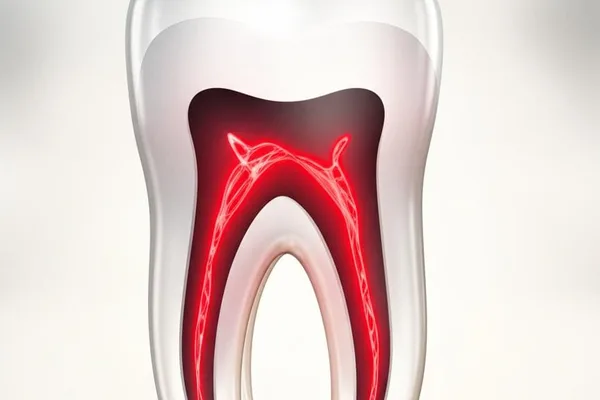
Simply put, the pulp is the innermost layer of your tooth. It's like the pulp of a coconut. It contains nerves, blood vessels, specialized cells, and a lot of connective tissue. These are what provide your tooth with the nutrients it needs. In other words, it's the pulp that "makes" your tooth live .
Imagine, there are two hard layers on the outside of your teeth - dentin and enamel . Just like a soldier protects a country, these two layers protect the tooth enamel. But sometimes, cavities, cracks, or people grinding their teeth at night, which is called bruxism , can cause this tooth enamel to come out. If that happens, it needs to be treated.
What happens to the tooth pulp? What are its duties?
Dental pulp is not just something that sits inside a tooth. It has many important jobs to do. Take a look:
- Protection from bacteria: Immune cells inside the tooth pulp, like little soldiers, fight germs that enter the mouth.
- Sensory function: The nerves in the pulp of the tooth are what allow you to feel things like cold, heat, and pressure. When there is a problem with a tooth, pain is also caused by these nerves. That's what tells us, "There's something wrong here, look."
- Dentin formation: The middle layer of your tooth, called dentin , is made up of this pulp. This dentin supports the enamel (the hard outer layer of the tooth) and protects the pulp.
- Production of nutrients: The pulp produces proteins such as albumin and fibrinogen , which help keep the dentin healthy.
- Moisture: The blood vessels in the pulp of the tooth provide the necessary moisture to the tooth. This reduces the risk of tooth breakage and keeps the tooth strong and healthy.
Think of it this way: the pulp is like the "heart" of the tooth. Without it, the tooth has no life.
What happens if the tooth pulp comes out? Is it dangerous?
As we've discussed before, tooth pulp can come out due to cavities, cracked teeth, or other accidents. If the pulp is exposed like this, the chances of the tooth becoming infected are much higher. It's like leaving the door open and a burglar can break in. If this infection isn't treated, it can spread to other parts of the mouth and body.
Here's how it happens:
- When your tooth comes out of the socket, bacteria from your mouth will slowly seep into the socket.
- This causes the tooth pulp to swell, which means it becomes inflamed.
- This swelling is what causes the toothache.
- As the infection progresses, the tooth pulp begins to die.
- Sometimes this infection can spread to other parts of the mouth and jaw area.
If the pulp of a tooth is exposed and left untreated, it can lead to serious, sometimes life-threatening conditions. Here are some of the conditions:
- Oral Sepsis
- Brain Abscess
- Meningitis - inflammation of the membranes covering the brain
- Purulent Sinusitis
- Infection of the tissues around the eyeball (Orbital Cellulitis)
- Cavernous Sinus Thrombosis - This is a blood clot that forms in a blood vessel that connects to the brain.
Don't worry, these things only happen if you don't treat them. That's why it's very important to see a dentist as soon as you have a tooth problem.
What is tooth pulp made of?
Tooth pulp is a jelly-like mass. Inside it, along with connective tissue, are the following:
- Nerves
- Blood vessels
- Odontoblasts - cells that make dentin
- Fibroblasts - cells that make connective tissue
- Histiocytes - a type of immune cell
- Macrophages - cells that "eat" germs and waste
- Mast cells - cells involved in allergies and inflammation
- Plasma cells - cells that produce antibodies
This tooth pulp is located in a cavity inside the tooth. We call this cavity the pulp cavity. There are three main parts to this cavity:
- Pulp Chamber : This is the main upper part of the tooth inside the crown (the part above the gum).
- Pulp Horns : These are small protrusions that extend from the pulp chamber onto the chewing surface of the tooth.
- Radicular Canals : These are channels that extend from the pulp chamber down the root of the tooth, all the way to the root apex (tip).
What does tooth pulp look like?
A healthy tooth pulp is usually a reddish-pink color. It is also shaped like a tooth.
What are the common conditions that affect the tooth pulp?
There are several different medical conditions that can affect the gums. The main ones are:
- Pulpitis
- Pulp Necrosis
- Dental Pulp Calcification
Now let's look at each of these in a little more detail.
Pulpitis
Pulpitis is the swelling or inflammation of the pulp of a tooth. This happens when things like bacteria penetrate the dentin layer and enter the pulp. When this happens, it usually causes discomfort and pain in the tooth. Sometimes, this pain can be persistent.
Pulpitis can be reversible (reversible pulpitis) or irreversible (irreversible pulpitis) . Reversible pulpitis is a mild inflammation that gets better with treatment. Irreversible pulpitis is a severe inflammation that does not get better with treatment. This severe condition can lead to the death of the tooth pulp, which is called pulp necrosis .
Pulp Necrosis
Pulp necrosis is the death of the pulp of a tooth. After the pulp dies, you may no longer feel any pain or discomfort. Even if you think, "Oh, okay, now it doesn't hurt," the problem is not over.
If left untreated, pulp necrosis can cause pus to collect inside and around the tooth. This is called a dental abscess . This type of infection can spread to other parts of the mouth and body. Therefore, it is not a good idea to just wait until the pain goes away.
Dental Pulp Calcification
Some people can develop calcium deposits inside their teeth, similar to limescale in water pipes. The main causes of this are aging and dental trauma.
But in rare cases, certain health conditions can also increase the risk of calcium deposits in the tooth pulp. Some examples are:
- Kidney disease
- Heart disease
- Paget's disease of the bone
- Hyperparathyroidism - increased activity of the parathyroid gland
- Dentin Dysplasia - a genetic disease affecting the teeth
- Gout
- Dentinogenesis Imperfecta - a disease that affects tooth development
In most cases, calcium deposits in the pulp of a tooth do not require any special treatment. However, if a tooth with such calcium deposits becomes infected, root canal therapy may be necessary to save the tooth.
How do dentists check the health of the tooth pulp?
Dentists perform several tests to check whether your gums are healthy or not. The main ones are:
Pulp Testing
Pulp testing is a procedure that uses cold temperatures to check the health of your tooth's pulp. In this procedure, your dentist places a cold object in various places in your mouth. They then ask you to rate the pain on a scale of 1 to 10. They also measure how long it took for the discomfort to begin and how long it took for it to go away.
Dental X-rays
In addition to the pulp test, your dentist will take dental X-rays of your teeth. These X-rays can help determine if the infection has spread to other areas.
What are the common treatments for tooth pulp diseases?
There are several main methods used to treat gum problems:
- Pulpotomy
- Pulpectomy
- Root Canal Therapy
Although most of these treatments are performed by general dentists, sometimes you may be referred to an endodontist , a doctor who specializes in saving teeth.
Pulpotomy
Pulpotomy is a procedure that is performed on a tooth that is still "living." This means that you still have sensation in the tooth, and the pulp is not dead.
In this treatment, the dentist or endodontist removes only the decayed tissue inside the crown of the tooth (the part above the gum line). The small part inside the root of the tooth remains intact. Then, the tooth is filled with a special medicine to protect it and reduce the risk of re-infection.
Pulpotomy is most often performed on baby teeth, but sometimes it can also help save a permanent tooth.
Pulpectomy
Pulpectomy involves removing all of the pulp from the tooth, including the roots. The dentist then thoroughly cleans and disinfects the pulp chamber and root canals. Finally, the cavities are filled with an absorbable material.
Pulpectomy is also commonly performed on baby teeth. In adults, pulpectomy is the first step in root canal therapy .
Root Canal Therapy
Root canal therapy is similar to a pulpectomy. In both cases, the pulp of the tooth is removed. However, in a root canal, the dentist or endodontist thoroughly cleans, shapes, and fills the canals inside the tooth root. Often, a dental crown is also placed to protect the tooth.
What if treatment can't save the tooth?
Dentists use treatments like pulpotomy, pulpectomy, and root canal therapy to save your natural teeth from infection. However, if the tooth is severely decayed or damaged, your dentist may have to extract the tooth. If a tooth needs to be extracted, your dentist will talk to you about alternatives, such as a dental bridge or dental implant .
How to keep the tooth pulp healthy?
The best way to keep your teeth healthy is to follow good oral hygiene habits:
- Brush your teeth at least twice a day with a soft-bristled toothbrush and toothpaste containing fluoride.
- Clean between your teeth at least once a day with regular dental floss , dental picks , or interproximal brushes .
- See a dentist regularly to have your teeth checked and cleaned.
- If you grind your teeth at night, use a mouth guard .
- Drink plenty of water.
Does tooth pulp regrow?
Naturally, tooth pulp does not regrow. This means that if your dentist removes the pulp during a root canal treatment, it will not regrow. Instead, the space inside the tooth is filled with a dental filling material.
Currently, scientists are investigating whether they can regrow tooth pulp using stem cells called dental pulp stem cells . If successful, dentists could be able to regrow new pulp in infected teeth in the future.
Can a tooth "live" without a tooth root?
When a tooth loses its blood supply, it "dies." This can happen naturally due to infection, or it can happen when a doctor removes the pulp during a root canal treatment.
A tooth cannot "live" without a tooth root - but it can be as functional as before.
That means, even if the tooth loses sensation, you can still use it to eat and smile.
Take home message
So, the most important thing to remember from what we've talked about today is that the pulp is a very important part of your tooth that keeps it "alive." It contains nerves, blood vessels, and many cells that help keep the tooth healthy. Sometimes, the pulp can become infected due to cavities or other damage. If you get treatment quickly, you can kill the bacteria and stop the infection from spreading. To reduce your risk of pulp-related diseases, see your dentist regularly and practice good oral hygiene habits at home. Then you can have a beautiful, healthy smile!
` Tooth pulp, Dental health, Pulpitis, Root canal, Toothache, Oral health




💬 Comments (0)
No comments yet. Be the first to share your thoughts here.
Add Your Comment