
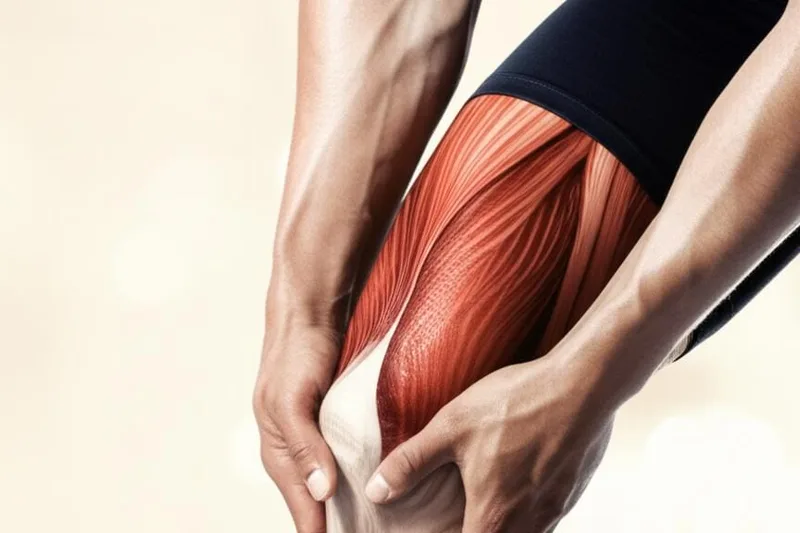
Have you ever thought about how important your knees are? Our knees help us walk, run, jump, stand, sit... all of these things. In fact, the knee is the largest joint in our body. So, let's talk about the important knee in a little more detail, shall we?
What is the knee joint?
Simply put, the knee is the joint that connects your thigh to your lower leg. It's like the hinge on a door. It's part of our skeletal system . But the knee isn't just made up of bones. It also contains cartilage, muscles, ligaments, and nerves.
Your knees help you support your body weight, bend your legs, and move your body. Any movement you make using your legs requires support from your knees. If you have knee pain, be sure to see a doctor. He or she can diagnose the cause of your pain and provide you with the treatment you need to get back to your normal activities.
What are the main functions of the knee?
Our knees have several very important jobs to do. Take a look:
- Leg movement: Your knees help you bend, extend, and rotate your legs. Think about how much work your knees do when you walk, run, or climb stairs.
- Supporting the body while standing and moving: When you are standing, your knees bear a significant portion of your entire body weight.
- Keeping the body stable and maintaining balance: The knees also help maintain the body's balance when turning suddenly or stopping.
Where is the knee located?
This is something that everyone knows. The knee is the joint in the middle of your leg. To be precise, the knee is where your thigh bone (which we call `Femur` in medical terms) meets your shin bone (`Tibia`).
What kind of joint is the knee?
There are many types of joints in our bodies. Doctors classify them based on what they are made of (that is, their composition) and how they move (that is, their function).
The knee is a synovial joint . Synovial joints are the most mobile joints in our body. They are formed by a cavity in one bone that is fitted with another bone. The ends of these bones are covered with something called hyaline cartilage . In the space between the bones is a synovial membrane . This is like a fluid-filled sac. This is what lubricates and protects the joint. This extra cushioning is what allows synovial joints to move with as little friction as possible.
Functionally, the knee is a hinge joint . Think of it like the hinge of a door. Some parts of it don't move, but other parts move a certain distance to open and close the door. Like the knee, the hip joint follows the same basic law - it can open and close in one direction.
How is the structure of the knee?
Your knee is mainly made up of these parts:
- Bone
- Cartilage
- Ligaments
- Muscles
- Nerves
Let's look at each of these separately.
Knee bones
The knee joint is made up of three main bones:
- Femur: This is the longest and strongest bone in your thigh.
- Tibia: This is the main weight-bearing bone on the inside of your lower leg.
- Patella: This is the kneecap we all know. It is a small, triangular bone located in front of the knee.
The places where these bones meet are called articulations or articulating surfaces . Your knee has two such articulation surfaces:
- Patellofemoral joint: This is where the kneecap (patella) connects to the thigh bone (femur).
- Tibiofemoral joint: This is where the tibia connects to the femur.
Knee cartilage
Cartilage is a strong, flexible connective tissue that protects your joints and acts as a shock absorber throughout your body.
There are two types of cartilage in your knee:
- Hyaline cartilage: This is the most common type of cartilage in your body. Some doctors also call it articular cartilage . It lines your joints and cushions the ends of your bones. Hyaline cartilage is very smooth and slippery. That's why your bones can slide smoothly over each other inside your joints. Your thigh bone, shin bone, and kneecap have this hyaline cartilage covering where they touch.
- Fibrocartilage: As the name suggests, this is a type of cartilage that is made up of dense fibers. It is strong enough to hold body parts together and absorb shock. The meniscus in your knee is made up of two wedges of this fibrocartilage. This is what cushions the gap between the thigh bone and the shin bone.
Think of it this way, cartilage is like a tire on a car. When a tire wears out, the car becomes difficult to drive, just as when the cartilage in the knee wears out, it hurts when you move the knee.
Ligaments of the knee
The knee ligaments are bands of tissue that connect your thigh bone to the bones in your lower leg. These are what hold your knee together and prevent it from moving around unnecessarily.
There are two types of ligaments in your knee:
- Collateral ligaments: These two collateral ligaments are like two bands on either side of your knee.
- Medial Collateral Ligament (MCL): This is located on the inside of your knee. It connects your thigh bone to your shin bone.
- Lateral Collateral Ligament (LCL): This is located on the outside of the knee. It connects your thigh bone to the fibula , a small bone just outside the shin bone.
These lateral ligaments prevent the knee from twisting too much to either side.
- Cruciate ligaments: These two cruciate ligaments are located inside the knee joint. They connect the thigh bone to the shin bone. They cross over each other to form an 'X' shape. These cruciate ligaments control the way the knee moves forward and backward.
- Anterior Cruciate Ligament (ACL): This is located at the front of the knee. You may have heard that this ``(ACL)`` is often injured during sports.
- Posterior Cruciate Ligament (PCL): This is located behind the ACL, on the back of the knee.
Knee muscles
Muscles are soft tissues made up of elastic fibers. They contract (flex) to pull and move body parts. Many of the muscles attached to your legs control the movements of your knees.
The muscles that help bend the knee are called flexors . Some examples are:
- `Articularis genus`
- `Rectus femoris`
- `Vastus lateralis`
- `Vastus intermedius`
- `Vastus medialis`
The extensors are the muscles that help extend the knee and work against these flexors. Some of the extensors that control the knee are:
- `Biceps femoris`
- `Semitendinosus`
- `Semimembranosus`
- `Gastrocnemius`
- `Plantaris`
- `Gracilis`
- `Popliteus`
Although these muscles may seem a bit complicated, simply put, this muscular system is very important for bending and extending the knee, as well as keeping the knee stable.
Knee nerves
Nerves are like cables. They carry electrical impulses between your brain and the rest of your body. These impulses are what give you sensations and make your muscles move. Some of the main nerves in your knee are:
- Femoral nerve
- Sciatic nerve
- Tibial nerve
- Peroneal nerve
If there is any damage to these nerves, it can cause knee pain, numbness, or loss of sensation in the leg.
What are the common problems that affect the knee?
Anything that damages your bones or connective tissue can affect your knees. For example:
- Arthritis: This is when the joints become inflamed.
- Osteoarthritis: This is a condition in which the cartilage in the joints wears down. It is more common with age.
- Bursitis: Inflammation of the small fluid-filled sacs called bursa in the knee.
- Tendinitis: Inflammation of the tendons that connect muscles to bones.
- Osteoporosis: A condition in which bones become weak and break easily.
Sports-related injuries are some of the most common injuries to the knee:
- ACL tears
- `(MCL)` tears (MCL tears)
- Meniscus tears
- Hyperextended knees
- Sprains
- Bone fractures
- Dislocations
- Patellofemoral pain syndrome (PFPS): Pain associated with the kneecap.
Symptoms that can be seen in the knees
The symptoms you experience will depend on the condition affecting your knee. However, most knee problems have symptoms like these:
- Pain (especially when moving)
- Inflammation (swelling)
- Discoloration or redness around the knee
- Feeling warm or hot
- A grinding sound or sensation
- A "pop" sound or sensation
If you have one or more of these symptoms, don't ignore them. See a doctor immediately.
Tests to check the knee
See a doctor as soon as you notice any pain or changes in your knee. Here are some of the most common tests doctors use to diagnose knee problems:
- X-rays
- Ultrasounds
- Joint aspiration: A procedure in which a small amount of fluid is removed from a joint and tested.
- CT scans
- MRIs
Sometimes a doctor will move your knee, bending and extending it, to check for a torn meniscus or ligament damage. Some of these tests include:
- `McMurray test`
- `Apley test`
- `Thessaly test`
- ``Valgus and varus stress tests''
These may sound a little strange, but these are the methods doctors use to accurately understand the condition of your knee.
How to keep your knees healthy?
The best way to take good care of your knees is to maintain good overall health. That means:
- Follow a healthy diet and exercise plan that suits you. Obesity puts extra pressure on the knees.
- Go for regular medical checkups and see a doctor as soon as you notice any changes or symptoms in your knees.
- Wear appropriate protective equipment for any activity, sport, or job you do. For example, use things like knee guards when playing sports.
The most important thing to remember (Take-Home Message)
Your knees are the largest joints in your body. And they have a big job to do - helping you stand, move, and use your legs. No matter what you do, you use your knees a lot in your daily activities.
Because we use our knees for so many things, they are one of the most injured joints in our bodies. Everyone can get a little pain from time to time, but never ignore knee symptoms. See a doctor as soon as you notice anything unusual. He or she can help you understand what's going on inside your knee joint and find the right treatment to keep your knees healthy, strong, and functioning properly. Take care of your knees, because they are very important to you!
` Knee, knee joint, bones, cartilage, ligaments, knee pain, knee disorders


💬 Comments (0)
No comments yet. Be the first to share your thoughts here.
Add Your Comment