
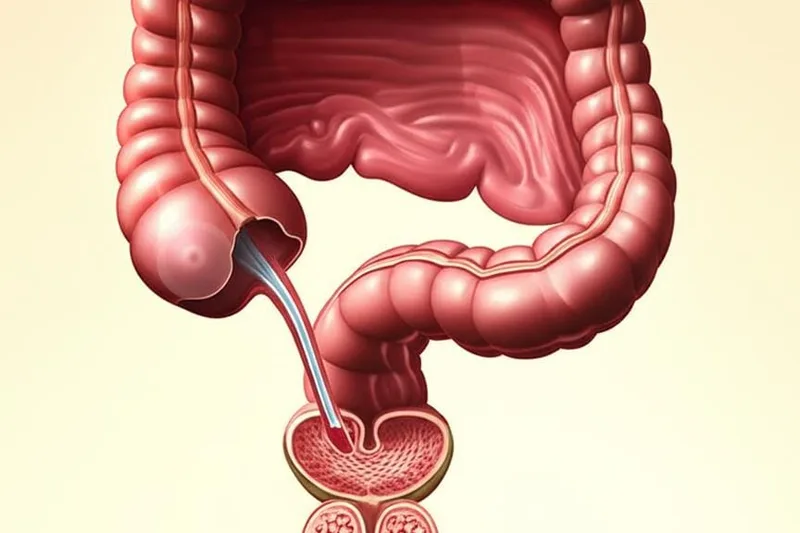
Today we are going to talk about a very important part of our body, and one that is sometimes a little difficult to talk about, but which we definitely need to be aware of. That is the anus, or the part we call (anus) in English. Knowing this well will help you avoid many diseases and, if a problem arises, quickly understand it and seek treatment.
What exactly is the anus?
Simply put, your anus is the last part of your large intestine. Think of it like the end of a long road that the food we eat travels through. It's usually about three to four centimeters long. This is where your large intestine opens to the outside, meaning your stool comes out through this.
In the anus, the thin lining of the large intestine, called the mucosa, gradually changes to become normal skin. This is surrounded by two strong, ring-like layers of muscle. We call these sphincters. They are like two locks on a door. These sphincters keep the anus tightly closed until stool comes out, preventing you from having to pass stool without control.
What is the difference between the anus and the rectum?
You may have also heard the word (Rectum). Don't confuse the two. (Rectum) is the part of your large intestine just above the anus. It is about five or six inches long. Simply put, (Rectum) is a storage place where feces accumulates.
When your rectum is full of stool, the nerves there send a message to your brain, saying, "It's time to go to the toilet." That's when you feel the urge to have a bowel movement. At this time, the internal anal sphincter relaxes naturally, that is, without your control. However, you can control the external sphincter. That is, it is because of the control of this external sphincter that you can hold your stool until you are in the right place. Do you understand?
What are the functions of the anus?
The main function of the rectum is to assist in the process of defecation. It is not just a hole. It is a very complex place.
- Notification and control: The nerves and muscles around the anus work together like a team. They are the ones who tell you when you need to have a bowel movement. They are also the ones who help you hold your bowel movements until you have a chance to go to the toilet.
- Helping with bowel movements: When you are ready to have a bowel movement, these nerves and muscles contract again, helping to push the stool out of the body.
- Lubrication: The mucous lining of the rectum secretes a mucus-like substance. This mucus makes the passageway for stool slippery, allowing stool to pass through easily and without any pain.
What is the anatomy of the anus?
This is a bit of a stretch, but I'll keep it simple. The inside wall of the rectum has folds, or folds, that run vertically from top to bottom. These divide the rectum into two main parts, the upper and lower parts.
These ridges are called anal columns. Between them are small canals called anal sinuses. Inside these anal sinuses are the glands that produce mucus that I mentioned earlier. At the end of these sinuses are small folds called anal valves. These valves mark the line where the mucous lining begins to become smooth, called the pectinate line or dentate line.
The most important thing is that the blood vessels and nervous system that supply blood to the upper and lower parts of the anus are different from the pectinate line. That is why the lower part of the anus, that is, the two-thirds below the pectinate line, is very sensitive to pain and other sensations. The inner and outer anal sphincters are also supplied with nerves differently. That is why the inner one (involuntary), that is, we cannot control it, works, and the outer one (voluntary), that is, we can control it.
What are the common diseases and disorders that affect the anus?
The rectum is a place that can be susceptible to various diseases. Let's take a look at a few of them.
- Hemorrhoids: This is a common problem that many people suffer from. Simply put, hemorrhoids are swollen blood vessels in the anus or rectum. They are like a knotted vein. If they are above the pectinate line, they are called internal hemorrhoids, and if they are below it, they are called external hemorrhoids. This can be caused by things like straining during bowel movements and prolonged constipation.
- Anal fissure: This is a small tear or crack in the delicate skin inside the anus. Think of it like a crack in the corner of your mouth. This can cause severe pain, especially during bowel movements, and some bleeding .
- Anal yeast infection: Sometimes, a type of yeast called Candida can cause an infection in the anus and surrounding area (perianal region). This is also called Candidiasis. The main symptoms are itching and pain.
- Anal STIs: Unprotected anal sex can lead to a variety of infections (STIs) that affect the anus. Examples include Chlamydia, Genital Herpes, Anal warts caused by Human Papillomavirus (HPV), Syphilis, Gonorrhea, Hepatitis A, Hepatitis B, and HIV.
- Anal abscess/anal fistula: A gland in the anus that produces mucus can sometimes become blocked and infected. This can cause a pus-filled lump (abscess) to form under the skin. After this abscess is treated with medication or minor surgery, in more than 50% of cases, an abnormal passage (anal fistula) can develop from the gland to the skin. This is a bit of a complicated situation.
- Anal stenosis: Stenosis is a narrowing of a tube in our body. Scar tissue can form inside the anus due to an injury, previous surgery, or disease, making the passage for stool narrow.
- Anorectal malformation: This is a condition that is present at birth . Some babies are born with an anus that is not properly formed or completely absent. In this case, surgery called anoplasty may be required to repair it.
- Dyssynergic defecation: This condition occurs when the muscles and nerves that help you pass stool do not work together properly. It's like the clutch and gears in a car not working properly when you shift gears. This is also called dyssynergic defecation.
- Anal incontinence: When the sphincter muscles in the anus become weak or damaged, you may experience involuntary leakage of stool. This can occur for a variety of reasons.
- Anal cancer: This is a different type of cancer than colon cancer or rectal cancer. The majority of cancers that develop in the anal canal are of a type called squamous cell carcinoma.
Important: If you have one or more of these symptoms, it doesn't necessarily mean you have the disease. However, it's wise to see a doctor for a checkup.
What are the symptoms that can indicate a rectal problem?
If you have any health problems related to your rectum, you may experience these symptoms. If you have any of these, please see a doctor.
- Anal pain: This can be felt in different ways, such as a dull ache, pain during bowel movements, or pain when sitting.
- Anal lesions: You may see things like warts, redness, blisters, small bumps, and cracks on the skin inside or outside the anus.
- Anal itching: This is a very annoying symptom. It can be caused by an allergy or an infection.
- Anal bleeding: You may notice blood in your stool or on the toilet paper when you go to the toilet. Sometimes you may even feel blood when you flush. This bleeding may be painful or painless.
- Anal discharge: If something like mucus or pus comes out with the stool, or if it stains your underwear, it could be a sign of an illness.
- Difficulty with bowel movements: Difficulty passing stool, straining for a long time, or inability to control bowel movements may be caused by problems with the muscles or nerves in the rectum.
What kind of tests do doctors do to check rectal health?
If a doctor thinks you have a rectal problem, they may do several tests to find the cause:
- Digital Rectal Exam (DRE): In this test, your doctor inserts a gloved, lubricated finger into your rectum to examine your anus and rectum. This can help detect any unusual lumps or painful areas.
- Anoscopy: This involves inserting a small, short tube-like instrument called an anoscope into the anus to look directly at the inside of the anal canal. Sometimes this is done with a magnifying lens.
- Barium enema: This is a special X-ray test that looks at the gastrointestinal system. In this, a white liquid called barium is inserted into the rectum as an enema. The barium makes the intestines visible on X-ray images. This allows you to see the inside of the large intestine, rectum, and anus. This is done using a technique called fluoroscopy, which is like a live video X-ray.
- Defecography: This is also an X-ray test. This involves recording the process (X-ray) as you defecate. It is used to detect mechanical or functional problems that occur during defecation.
- Anorectal manometry: This test measures the strength of the rectal muscle contractions, rectal sensitivity, nerve response, and muscle control.
- Electromyogram (EMG): An EMG test measures the electrical activity of muscles. This can help determine if there is any weakness or nerve problems in the sphincter muscles.
How can I keep my rectum healthy?
Okay, so how do we keep this important organ called the rectum healthy? Here are some tips:
1. Practicing safe sex: Protect yourself from sexually transmitted diseases (STIs). Using protective methods such as condoms during anal sex and using lubrication if necessary can help prevent damage to anal tissue.
2. Eat a diet rich in fiber: Whole grains, vegetables, fruits, and legumes provide our body with dietary fiber. This fiber helps to ease the bowel movement, soften the stool, and prevent constipation.
3. Practicing gentle hygiene: It is important to wash and clean thoroughly after defecation. However, do not use harsh soaps or alcohol-based wipes frequently. This is because the skin and mucosa around the anus are very sensitive. Harsh substances can damage its natural defenses, causing problems such as itching, dryness, and cracking.
4. Taking symptoms seriously: If you notice anything unusual in your anus, such as pain, itching, or bleeding, don't just assume it's normal. Don't be embarrassed. See a doctor immediately and get the necessary advice and treatment.
Things we need to remember from this story (Take-Home Message)
Okay, so let's remind you of a few things we talked about today that we think are important to you:
- The anus is an essential part of our body that helps us excrete waste, expel waste from the body, and protect us from external infections.
- Conditions such as hemorrhoids, anal fissures, various infections, and sometimes cancer can affect this area.
- If you have pain, itching, bleeding, a sore, a lump, unusual discharge, or a change or difficulty in your bowel movements , don't ignore it.
- A high-fiber diet, gentle and proper hygiene habits, and safe sex go a long way in maintaining rectal health.
- > The most important thing is that if you have any questions or doubts about this, put aside your shame and fear and definitely see a doctor for advice. Your health is what matters!
So, I hope you have learned something simple and clear about the anus. Being aware of things like this is very important for a healthy life.
` Rectum, hemorrhoids, stool, rectal pain, rectal bleeding, digestive system, health


💬 Comments (0)
No comments yet. Be the first to share your thoughts here.
Add Your Comment