
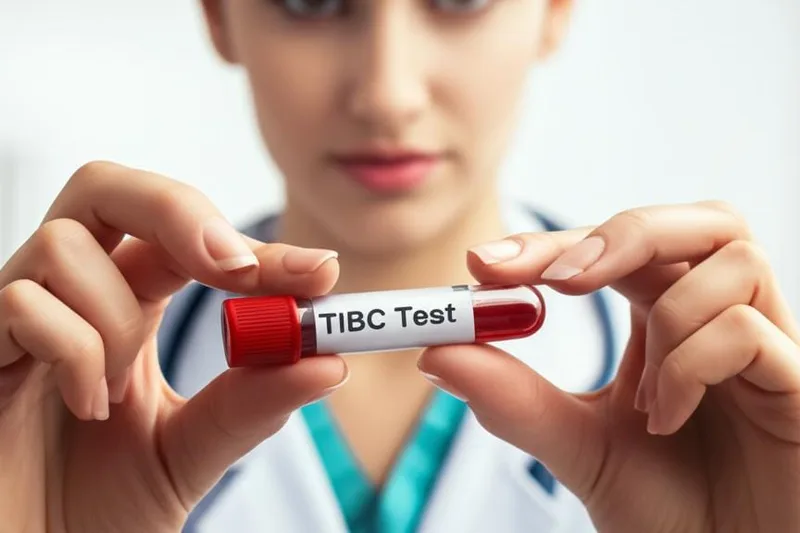
Have you ever wondered how important the nutrient iron is in our bodies, how it moves throughout the body, and whether there are tests that can measure it? That's when we have to talk about this special blood test called TIBC (Total Iron-Binding Capacity). Although this is a bit of a medical name, it is very simple. Today, we will talk about this in Sinhala that you can understand.
What is TIBC (Total Iron-Binding Capacity)? Simply put...
Simply put, TIBC (Total Iron-Binding Capacity) is a blood test that measures your blood's ability to bind to the mineral iron and carry it throughout your body. It's like the amount of space on a bus for people to sit on. It measures how much iron our blood can "carry."
Doctors use this test to diagnose conditions such as iron-deficiency anemia or other problems related to iron in the body.
To go a little deeper, the TIBC test actually measures the amount of a protein called transferrin in your blood. This transferrin is a special protein made by our liver. It is this protein that regulates, that is, controls, the absorption of iron into our blood.
Think of transferrin as a vehicle that transports iron. TIBC measures how much iron this vehicle can carry.
Our bodies need iron to make healthy red blood cells . These red blood cells carry oxygen from our lungs to the rest of our bodies. Iron is also essential for healthy muscles, bone marrow, and other organ function.
Are TIBC and Ferritin the same thing?
No, TIBC and ferritin are two different tests, although they are related.
A ferritin test measures the level of a protein called ferritin. Ferritin is a protein that stores iron inside our cells. Simply put, while TIBC measures how much iron is transported throughout the body (via transferrin), a ferritin test measures how much iron is stored in the body. Ferritin is a better indicator for accurately assessing whether there is an iron deficiency.
When do you need a TIBC test?
Doctors mainly order TIBC tests to diagnose iron-related problems. That is, you may have low iron levels (which is called iron-deficiency anemia) or high iron levels (which is called hemochromatosis ).
The TIBC test is often done as part of an "iron panel." This iron panel may include several other tests:
- Fasting iron blood test.
- Percentage transferrin saturation or iron saturation.
- Ferritin blood test.
Doctors also use the TIBC test to monitor iron-related conditions.
Who performs this TIBC test? How do you prepare for it?
Blood samples are usually taken by a medical assistant called a phlebotomist . Sometimes a nurse or doctor can do this. The blood sample is sent to a lab, where a medical laboratory scientist tests the sample using special machines (called "analyzers" ).
Do you need to prepare before the test?
Yes, sometimes your doctor will tell you to fast (that is, not eat or drink anything except water) for 12 hours before the test. You may also be asked to stop taking iron supplements during this time. If you have any questions about how to prepare, be sure to talk to your doctor.
What happens during the test?
This is what you should generally expect when having blood drawn:
- You will be seated in a chair. Then a medical worker will select an easy vein in your arm to draw blood. This is usually done on the inside of your elbow.
- Once the vein is found, the area is thoroughly cleaned and disinfected.
- Then, a small needle will be inserted into the vein and a blood sample will be taken. You may feel a slight tingling sensation at this time.
- After the needle is inserted, a little blood is collected in a test tube.
- After the blood sample is collected, the needle is removed and a piece of cotton or gauze is placed on the site to stop the bleeding and held in place for a while.
- Finally, a plaster is applied to the area and the work is completed.
The entire process usually takes less than five minutes, so there's no reason to worry.
What to expect after the test?
After your blood sample is taken, it will be sent to a laboratory for testing. Once the test results are in, your doctor will let you know the results.
Are there any risks associated with the TIBC test?
Blood tests are a very common and necessary part of medical testing and diagnosis. The risks of blood tests are very low. You may experience some bruising or soreness where the blood is drawn, but this will quickly heal.
How long does it take to get the results of the TIBC test?
Most of the time, the results of the TIBC test should be available within a day or two. However, sometimes it can take a little longer. It depends on things like the workload of the lab.
What are the normal values for a TIBC test?
Different laboratories may have different reference ranges for normal TIBC values. This means that one lab's normal value may be slightly different from another lab's. When you receive your blood test report, it will also state what the normal range is for that lab.
Normally, the TIBC value should be between 240 to 450 micrograms per deciliter (240 mcg/dL to 450 mcg/dL).
But it's important to remember that when doctors make a diagnosis, they take into account not only the TIBC value, but also the results of other tests, such as blood iron levels and ferritin.
If your TIBC value is low, what does that mean?
If your TIBC is low and your blood iron levels are high, it may be due to a condition called hemochromatosis (which means too much iron in the body). If your TIBC is low and your iron levels are low, it may be due to conditions such as:
- Cirrhosis ( a disease of the liver)
- Chronic inflammation
- Infection
- Malnutrition
- Nephrotic syndrome (kidney disease)
What happens if Ferritin is low and TIBC is high?
Low ferritin levels and high TIBC levels usually mean you have iron-deficiency anemia . This is the most common form of anemia. This condition occurs when your body doesn't have enough iron to make hemoglobin . Hemoglobin is a substance found in red blood cells that helps carry oxygen around the body.
Should I be worried if my TIBC results are abnormal?
Abnormal results on your TIBC test do not always mean you have a medical condition. The following factors can also affect your results:
- Recent blood transfusions .
- Use of fluoride .
- Oral birth control ( family planning pills).
- Chloramphenicol (a medicine for superficial eye infections).
- Any error that occurred during the collection, transportation, or processing of blood for testing.
If you get an abnormal result, your doctor will talk to you about it. The doctor will consider several other factors before reaching a diagnosis. He or she may also order additional tests.
It's normal to feel scared when you see an abnormal test result. But remember, an abnormal TIBC result doesn't necessarily mean you have a disease. About 1 in 20 healthy people have results outside the normal range. Your doctor will discuss these results with you and decide what to do next. The good news is that many conditions that cause low or high iron levels in the body can be treated.
Finally, things you need to remember (Take-Home Message)
The TIBC test is a test that provides important information about your body's iron metabolism.
- This measures your blood's ability to bind and transport iron.
- This helps to diagnose conditions such as iron-deficiency anemia or hemochromatosis .
- You may need to follow special instructions, such as fasting, before the test.
- Even if the results are abnormal, there could be a number of reasons for it. So it's important to talk to your doctor and get the right advice.
- Many iron-related problems can be successfully treated, so don't panic and follow your doctor's advice.
If you have any further questions about this, don't hesitate to ask your doctor. Stay healthy!
` Iron, TIBC, blood tests, anemia, ferritin, transferrin, health




💬 Comments (0)
No comments yet. Be the first to share your thoughts here.
Add Your Comment