
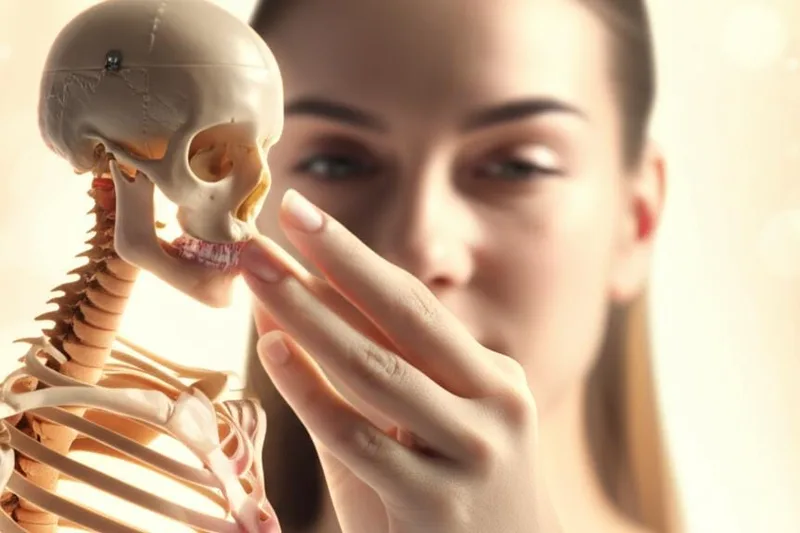
Have you ever thought about the bones in our bodies? You probably think about them when you get hurt somewhere, or when you fall as a child and break an arm or leg. But these bones are actually a very important and amazing part of our bodies. So, today we will talk in more detail about these bones, their function, and how to keep them healthy.
What exactly are these bones?
Simply put, your bones are the main support for your body. They are like the frame inside the walls when you build a house. If you've watched TV shows about building houses, you've probably seen the pillars and beams inside the house. That's how our bones are. These are what give our bodies shape, keep them upright, and help us move, run, jump, and do various tasks. They are made of very strong, tough tissue.
You might think that bones are lifeless, just hard things. But, don't be surprised, bones are living tissue, just like the rest of our bodies. Yes, that's true. As long as we live, these bones continue to grow, change, and renew themselves. In fact, they are constantly being reshaped.
If you ever feel a strange ache or pain coming from inside your body (bone pain), see a doctor. Also, if you think you've had an accident and broken a bone, it's best to go to a hospital right away.
What service do bones provide to our body?
Bones perform not just one service for our bodies, but many. Let's look at some of the main ones.
- Provides support for the body: Bones provide stability and support to our bodies when we stand, sit, and sleep.
- Helps with movement: Bones help with all of these things when we walk, run, and move our limbs. But it's not just bones, it's also muscles, tendons, and ligaments that are involved. All of these work together to make us move.
- Protects vital organs: Think about the brain in our head. How sensitive is it? The brain is protected by a system of bones called the skull. Similarly, the vital organs like the heart and lungs in our chest are protected by bones called the ribcage.
- Bone Marrow Stores and Protects: Inside the bones is an important substance called bone marrow. It is like an oily, soft tissue. It is from this bone marrow that the types of cells that are essential for our body are produced.
- Red blood cells: These are the ones that carry oxygen throughout the body.
- White blood cells: These are what protect us by fighting against disease.
- Platelets: These are what help control bleeding when it occurs.
See, bones are not just pieces of the body, they perform such an important function!
Where are the bones?
This is a very simple question. Bones are everywhere in our bodies. From our heads to our toes!
How many bones do we have in our body?
An adult's body usually has between 206 and 213 bones . But surprisingly, a newborn baby has about 270 bones! Later, these small bones fuse together to form the adult skeleton.
Some people may have slightly more bone mass than others. There are several reasons for this:
- Some people may have a difference in the number of ribs in their chest.
- There may be slight differences in the number of vertebrae in the spine.
- A person with an abnormally low number of digits on their hands or feet also has a reduced number of bones.
What are the shapes of bones? How are they classified?
Doctors usually classify bones by their shape and size. Let's look at the main types.
Long bones
As the name suggests, these are the longest bones in the body. We especially have these types of bones in our arms and legs. For example, the thigh bone `(Femur)` (the one in the upper leg), the arm bone `(Humerus)` (the one in the upper arm). Also, the two bones in the lower leg called `(Tibia)` (shin bone) and `(Fibula)` (calf bone) are also long bones.
Short bones
These are shorter than long bones and are also slightly less strong. Examples of short bones include the bones in our hands and wrists, and the talus bone in our ankles.
Flat bones
These bones are wider and less round than the others. They are flat bones, like the plates that make up our skull, the ribs in our chest, and the clavicle in our collarbone.
Sesamoid bones
These are a little special. These bones are embedded in tendons or muscles. They are not connected to each other like other bones, but are directly embedded in the tissue. The kneecap (patella) and some of the metacarpal bones in the hand are good examples of these bones.
What are bones made of?
Bones are mainly made up of cells and proteins. The hard, strong outer layer of a bone is called the cortex. That's the hard, shell-like part of the bone you see in pictures. Inside this cortex is a layer called cancellous bone, or spongy bone. It's not as hard as the cortex, it's a little more flexible, and has bumps like a sponge. Your bone marrow is also found in this part of the bone.
Our bones renew their cells throughout our lives. There are two special types of cells that help with this: osteoblasts and osteoclasts . Simply put, osteoblasts build new bone tissue. Osteoclasts break down old, damaged bone tissue and remove it, making way for new, healthy tissue. This is like a constant repair.
What are the common diseases that affect bones?
Two of the main problems affecting bones are fractures and conditions called osteoporosis.
Bone Fractures
A bone fracture is a medical term for a broken bone. Simply put, it is a break in a bone. A bone can be broken by a fall, a car accident, or another accident while playing sports.
Important: If you have had an accident and think you have a broken bone, go to an emergency department (ETU) immediately. It is very important for a fracture to be diagnosed and treated quickly by a doctor so that the bone can heal properly.
Osteoporosis
Osteoporosis is a disease in which bones become weak and easily broken. Many people only find out they have osteoporosis after they break a bone. This is because it usually has no obvious symptoms.
Women and adults over the age of 65 are especially at risk of developing osteoporosis. If you fall into one of these risk groups, it's a good idea to talk to your doctor about getting a bone density test. It can detect osteoporosis before a bone breaks.
What are the common treatments for bones?
Generally, unless you have had an accident, such as a broken bone, or have been diagnosed with a disease like osteoporosis, your bones do not require special treatment.
Treatment for a fracture
When a bone is broken, the treatment depends on which bone is broken and how it was broken. You will likely need to wear a splint or cast to keep the broken bone in place. Sometimes, surgery may be needed to set the bone and allow it to heal.
Treatment of osteoporosis
The following can be used as treatments for osteoporosis:
- Exercising
- Taking vitamin and mineral supplements (especially calcium and vitamin D)
- Medicines prescribed by a doctor
Osteoporosis can often be prevented by exercising and taking the necessary nutritional supplements. Your doctor can help you find the best combination of treatments for you and your bone health.
How can I keep my bones healthy?
It's important to follow a diet and exercise plan that's good for your overall health and bone health. Also, by going for regular medical checkups, you can quickly identify any problems or symptoms that may be affecting your bones.
- If you are over 65 years old, or if someone in your family has osteoporosis, talk to your doctor about a bone density test.
- Eat a balanced diet. Include foods rich in calcium and vitamin D (milk, yogurt, cheese, green vegetables, small fish) in your diet. The best place to get vitamin D is in the morning sunlight.
- Exercise regularly. Exercise like walking, running, and lifting weights strengthens bones.
- Avoid smoking and limit alcohol consumption. These are bad for bone health.
Also, follow these simple tips to protect yourself from accidents:
- Wear seat belts every time you ride in a vehicle.
- Wear appropriate protective equipment when playing sports and other activities.
- Don't leave things lying around in your home or workplace that could fall. Keep them tidy.
- When picking up something from the ceiling, always use appropriate equipment (like a ladder). Never climb on chairs or tables.
- If you have difficulty walking or are at high risk of falling, use crutches or a walker.
What is the longest and strongest bone in the body?
The longest bone in our body is the femur (the one at the top of your leg). The femur in an adult is usually about 18 inches long.
Also, the strongest bone in the body is the femur. It can support about 30 times your body weight! Hard to imagine, right?
What is the smallest bone in the body?
The three smallest bones in our bodies are inside your ear. They are called the ossicles. These three tiny bones help us hear. They carry sound vibrations to the inner ear. The malleus (hammer), incus (anvil), and stapes (stirrup) are all less than an inch long. The stapes is the smallest of these bones – it is usually about one-tenth of an inch (3.5 millimeters) long.
Whether you're lounging at home, taking a leisurely stroll, or training for a marathon, your bones are what support your body and keep you moving (or helping you stay still on the couch!). From the smallest bone in your ear to the longest bone in your leg, every bone in your body is important.
Finally, what to remember (Take-Home Message)
So, I hope you now have a better understanding of bones.
Anything you do to maintain your overall health will also help keep your bones strong and healthy.
That means eating well, exercising, and taking precautions. If you're over 65 or have a family history of osteoporosis, be sure to talk to your doctor about getting a bone density test. Our skeleton is a wonderful thing that will protect us throughout our lives, so it's our responsibility to take good care of it. Got it?
` Bones, bones, bone health, osteoporosis, fractures, calcium, vitamin D


💬 Comments (0)
No comments yet. Be the first to share your thoughts here.
Add Your Comment