

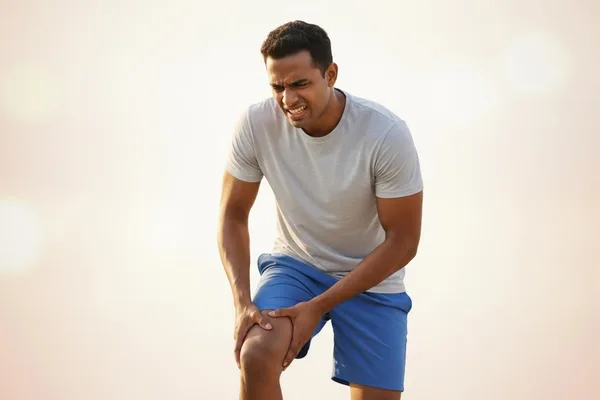
Have you ever heard a "click" sound from your knee while playing sports, running, jumping, or just walking normally, and suddenly felt a sharp pain and was unable to bend or straighten your knee? Or did your knee feel swollen and stiff? These could be signs of a torn ligament in the knee, especially the one we're talking about (ACL Tear) . So, let's talk about this in a simple way today.
What is this (ACL Tear)? Let's understand exactly!
Simply put, an ACL tear is a tear in the anterior cruciate ligament (ACL) . The ACL is one of four major ligaments in the knee. Think of it like a strong band. It connects your thigh bone, the femur , to your shin bone, the tibia .
Inside your knee, this (ACL) and another ligament called (PCL - Posterior Cruciate Ligament) are arranged in the shape of the letter "X". (ACL) is located in the front of the knee, and (PCL) is located in the back of the knee.
The main function of this (ACL) ligament is to stop your knee from bending too much, or from twisting too much. That is, it helps keep your knee stable. So, if your knee is somehow subjected to an excessive force, and it bends or twists too much, this (ACL) ligament can be damaged or torn.
ACL injuries are most common among athletes, but they can happen to anyone. If you have knee pain, especially if it started after an accident or while playing sports, you should definitely see a doctor.
Are there different levels of (ACL) injuries?
Yes, doctors grade these (ACL) injuries according to their severity. This helps us understand what the injury is like. There are three main grades:
- Grade 1: This is when the ACL is sprained, causing some damage, but it is not completely torn. This means that the ligament is still in one piece, holding the knee bones together. But it is a little weaker.
- Grade 2: Here the ACL ligament is severely stretched, with part of it torn. The ligament is loose, and the stability of the knee is reduced.
- Grade 3: This is the most severe case. Here the ACL is completely torn, separating into two pieces.
What does it feel like to have an ACL tear?
Many people remember the moment when they tear their ACL vividly, because it usually happens in a clear-cut event, like a sports accident.
A person with an ACL tear may typically experience the following:
- You hear or feel a "click" or "pop" sound in your knee.
- Knee suddenlyFeeling "unsteady" and out of control (unsteadiness, weakness).
- ACL tears can be quite painful. Some people may only experience mild discomfort. However, if you have an injury to your knee, especially if you hear or feel a popping sound like the one mentioned above, you should definitely see a doctor.
How common are ACL injuries?
In fact, ACL injuries are very common. Of all the ligaments in the knee, the ACL is the most commonly injured. According to some statistics, for example, in the United States alone, about 100,000 to 200,000 people tear their ACL every year. So imagine how common this is.
What are the symptoms of an ACL Tear?
As we've talked about a bit before, the main symptoms of an ACL Tear are:
- Hearing or feeling a "click" or "pop" sound in the knee.
- Swelling: The knee begins to swell immediately after the injury or a few hours later.
- Pain: Severe pain may occur, especially when trying to stand or walk with weight on the knee.
- Weakness or a feeling like the knee is "popping": The knee may feel weak and suddenly bend when standing.
- Difficulty moving: Unable to fully bend or straighten the knee.
What are the causes of ACL Tear?
Simply put, an ACL tear can occur when your knee is subjected to excessive force or pressure. This means that the knee is pushed beyond its natural range of motion.
The most common causes of ACL tears are:
- Sports accidents: Especially in sports that involve sudden stops, sudden changes of direction, and jumping (e.g., running in football, netball, basketball, volleyball, cricket).
- Car accidents: Severe blows to the knee during car accidents.
- Falls: In cases such as falling from a height or slipping.
Who is at higher risk for (ACL Tear)?
Anyone can get an ACL tear. However, it is more common among athletes. As mentioned earlier, those who play sports that involve sudden stops, twists, and changes of direction are at higher risk. For example:
- Football
- Football
- Basketball
- Gymnastics
- Netball
- Volleyball
What are the complications of an ACL Tear?
In an accident severe enough to tear the ACL, other parts of the knee can also be damaged, which is why it is important to seek medical attention immediately.
Along with an ACL tear, other ligaments in your knee can also be damaged, such as:
- (Medial Collateral Ligament - MCL)
- (Lateral Collateral Ligament - LCL)
- (Posterior Cruciate Ligament - PCL)
Also, other injuries that can occur with an ACL tear include:
- Bone fractures
- Meniscus tears ( the meniscus is the cartilage-like part between the knee bones)
- Muscle strains
How to recognize an ACL tear?
A doctor diagnoses an ACL tear by asking about your symptoms, performing a physical examination, and possibly performing some tests.
First, the doctor will ask you how the injury occurred, what symptoms you have, and how long you have had the pain. You need to tell the doctor exactly what you were doing before you injured your knee and when you first noticed the symptoms.
Then, the doctor will move your knee and leg in certain ways. You may feel some discomfort or pain during this time. If any of these positions or movements are painful, tell your doctor.
You will likely need to have one or more of these imaging tests :
- X-rays: These can check for any signs of a fracture.
- CT scan (Computed Tomography scan): This can also give some idea of the bones and soft tissues.
- MRI (Magnetic Resonance Imaging): An MRI is the best way to accurately diagnose injuries to the ligaments and soft tissues, such as an ACL tear.
How is an ACL tear treated?
Treatment is determined by the grade of your (ACL) injury (i.e. how severe it is) and whether there is any other damage to your knee.
Things to do immediately after an injury (RICE method):
As soon as you notice knee pain or other symptoms, stop playing sports or doing activities that put pressure on your knee. Then follow this RICE method :
- R - Rest: Avoid the activity that caused the injury. Don't put too much weight on your knee until it heals.
- I - Ice: Place an ice pack wrapped in a thin towel or a few ice cubes on the injured knee for about 15 minutes several times a day. This will reduce swelling and pain.
- C - Compression: Wrap your knee with an elastic bandage. This will also help reduce swelling. But remember, don't wrap it too tightly , as this can cut off blood flow.
- E - Elevation: Keep your knees and feet above the level of your heart as much as possible. You can use something like a pillow to prop them up.
Your doctor may suggest things like these to help control your pain and other symptoms:
- Use crutches (walk without putting weight on your knees).
- Wear a brace to keep your knee stable.
- Painkillers that can be purchased from a pharmacy without a doctor's prescription, for example (NSAIDs - Nonsteroidal Anti-inflammatory Drugs) (e.g. Ibuprofen) or (Acetaminophen) (e.g. Panadol).
- Physical therapy: This is very important. A physical therapist will teach you exercises to help you regain strength, flexibility, and movement in your knee.
Will an ACL tear heal on its own?
A torn ACL does not heal on its own. However, if the injury is not too severe (e.g., a grade 1 injury), some people can live with it. That is, they can carry out their daily activities without much difficulty.
However, if you are an athlete or someone who likes to lead a physically active life, you will often need surgery to repair the ACL. Many people choose to have surgery for an ACL tear.
Let's learn about ACL Tear surgery
Surgery to repair knee injuries like this is usually done as an outpatient procedure, meaning you don't have to stay in the hospital.
The surgeon often performs a procedure called knee arthroscopy . This involves making a few small incisions in the knee, inserting a camera and small instruments, and repairing the damage under the guidance of a monitor. This is a minimally invasive procedure, which helps to heal faster and reduce scarring. You can ask your surgeon for more information about this.
Can an ACL tear be prevented?
Sometimes it's hard to prevent an ACL tear, especially if you're an athlete. Because we can't plan for sports injuries and accidents.
However, there are things we can do to reduce the risk.
While playing sports or other physical activities:
- Wear appropriate safety equipment.
- If you experience knee pain while playing sports or exercising, stop "playing through the pain." Rest immediately.
- Give your body time to rest and recover after strenuous activity.
- Warm up and stretch thoroughly before playing sports or exercising.
- Cool down and stretch again after activities.
- By participating in exercise programs that strengthen the knee and lower body muscles during the offseason, you can prepare the joints to withstand the stress placed on the knee during the season.
Follow these general safety tips to reduce the risk of injury:
- Avoid planting your feet firmly in one place and pivoting your body above your knees.This is the main reason for damage to the ACL and meniscus in athletes.
- Keep your home and workplace tidy, free of unnecessary items and things that could get in the way.
- Always use appropriate tools to reach things that are high up in your home. Never climb on chairs, tables, or counters.
- If you have difficulty walking or are at high risk of falling, use your cane or walker.
How long does it take to heal from an ACL tear?
It usually takes six to nine months to heal from an ACL tear. Competitive athletes may take a little longer to fully recover and be cleared to return to play.
Your doctor will tell you when you can resume physical activity. Do not play sports or exercise until your doctor gives you the okay. If you resume activity before your ACL has fully healed, you are more likely to re-injure it.
Can you walk with a torn ACL?
Some people can walk with a torn ACL. However, if there is pain, do not forcefully move or use your knee. If you have pain or other symptoms of a knee injury, see a doctor. Putting more pressure on the injured ACL can make even a minor injury worse.
When should I see my doctor?
See a doctor as soon as possible after you injure your knee. Tell your doctor if you notice any new symptoms or if the pain seems to be getting worse.
If you have suffered a serious injury (trauma) , such as a car accident or a serious fall, go to the hospital emergency department immediately. In such accidents, you may have other internal injuries that you may not immediately realize.
What questions should I ask my doctor?
When you go to see the doctor, it's a good idea to ask questions like these:
- Do I have an ACL tear or another injury?
- What grade is this injury?
- Will I need surgery?
- How long will I have to wait before I can start exercising or playing sports again?
- What is the risk of tearing the ACL again in the future?
Can an ACL tear happen again?
Even if the ACL is repaired surgically, there is a very small chance that the ACL will tear again in the future. Less than 10% of people who have an ACL tear will tear the same ACL again. Ask your doctor or surgeon for more information about this.
Does an ACL tear mean the "end of an athlete's career"?
Most of the time, an ACL tear is not the end of an athlete's career.The most important thing is not to rush the healing process. Most people who suffer an ACL tear can return to their sport without any long-term side effects.
A rehabilitation program after your surgery is the best way to regain strength and flexibility in your knee. You will need to rehabilitate your knee for a period of time before you can return to sports.
Ask your doctor or surgeon if it's safe for you to play the same sport again and when you can start training.
An ACL tear is one of the most common knee injuries in athletes. It can be frustrating to be out of action for months. However, never rush the healing process. If you have surgery to repair your ACL, you will be able to return to the field or gym as soon as your knee heals.
If you have an injury to your knee, don't put too much pressure on it. Doing so can make even a minor ACL tear worse. See a doctor as soon as you injure your knee or feel pain.
Take-Home Message
Okay, so we've talked a lot about an ACL tear. Finally, keep these points in mind:
- An ACL tear is a common and potentially serious injury to the knee.
- If you experience symptoms such as a "clicking" sound coming from your knee, swelling, severe pain, or loss of knee control , seek medical advice immediately.
- Tests such as MRI may be necessary for an accurate diagnosis.
- Treatment methods vary depending on the nature of the injury. Rest, ice, and physical therapy are important. Severe injuries may require surgery .
- Rehabilitation is an essential part of the healing process. Follow your doctor's instructions exactly.
- Following certain safety measures can reduce the risk of an ACL tear.
- Never ignore pain. Prompt treatment can prevent the condition from getting worse.
If you have a problem like this, the best thing to do is not to panic, seek proper medical advice, and patiently undergo treatment.
👩🏽⚕️ Additional questions (FAQs)
💬 Is an ACL tear a broken knee?
The kneecap is not broken. This is a tear of the Anterior Cruciate Ligament, the main strong ligament that runs through the middle of the knee that connects our thigh bone and lower leg bone. This can be severely torn when you suddenly turn your leg and stop while playing games like cricket or football.
💬 How does it feel when this is torn? Can't you move your leg?
When the artery ruptures, you hear a 'pop' sound from inside your knee! Along with that, you experience unbearable pain, and within a few hours, your knee swells up considerably. Not only will you be unable to put weight on your leg and walk, but your knee will also 'give way' (the knee will feel unstable).
💬 Does this require an operation? Can't it be fixed with a plaster?
Like other ligaments in our legs, the ACL ligament does not heal on its own once it is torn. If you are older or just walking, you can keep it in shape with exercise. But if you are young and playing again, you will definitely need to undergo an 'ACL Reconstruction' operation, where a piece of ligament is taken from another part of the leg and placed in the knee.
` ACL tear, knee injuries, sports injuries, ligament tears, knee surgery, physical therapy, knee pain




💬 Comments (0)
No comments yet. Be the first to share your thoughts here.
Add Your Comment