
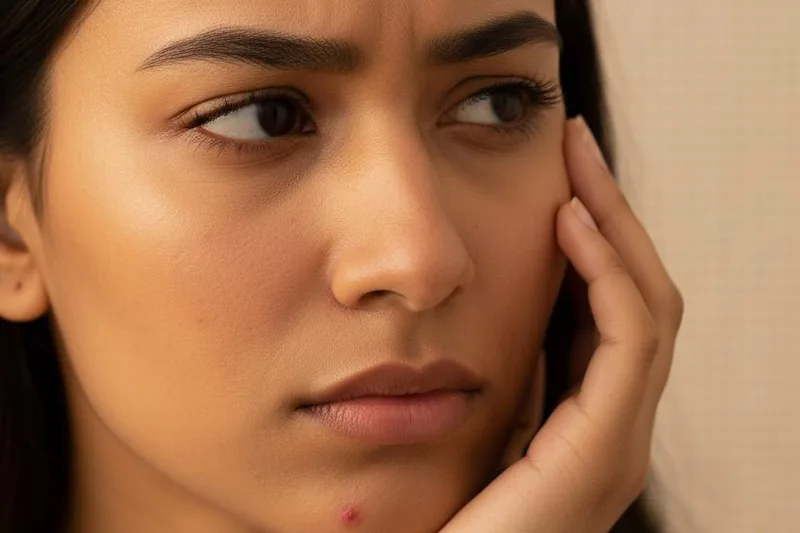
When you look in the mirror, do you feel worried because of a few new pimples? Sometimes these get bigger and start to hurt. This is a problem for many people, especially at a young age. But don't worry, you're not alone, this is a very common condition. What exactly are these pimples? Why do they form? What can you do about them? Let's talk about this from the beginning, very simply, in a way that you can understand.
Simply put, what is acne?
Acne, or medically known as ``Acne Vulgaris'', is a very common skin condition that occurs when the small pores in our skin become clogged with various things. When these pores become clogged, you can develop blackheads , whiteheads, and other types of pimples. Pimples are usually pus-filled, sometimes painful, bumps that appear on the skin.
Are there different types of acne?
Yes, there are actually different types of acne. Some are very minor, but some can be quite serious. Let's take a look at some of the main types.
| Acne Type | Description |
|---|---|
| Cystic acne | These are large, painful, pus-filled lumps that form under the skin. They have a high risk of causing permanent skin scarring. |
| Fungal acne | These are caused by an overgrowth of a type of fungus called yeast in the hair follicles. They often itch and become red and swollen. |
| Hormonal acne | These are most common in adults, especially women. They are caused by hormonal imbalances that cause the skin to produce more sebum, which clogs pores. |
| Nodular acne | This is also one of the most severe types of acne. Along with the pimples on the surface of the skin, there are also hard, painful lumps (nodules) that form under the skin. |
All of these types of acne can affect your self-confidence. Cystic and nodular acne in particular can cause permanent scarring. So, if you have large, painful pimples like these, it's best to see a doctor as soon as possible. Then you can choose the treatment that's right for you.
Who gets acne? How common is it?
In fact, almost everyone gets acne at some point in their life. So you're not alone. It's the most common skin condition in the world. It's especially common during adolescence and young adulthood, when hormonal changes are occurring. But acne can also occur in adults. Adult acne is especially common in women. If your family, that is, your mother or father, had acne problems, you are more likely to develop it (genetics).
Where on the body do acne most commonly occur?
Although we have oil glands almost everywhere on our bodies, there are more of them in certain areas. Acne is most common in those areas.
- Face
- Forehead
- Chest
- Shoulders
- Upper back
What are the symptoms of acne?
Even though acne is called acne, it can appear in different ways. Let's get to know each type. I will show you a table to make this easier for you to understand.
| Symptom Name | Appearance & Nature |
|---|---|
| Common Pimples (Pustules) | A white pus-filled lump that has risen to the surface. |
| Red bumps (Papules) | A small, swollen lump that is redder than the skin color, more like a purple color. There is no pus in this lump. |
| Blackheads | The pores in the skin are clogged, and the top of the pore has turned black. |
| Whiteheads | The pores of the skin are clogged, and the upper part is covered in white. |
| Nodules | Large, hard lumps that form under the skin, are painful and can be felt in the hand. |
| Cysts | A large, painful, fluid-filled lump that forms under the skin. |
Okay, now let's see why these pimples form.
The main cause of acne is the blockage of the hair follicles in our skin. These hair follicles are like small tubes that contain our hair. A blockage occurs when these tubes become clogged with things. Think of it like a water pipe getting clogged with dirt. There are three main reasons why these hair follicles become clogged:
- Sebum: This is a type of oil that our skin produces naturally to keep it oily and protect it. However, if it is produced in excess, it can clog pores.
- Bacteria: Small amounts of bacteria naturally live on our skin. However, if these bacteria become too large, they can get into pores and cause infections, leading to acne.
- Dead skin cells: Our skin is constantly renewing itself. As it does so, old, dead cells are shed. But sometimes these dead cells can get stuck inside hair follicles instead of being shed properly.
When one or more of these things come together and a hair follicle becomes blocked, the pressure inside it increases and it begins to swell. This is what we call inflammation . It is because of this inflammation that a pimple becomes painful, red, and swollen.
Things that increase or provoke acne (Triggers)
Some things can cause acne to develop more often, or existing acne to become worse.
- Wearing tight clothing and things like helmets: These reduce the skin's ability to breathe, and can cause sweat and oil to accumulate and clog pores.
- Humid weather: Excessive sweating can increase acne.
- Oily products: Using oily creams, lotions, and makeup.
- Stress: When we are stressed, our body produces more of the hormone ``Cortisol.`` This can also increase the production of oil in the skin.
- Certain medications: Some medications can cause acne as a side effect.
- Picking and popping pimples: This is the biggest mistake people make. When you squeeze or pop a pimple, the bacteria inside it can go deeper into the skin, causing more inflammation, and ultimately causing a large scar.
What are the treatments for acne?
Fortunately, there are many effective treatments for acne. The treatment depends on your age, the type of acne, and the severity. It's always safest and best to consult a doctor before trying these on your own.
Treatment can be divided into several main parts.
Topical Medications
These are creams, gels, or lotions that are applied directly to the skin where acne is present.
- Benzoyl peroxide: These kill bacteria on the surface of the skin.
- Salicylic acid: This removes dead skin cells and prevents pores from becoming clogged.
- Retinoids: These are medications made from vitamin A. They help unclog pores and control the formation of new acne. These are not just a topical treatment for acne, they should be applied to the entire area of acne.
- Topical antibiotics: Medications like Clindamycin and Erythromycin control bacteria on the skin.
Oral Medications
If you have moderate or severe acne that cannot be controlled with topical medications alone, your doctor may prescribe oral medication.
- Oral antibiotics: Pills like `(Tetracycline)`, `(Minocycline)`, ` ( Doxycycline ) ` control acne caused by bacteria.
- Isotretinoin: This is a very strong medication. It is given for the most severe types of acne. It reduces the size of the oil glands in the skin and controls oil production. You should definitely be under medical supervision when taking this medication.
- Contraceptives: For women with hormone-related acne, some types of birth control pills can help control acne.
- Hormone therapy: Medications like ``Spironolactone`` control the activity of hormones and reduce acne.
Other special treatments (Additional Therapies)
- Steroid injections: An injection directly into very large, painful cysts or nodules can quickly reduce swelling and pain.
- Lasers: Laser treatments and light therapy are used to reduce scars caused by acne.
- Chemical peels: A special chemical is used to gently remove the top layer of skin. The new skin that emerges is brighter and smoother, and scars are reduced.
What are some home remedies to control acne?
Along with medical treatment, it is very important to maintain your daily skin care routine.
- Wash your face at least once a day with lukewarm water and a gentle cleanser. Also cleanse your skin after doing something that makes you sweat, such as exercise.
- Avoid products that contain harsh ingredients like alcohol, astringents, and toners. These can dry out the skin and cause it to produce more oil.
- Be sure to remove your makeup before going to bed at night.
- After cleansing your skin, use an oil-free moisturizer.
- Avoid touching your face frequently. Bacteria on our hands can get onto our face.
The most important thing is not to pick or squeeze pimples. Doing so increases the risk of scarring. Allow the skin to heal on its own.
Acne and mental health
Acne is not just a skin problem. It can also affect our minds. Acne can make us feel self-conscious about our appearance, reduce our self-confidence, make us afraid to go to social events, and increase our stress levels. This is very common. If you feel the same way, don't keep it to yourself and suffer from it. Talk to someone you trust, or your doctor, about it. Remember that acne is something that can be treated and cured.
What is the best time to see a doctor?
- If your home remedies don't reduce your acne.
- If the acne is very large, painful, and forms lumps under the skin (cystic or nodular acne).
- If acne has started to cause scars.
- If acne has affected your mental health.
In such a situation, seeing a doctor, especially a dermatologist, can help you quickly begin the right treatment.
Take-Home Message
- Acne is a very common condition. So don't be ashamed or afraid of it. You are not alone.
- These form when skin pores become clogged with oil, dead cells, and bacteria.
- Most importantly: Don't pop or squeeze pimples! Doing so can cause permanent scarring.
- Maintaining a good skincare routine goes a long way in controlling acne.
- If you can't control your acne with home remedies, definitely see a doctor. There are many effective treatments for acne today.


💬 Comments (0)
No comments yet. Be the first to share your thoughts here.
Add Your Comment