
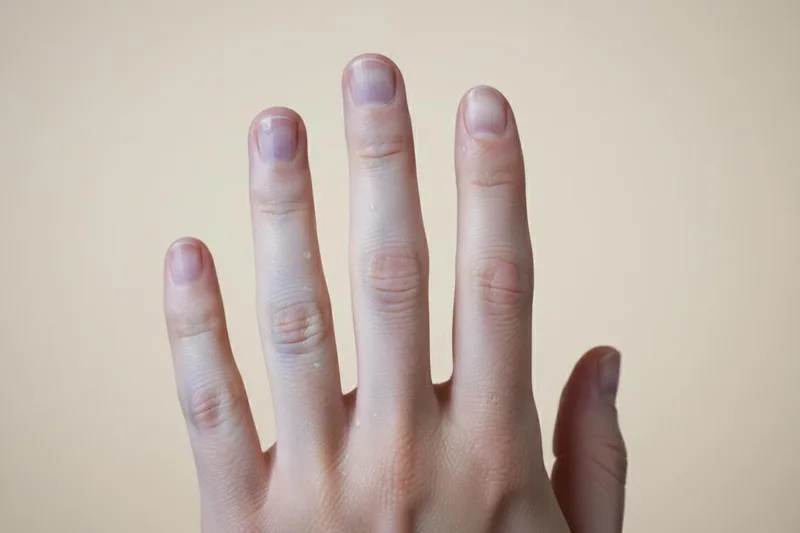
Have you ever noticed that after taking a cold shower or going outside on a cold day without gloves, the tips of your fingers or toes turn blue, sometimes even pale? For many people, this may be normal. But sometimes it can be a sign of a health condition. That's what we're going to talk about today. This is called acrocyanosis in medical terms.
What is acrocyanosis? Let's understand it simply.
Simply put, acrocyanosis is a condition where your hands or feet (and sometimes other parts of your body) turn blue, white, or gray. This happens when the small blood vessels in our body, called arteries, become too tight, or more accurately , constricted (vasospasm), for too long. This reduces the amount of blood and oxygen that gets to the surrounding tissues. That's why the skin changes color. This is also called peripheral cyanosis.
Do you remember when you were a kid and your hands turned blue from being in the cold? That's what it's like. Most of the time, this isn't dangerous and will go away once you warm up. However, sometimes it can be a sign of an underlying health problem. So, whether or not this is something to worry about depends on the type of acrocyanosis you have. There are two main types.
There are two types of acrocyanosis:
Strictly speaking, this condition can be divided into two main categories: Primary Acrocyanosis and Secondary Acrocyanosis. Let's now look at these two separately.
Let's learn about Primary Acrocyanosis.
Primary Acrocyanosis is a type of functional peripheral arterial disease. "Functional" here means that there is no damage to your blood vessels. Instead, your blood vessels simply constrict and dilate in response to things like temperature changes or stress. "Peripheral" refers to areas further away from the center of the body, such as the arms and legs.
This condition, called primary acrocyanosis, can affect anyone. But it is most common in newborns, infants, and young adults in their 20s . This type usually affects both sides of the body (for example, both arms or both legs). Importantly, primary acrocyanosis is not painful .
What is Secondary Acrocyanosis?
Secondary acrocyanosis usually occurs in conjunction with other health conditions . This means that it can occur as a side effect of a medical condition. The appearance of the condition can vary depending on the underlying cause. Unlike primary acrocyanosis, secondary acrocyanosis usually affects only one side of the body . It is also often painful and can cause tissue damage. Therefore, it requires treatment .
What are the symptoms of Acrocyanosis?
There are several common symptoms that can be seen in both primary and secondary acrocyanosis. They are:
- Blue or grayish discoloration of the hands, feet, and fingers (this is the most common).
- Wrists, ankles, nipples, earlobes, or nose turning blue or gray (this is a little less common).
- Sweaty or clammy hands and feet.
- Swelling of the hands and feet.
- Slowing of blood circulation.
- Decreased skin temperature.
Important: If your chest area, tongue, lips, or insides of your cheeks turn blue or gray, you should see a doctor immediately. These could be signs of a condition called central cyanosis, which requires immediate medical attention. This is not a joke, so remember this.
Why does this acrocyanosis occur? What are the causes?
What causes this will vary depending on the type of acrocyanosis you have.
Causes of Primary Acrocyanosis
Doctors are still researching primary acrocyanosis and exactly why it happens. However, it is thought to be caused by a constriction of your blood vessels. There are several factors that can contribute to this constriction:
- Exposure to cold temperatures. (This is the main cause.)
- Having a genetic predisposition (meaning your blood vessels may be naturally more likely to constrict).
- Living in high altitudes where cold temperatures and low oxygen pressure are common.
Is it common for newborns to have primary acrocyanosis?
Yes, many newborn babies have acrocyanosis in the first few hours of their lives. This is normal and nothing to worry about. This happens because the baby's blood is first carrying oxygen to their most important organs, such as the lungs, kidneys, and brain. As the baby's body adjusts to the new blood circulation pattern, this acrocyanosis will disappear. Later, if the baby feels cold, the blue, pale color may appear again. This is also normal, and it will disappear when the baby warms up. So, if you are a mother with a small baby, you should not worry unnecessarily about this, right?
Causes of Secondary Acrocyanosis
Doctors know more about secondary acrocyanosis because they have studied the underlying conditions that often accompany it. Sometimes secondary acrocyanosis can be the first sign of a disease. In other cases, it can develop slowly over time.
Secondary Acrocyanosis can be caused by:
- Raynaud's syndrome.
- Eating disorders or malnutrition.
- Low oxygen levels in the blood (hypoxemia).
- Infections.
- Genetic diseases.
- Vascular diseases.
- Blood disorders.
- Cancer.
- Some medications.
Who is at higher risk of developing Acrocyanosis?
If you have any of the health conditions we discussed earlier, you are at higher risk of developing secondary acrocyanosis.
People who are more likely to develop primary acrocyanosis are:
- If you live in an area with a cold climate.
- If you work outdoors in cold weather.
- If the body mass index `(BMI)` is low.
- If you are under 30 years old.
How do doctors diagnose this?
A doctor can usually tell if you have acrocyanosis by looking at your skin and doing a physical examination. They will examine your hands and feet to see if the discoloration is on one side of your body or on both sides.
Depending on your condition, your doctor may recommend some tests to determine if there is an underlying medical condition. These may include:
- Pulse oximetry (pulse ox) is a test that measures the oxygen level in the blood.
- Blood tests.
- Urinalysis.
- Liver function tests.
- Kidney function tests.
- Arterial blood gas (ABG) measurement.
- Chest X-ray.
- Skin biopsy.
How is Acrocyanosis treated?
The good news is that primary acrocyanosis is not a harmful condition and usually does not require treatment. The symptoms will go away once your body warms up.
Treatment for secondary acrocyanosis depends on the underlying health condition. This means that treating the underlying cause may also reduce the symptoms of acrocyanosis.
How serious could this situation be? `(Outlook)`
Primary acrocyanosis is a harmless condition that gets better on its own. Most people outgrow the condition completely as they get older.
The condition of secondary acrocyanosis depends largely on the underlying health problem. It can be serious for some people. So if you have symptoms of acrocyanosis, be sure to tell your doctor. They can then rule out another medical condition.
Can Acrocyanosis be prevented?
This condition cannot always be prevented, especially secondary acrocyanosis, because it occurs with other health conditions that we cannot control.
However, you can reduce your risk of developing primary acrocyanosis. How can you do this? Wear warm clothing (such as gloves and socks) in cold weather. You can also keep small hand warmers, available at pharmacies, in your coat pocket.
To reduce the risk of your newborn developing acrocyanosis, swaddle your baby in warm clothes. Don't forget to wrap him in a towel right after the bath. These things will help keep him warm. Remember, acrocyanosis is normal for newborns and will go away once the baby warms up again.
When should I see a doctor?
You should definitely see a doctor if you are in this situation:
- You're not cold, but your limbs have changed color (turned blue/gray).
- If you have a change in color of your lips, tongue, or chest area (central cyanosis). (This is an emergency!)
- If there is pain with the color change.
It's normal to feel scared when you see your skin turning blue or gray. Parents of newborns, especially, can be very worried when they see their baby have acrocyanosis. This condition can occur for a variety of reasons. The most important thing is to find out what the underlying cause is. In most cases, it's not harmful. However, if you have pain or other symptoms along with acrocyanosis, see a doctor right away. They can then determine if you have an underlying health condition and recommend appropriate treatment.
Finally, the most important things to remember
Okay, so from what we've discussed, I hope you've got a good idea about Acrocyanosis. Remember:
- Acrocyanosis is a condition in which the limbs turn blue/gray. It is often caused by cold.
- The primary type is not dangerous and will go away when warmed up. This is normal, especially for young babies.
- The secondary type may be a sign of another disease, which requires treatment.
- If your chest, tongue, and lips turn blue, it could be central cyanosis. See a doctor immediately.
- If there is pain along with the color change, that is also something to be concerned about.
Don't panic, but be careful. If you or someone in your family has these symptoms, it's best to seek medical advice. Then you'll have peace of mind, right?
` Acrocyanosis, blueness of the limbs, skin discoloration, constriction of blood vessels, cold, newborns, symptoms




💬 Comments (0)
No comments yet. Be the first to share your thoughts here.
Add Your Comment