
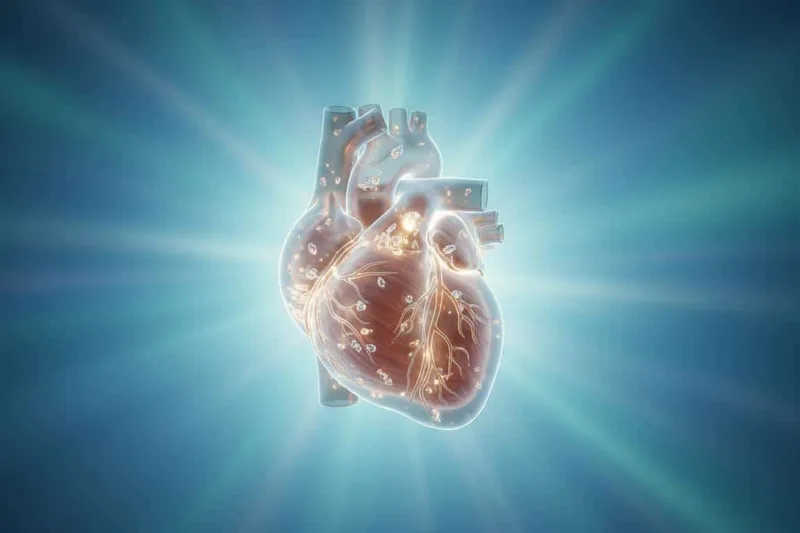
Do you sometimes feel like there's something strange or different about your heart? It might not be a big deal, but it can be a bit of a problem if not detected properly. Today we're going to talk about a heart condition that's a bit complicated, but it's worth everyone being aware of. That's transthyretin amyloidosis, or as doctors call it, `(ATTR-CM)`.
What is transthyretin amyloidosis (ATTR-CM)?
Simply put, `(ATTR-CM)` is a condition that affects the heart, which is related to a protein in our body. Let's explain this a little more, shall we?
What is transthyretin (TTR)?
Transthyretin, or `(TTR)`, is a special protein found in our blood, mainly made by our liver. It works like a courier service in our body. It is this `(TTR)` protein that carries vitamin A (also known as retinol) and the hormone thyroxine, produced by the thyroid gland, to different parts of the body, where they are needed.
What is Amyloidosis?
Amyloidosis is the accumulation of abnormally shaped proteins in various organs of our body. Think of it like a pile of useless things in our house. When proteins are deposited in this way in the heart, we call it cardiac amyloidosis.
These abnormal proteins, like little balls of thread, form fibrous structures called `fibrils` . These `fibrils` end up in the heart, especially in the left ventricle, the main chamber that pumps blood to the entire body. This causes the heart to gradually thicken and stiffen. Instead of being a soft rubber ball, it becomes like a hard, rocky ball. This makes it difficult for the heart to contract properly and pump blood.
What is Cardiomyopathy (CM)?
When the heart becomes stiff and stiff, the heart muscle becomes diseased. This is what we medically call cardiomyopathy (CM). Simply put, the heart muscle becomes weak. This causes the heart to be unable to pump enough blood to the body. This often leads to a serious condition called heart failure.
Remember, in addition to this condition called `(ATTR-CM)`, there is also a type of amyloidosis caused by another protein called `(light chain)`. It is called `(AL) amyloidosis`. It is a different disease from the `(ATTR-CM)` we are talking about today.
This condition (ATTR-CM) is also known by several other names. For example, you may hear it referred to as cardiac amyloidosis, amyloidosis ATTR, or transthyretin cardiac amyloidosis from doctors or elsewhere.
What are the main types of `(ATTR-CM)`?
There are two main types of this ``(ATTR-CM)`` disease.
1. Familial/Hereditary ATTR-CM:
This is one type. Simply put, it is passed down from generation to generation . This type is caused by a change in our genes, a gene mutation. We call this familial or hereditary ATTR-CM. In this condition, the abnormal protein can be deposited not only in the heart, but also in the nervous system and sometimes in the kidneys. There are different gene mutations that affect this among different ethnic groups in the world.
2. Wild-type ATTR-CM:
The other type is wild-type ATTR-CM. No specific genetic cause has been found for this. It occurs spontaneously, without any clear cause. This type also mainly affects the heart and nervous system.
How common is this `(ATTR-CM)` disease?
To be honest, even medical experts cannot say exactly how many people have this `(ATTR-CM)` disease. However, it is believed that this disease may be more common in society than currently thought . In many cases, this disease is not properly diagnosed, that is, it is `(underdiagnosed)`.
The genetic variant may affect some ethnic groups more than others. For example, this genetic mutation is seen more in black people in the United States. However, the important thing is that not everyone who has the mutation will develop the disease.
What are the causes of `(ATTR-CM)`?
The main cause of familial ATTR-CM is a defect, or a change, in the gene that makes the protein TTR that we talked about earlier. Very rarely, someone can develop this gene change for the first time without anyone in the family having had the condition before. This is called a de novo mutation.
Doctors still don't know exactly what causes wild-type ATTR-CM. However, it is most common in men over the age of 65. Therefore, it is thought that aging and, to some extent, gender may be risk factors.
Whatever the cause, what eventually happens is that our bodies start to produce abnormal, irregular `(TTR)` proteins. These abnormal proteins break easily, get tangled up with each other, and `misfold`. This is how they fold, forming small clumps called `amyloid fibrils`. These travel throughout the body through the blood and get deposited in various organs, such as the heart and nerves. Over time, these organs start to get damaged.
What are the symptoms of `(ATTR-CM)` disease?
The symptoms of this `(ATTR-CM)` disease can vary greatly from person to person. Also, the symptoms vary depending on the type of disease.
- Some people with wild-type ATTR-CM may not have any symptoms . If symptoms do occur, they usually begin to appear after the age of 65.
- Familial ATTR-CM symptoms usually first appear after the age of 50. However, sometimes symptoms can begin earlier, in the 20s, or even much later, in the 80s.
Often, these `(ATTR-CM)` symptoms are very similar to the symptoms of `(Heart Failure)`. Think about whether you have been feeling these things lately:
- Shortness of breath: Feeling short of breath, especially when lying down in bed, or even with minor physical activity, such as walking a short distance.
- Feeling full and bloated .
- Confused , having difficulty thinking clearly.
- Coughing, feeling like a hawk (especially when lying down).
- Swelling of the legs, ankles, and feet (edema) (as if they were filled with water).
- Arrhythmia is an irregular heartbeat, sometimes called a fast heartbeat, especially a condition called atrial fibrillation.
- Heart palpitations are a feeling of the heart beating very fast, meaning it feels like the heart is thumping/throbbing .
- Fatigue is feeling tired and exhausted all the time for no reason .
- Feeling dizzy, or like you're going to faint .
What are the possible complications of `(ATTR-CM)`?
Transthyretin amyloidosis (ATTR-CM) can cause heart rhythm disorders, mainly heart failure and atrial fibrillation (Afib).
Additionally, if these amyloid deposits accumulate in the nervous system, the following problems can occur:
- Carpal tunnel syndrome: This is a condition where a nerve in the wrist becomes compressed. Often, the fingers on both hands become numb and painful, and sometimes the pain wakes you up at night.
- Seeing black spots floating in front of the eyes (eye floaters).
- Peripheral neuropathy: This is damage to the nerves in the limbs. This can cause numbness, tingling, pain, and possibly loss of sensation in the limbs.
These deposits can sometimes accumulate in the spine, causing spinal stenosis. They can also build up in various tissues of the body, leading to conditions such as tendon ruptures.
Another important thing is that amyloidosis is sometimes accompanied by a condition called aortic stenosis. This is a narrowing of the aortic valve that carries blood out of the main chamber of the heart. If your doctor has diagnosed you with aortic stenosis, your doctor may also want to check for amyloidosis. This is especially important if you have other symptoms, such as an irregular heartbeat or carpal tunnel syndrome.
How is `(ATTR-CM)` disease diagnosed?
In fact, diagnosing this ``ATTR-CM`` disease can sometimes be a bit challenging. Because, for example, the hereditary type can show symptoms similar to heart disease caused by high blood pressure. Therefore, some people may even receive an ``incorrect diagnosis`` at first.
On the other hand, the wild-type variant does not always show obvious symptoms. Therefore, the disease may not be diagnosed until a serious problem such as heart failure occurs.
There are several main tests that doctors use to diagnose the disease:
- ECG (Electrocardiogram) test: This checks the electrical activity of the heart.
- Heart imaging tests: Echocardiogram (this looks at the shape and function of the heart), MRI scan, PET scan, etc.
- Bone scan / Bone scintigraphy: This can check for amyloid deposits in the body.
- Heart biopsy: This involves taking a very small piece of tissue from the heart and examining it under a microscope to see if amyloid deposits are present.
- Blood tests: These can detect changes or mutations in the `(TTR)` gene.
What are the treatments for `(ATTR-CM)`?
This is the most important question for many people. To be honest, there is no complete cure for ATTR-CM yet. Also, there is no definitive way to remove the amyloid fibers that have already been deposited in the body.
But, fear not! There are now medications that can reduce the build-up of these new harmful proteins and slow the progression of the disease. This is a great relief.
Additionally, separate treatments are provided to control the symptoms caused by the side effects of this disease, such as heart failure, arrhythmias, and neuropathy.
- There are some specific medications that are given for familial ATTR-CM. These work by binding to the TTR protein, stabilizing it, and preventing the protein from misfolding. Examples include Tafamidis (Vyndaqel®, Vyndamax®) and Diflunisal (Dolobid®). Diflunisal is actually an NSAID (non-steroidal anti-inflammatory drug). Sometimes doctors use it 'off-label', meaning that it is not specifically approved for this condition, but because it is approved for other conditions and may be of some benefit to this condition.
- There are other drugs, such as Inotersen (Tegsedi®) and Patisiran (Onpattro®), which work by slowing down the liver's production of these faulty amyloid proteins.
Very rarely, in cases of exacerbation of the disease, the following may be necessary:
- A liver transplant.
- A kidney transplant.
- A left ventricular assist device (LVAD) (a small machine that helps the heart pump blood) is OK, or as a last resort, a heart transplant.
Can the disease `(ATTR-CM)` be prevented?
If you have the gene mutation `(TTR)` that causes familial `(Familial) ATTR-CM`, your children have a 50% chance of inheriting the gene mutation. That means, not every child, but a one in two chance of having a child. However, the important thing to remember is that not every child who inherits this gene mutation will develop `(ATTR-CM)`.
If you have a genetic risk factor like this, it is a good idea to talk to a genetic counselor when you are planning to have children. You can then learn about options such as preimplantation genetic diagnosis (PGD). In this method, embryos created through in vitro fertilization (IVF) are tested for the presence of the defective gene before they are implanted in the uterus. Healthy embryos without defects can then be selected and implanted in the uterus to try to reduce the risk of the child inheriting the genetic condition.
What are the future prospects for `(ATTR-CM)` patients?
Transthyretin amyloidosis (ATTR-CM) is a progressive disease that can eventually lead to serious complications. But don't worry! With new drugs like Tafamidis, as well as new treatments currently in clinical trials, life expectancy and quality of life are improving. One study showed that patients who received the drug Tafamidis for 30 months had a 13% increase in survival.
The most important thing is to regularly see a cardiologist and follow their advice to ensure you are receiving the right medications for your heart.
When should you see a doctor?
If you have one or more of the following symptoms, it is very important to see a doctor as soon as possible and seek advice without ignoring them:
- Sudden confusion or memory problems.
- Seeing things like black spots floating in front of the eyes is called ``Eye floaters''.
- Irregular heartbeat or a feeling of rapid heartbeat (heart palpitations).
- Difficulty breathing.
- Unexplained swelling (edema) and weight gain.
What questions should you ask your doctor?
If you are diagnosed with `(ATTR-CM)`, or suspect you have it, it is a good idea to ask your doctor questions like these to clarify:
- What type of Transthyretin Amyloidosis do I have? (Hereditary or wild-type?)
- What is causing this situation for me?
- Do I have a mutation, or defect, in the `(TTR)` gene?
- What treatments do you suggest for me?
- What are the side effects of these medications?
- Will I need something like an organ transplant in the future?
- What symptoms of complications should I be especially concerned about?
Some of the most important things we need to remember from this story are
Transthyretin amyloidosis, or ``ATTR-CM``, is a condition in which the protein ``Transthyretin`` misfolds and deposits itself in the heart as small ``fibrils.`` This can cause the heart chambers to thicken and weaken, leading to ``cardiomyopathy``.
Some people may have this condition that runs in families (Familial ATTR-CM). This means that there is a genetic influence. For others, the condition may develop with age for no apparent reason (Wild-type ATTR-CM).
Although there is still no cure, there are effective medications and treatments that can help control the new protein deposits, reduce symptoms, and prevent serious conditions such as heart attacks. Very rarely, if the disease progresses, something like an organ transplant may be necessary.
The most important thing is that if you have any unusual symptoms or discomfort related to your heart, do not ignore it as 'it just happened' and seek medical advice immediately. Because, like any disease, the sooner this is diagnosed, the greater the chance of starting treatment, minimizing complications, and living a normal life.
` Transthyretin amyloidosis, ATTR-CM, heart disease, amyloidosis, heart failure, protein deposition, hereditary diseases


💬 Comments (0)
No comments yet. Be the first to share your thoughts here.
Add Your Comment