
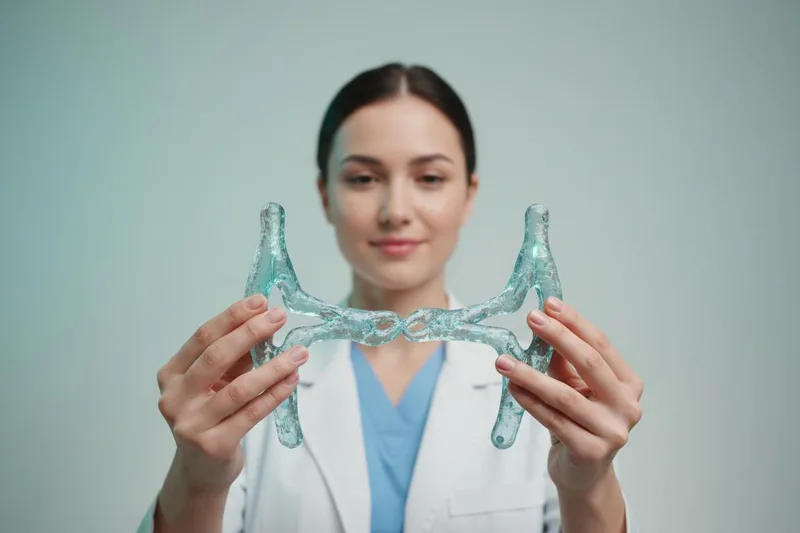
Have you or someone you know had a surgery to remove part of your intestine, or a heart bypass surgery? When that happens, have you ever wondered how to reconnect the two parts that were cut and removed? That's what we call an 'anastomosis' in medicine. This is very important, and it's essential in many surgeries. So let's talk about it in a simple way today.
What is an anastomosis?
Simply put, an anastomosis is a connection between two pathways. Think of it like where two rivers meet, or where two water pipes under a road connect. Our bodies have many naturally occurring connections, or natural anastomoses. For example, the network of our blood vessels (blood vessels) that connect to each other, and our digestive tract - that is, the way the esophagus connects to the stomach, and the stomach to the intestines - these are all natural anastomoses.
But in medicine, we mostly use the word for a connection that is created artificially through surgery. Surgeons often have to connect different blood vessels in the body.
Why is Anastomosis important in surgery?
Think of it this way. If a tube in your body (such as an intestine or a blood vessel) is damaged, doctors have to remove the damaged part. Then they have to reconnect the two remaining healthy ends, otherwise the flow of things (food or blood) through that tube will stop. That's what an anastomosis is for.
At other times, if something gets stuck in a tube, that is, a blockage occurs, a new path has to be created to bypass that blockage. This is called bypassing. In that case, too, a new connection, called an anastomosis, is created between the two parts of the tube on either side of the blockage.
Simply put, it is like repairing a broken road, restoring the function of body parts after surgery.
What are the main surgeries that perform these types of connections?
Anastomosis is used in a variety of surgical procedures. Let's look at some of the most common examples.
| Type of surgery | What simply happens |
|---|---|
| Bowel Resection | When part of the small intestine or colon is removed due to cancer or another disease, the two remaining healthy ends are reconnected to restore the digestive tract. |
| Bypass surgery (Arterial Bypass Surgery) | When a blood vessel in the heart or legs becomes blocked, a new route is created to bypass the blockage. This involves using a piece of vein taken from another part of the body and connecting it to the blocked area, both on the opposite side and on the opposite side. |
| Weight loss surgery (Gastric Bypass) | A new connection is created to bypass part of the stomach and send food directly to the lower part of the intestine. This reduces food absorption and helps with weight loss. |
| Dialysis Access for Kidney Patients | To perform hemodialysis on someone with kidney failure, an arteriovenous fistula is created between an artery and a vein in the arm so that the dialysis machine can be easily connected. This is also an anastomosis. |
| Organ Transplantation | When a new organ, such as a kidney or liver, is transplanted into the body, all the blood vessels and other connections that carry blood to and from that organ must be re-established. Several anastomosis surgeries are performed here. |
What are the main methods of performing anastomosis?
Surgeons make these connections in three main ways. It's like different ways to pair tubes.
- End-to-end anastomosis: This involves joining the open ends of two tubes together, facing each other, to form a single, continuous tube. This method is commonly used when connecting the intestines.
- Side-to-side anastomosis: This involves placing two tubes side by side, making holes in the two sides, and connecting them together. The ends of the tubes are closed.
- End-to-side anastomosis: In this method, the open end of one tube is brought to the side of the other tube and connected.
Are there any situations where an anastomosis is inappropriate?
Yes, sometimes it is not possible to make this connection at the time of surgery. Especially in intestinal surgery, if the tissue parts to be connected are swollen and weakened due to infection or disease, if an anastomosis is done at the time, it is more likely to not heal properly and leak later.
In such cases, doctors give the tissues time to heal and then temporarily create an 'ostomy' . This means that one end of the intestine is brought out through the skin of the abdomen and a bag is attached to collect the stool. Later, after the tissues have healed well, another surgery is performed to remove the ostomy and connect the two intestines together internally (anastomosis).
What are the possible risks of this surgery?
As with any surgery, there are common risks such as bleeding, blood clots, and infection. In addition, there are two major complications that are specific to an anastomosis.
| Complication | What does that mean and what does it do? |
|---|---|
| Narrowing of the connection (Anastomotic Stricture / Stenosis) | Scar tissue that forms as the connection heals can narrow the passageway, making it difficult for food or blood to pass through. However, this can often be corrected without surgery by inserting a device, such as a balloon, into the passageway and dilating it. |
| Anastomotic Leak | This is the most serious complication. If the two ends of the tube are not properly connected, the contents (e.g., stool from the intestines) can leak into the body cavity. This can cause serious infections. If this happens, it needs to be recognized and treated quickly. It may even require further surgery. |
Anastomosis is a very important and essential technique in the world of surgery. It is because of this method that many surgeries are successful and patients are able to lead a healthy life again. Surgeons use various techniques and tools to make these successful and to manage complications if they occur. Therefore, the majority of surgeries are successful without any complications.
Take-Home Message
- Anastomosis is the surgical reconnection of two parts of the body's tubes (such as intestines, blood vessels, etc.).
- This is essential in many surgical procedures, such as bowel removal, bypass surgery, and organ transplants.
- Although these surgeries are often successful, there are small risks, such as leaks or strictures at the connection site.
- If you are undergoing this type of surgery, it is very important to inform your doctor immediately about any fever, unbearable pain, bloating, or other unusual symptoms that occur after surgery. Prompt treatment can prevent serious complications.


💬 Comments (0)
No comments yet. Be the first to share your thoughts here.
Add Your Comment