

It's very normal for you, who are expecting to become a mother, to have a lot of worries and fears about things at this time. Especially when you think about the health of the little one in your belly. Sometimes we ask doctors, or even the people below us, about "genetic diseases" or "chromosomal problems." That's what we're going to talk about today, a condition called Aneuploidy . The name may sound like a big deal, but don't worry. We'll talk about this very simply, in a way that you can understand.
What are chromosomes? Let's understand it simply.
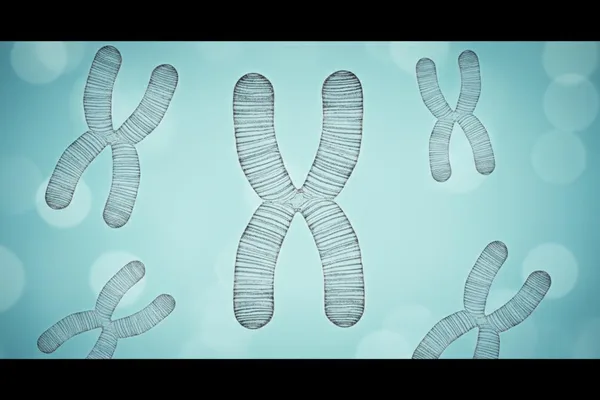
Imagine, every tiny cell in our body has little balls of thread inside it. That's what we call chromosomes . Inside these chromosomes is our DNA, which is extremely important. Just like a program in a computer, this DNA contains all the instructions and information that our body needs to grow, develop, and do everything. We get these instructions from our mother and father. That's why we sometimes look like our mother, sometimes like our father, and sometimes we have a mix of both.
You and I, we all got 23 chromosomes from our mother and 23 from our father, for a total of 46 chromosomes . These are arranged in pairs inside our cells; that is, 23 pairs. Of these, 22 pairs are the same for everyone. The last pair determines whether we are female or male. Usually, if it is a girl, it is arranged as XX , and if it is a boy, it is arranged as XY .
Our body cells are constantly being replaced. When old cells die, new cells are formed. We call this cell division . It's a simple process, like when you 'copy' and 'paste' on a computer. When cells divide in this way, the chromosomes we talked about are exactly the same, and they go into the two new cells that are formed. This happens throughout our lives. Also, when the basic cells that are needed to form a new baby, that is, the mother's egg and the father's sperm, this cell division also happens. However, sometimes there can be small mistakes and deficiencies in this division of chromosomes. The exact number of chromosomes that should be divided may not be the same. If that happens, some cells do not get the exact number of chromosomes that should be divided. That is the main reason for genetic conditions such as (Turner syndrome) or (Down syndrome) .
So, what is this (aneuploidy)?
Simply put, aneuploidy is the absence of the correct number of chromosomes in our cells, which is 46. Most of the time, this condition occurs due to a small error that occurs when the mother's egg or the father's sperm is formed. Then, as the baby begins to develop, it starts with a change in the number of chromosomes.
There are two things that can happen in this:
1. Trisomy: This means that there is an extra copy of one of the chromosomes, resulting in a total of 47 chromosomes.
2. Monosomy: This means that one chromosome is missing, resulting in a total of 45 chromosomes.
When a baby is conceived with this type of chromosome abnormality, the pregnancy often does not end successfully. There is a high risk of miscarriage . In fact, studies have found that this condition (aneuploidy) is responsible for about half of all miscarriages that occur during the first trimester.
What are the main types of aneuploidy?
As we mentioned earlier, there are two main types of aneuploidy: Trisomy and Monosomy.
Trisomy
Trisomy means that the baby has an extra chromosome. This brings the total number of chromosomes to 47. There are several main conditions that can result from this:
- Down syndrome: This is the condition we hear about the most. What happens here is that there is an extra copy of chromosome 21. That means there are three copies of chromosome 21. This is also called (Trisomy 21) .
- (Trisomy 18) Trisomy 18: This is where there is an extra copy of chromosome 18. Previously known as Edwards syndrome , this condition can cause many health problems in babies born with this condition.
- (Trisomy 13) Trisomy 13: This is where there is an extra copy of chromosome 13. Previously known as Patau syndrome , this is also a condition that causes serious health problems.
Monosomy
Monosomy means that the baby receives one less chromosome. This results in a total of 45 chromosomes. The main conditions that result from this are:
- Turner syndrome: This is a sex chromosome disorder. Normally, a female child has two X chromosomes (XX). A female child with Turner syndrome has only one X chromosome. This is called (Monosomy X) . Since there is no Y chromosome, these babies are born as girls.
Who is most likely to be affected by this situation?
In fact, a condition called aneuploidy can affect any baby . It happens randomly. However, some studies have found that the risk increases slightly as the mother ages . For example, a 20-year-old mother has a one in 1,480 chance of having a baby with a chromosomal abnormality, while a 40-year-old mother has a one in 65 chance. However, this does not mean that younger mothers are not at risk. In the case of Turner syndrome, it is said that age does not play a significant role.
That's why, if you're thinking about having a baby, it's so important to talk to a doctor and get genetic counseling . That way, you can be informed about these conditions in advance, understand your risks, and talk about any necessary tests.
How common is aneuploidy? Is there a link to miscarriages?
Aneuploidy and chromosomal abnormalities are more common than we think. They occur in approximately one in every 150 pregnancies . Aneuploidy is also responsible for nearly 50% of early miscarriages . This means that in most cases, nature will terminate a pregnancy with a chromosomal abnormality rather than continuing it.
How can aneuploidy affect pregnancy?
Having an extra chromosome (Trisomy) or a lack of chromosomes (Monosomy) can both affect pregnancy in different ways.
Trisomy:
Most pregnancies with trisomy end in miscarriage . Studies show that about 35% of all miscarriages are due to trisomy. However, very rarely, about 1% of babies are born with trisomy conditions. Among them, the most common are babies with (Trisomy 21) or (Down syndrome). If a baby is born with such a trisomy condition, the baby's survival rate may be lower than a normal baby. This is because of various complications and congenital defects that occur at birth.
Monosomy:
Monosomy conditions are rarer than trisomies. As far as is known, only Monosomy X, or Turner syndrome, results in a live birth. Turner syndrome occurs when only one X chromosome is present. Because there is no Y chromosome, these babies are born as girls.
What are the symptoms of aneuploidy?
The most common symptom of aneuploidy is miscarriage . This is when a pregnancy ends in mid-term. This usually happens during the first trimester, but can sometimes happen later. Symptoms of a miscarriage include:
- Having lower abdominal and back pain.
- Cramps like during menstruation.
- Maybe a little, maybe a lot of bleeding.
Important: If you think you have these symptoms, you should see a doctor immediately.
However, although about 50% of miscarriages are due to genetic causes such as aneuploidy, babies can sometimes be born with this condition. Such babies are more likely to have birth defects , as well as developmental delays and intellectual disabilities .
Why does this (aneuploidy) occur? What are the causes?
Aneuploidy is a genetic defect. Most often, this defect occurs before the mother's egg and the father's sperm unite, that is, during the process of egg and sperm formation. We talked earlier about cell division. Eggs and sperm are formed by a special cell division process called meiosis . Here, a cell with 46 chromosomes divides twice, creating four cells (eggs or sperm) with 23 chromosomes each. Aneuploidy occurs when chromosome pairs do not separate properly during this meiosis, and some eggs or sperm have too many or too few chromosomes.
This is something that happens randomly and unexpectedly . Just like the printer in the office sometimes stops working suddenly, or a sheet of paper prints out of place, our DNA can also have these kinds of mistakes. No one can say when or how it will happen. If you want to know more about this, it is a good idea to talk to a doctor and get genetic counseling.
Are there tests that can detect aneuploidy during pregnancy?
Yes, there are several tests that can be done during pregnancy to detect whether a baby has a condition called aneuploidy. Some of these are screening tests, while others are diagnostic tests.
- Noninvasive Prenatal Testing (NIPT) / Noninvasive Prenatal Screening (NIPS): This is a simple blood test that can be done after 10 weeks of pregnancy. It takes a sample of the mother's blood and looks for the baby's DNA in it to see how likely she is to have conditions like Down syndrome, Trisomy 18, and Trisomy 13. This only tells you the risk, not the exact cause.
- Chorionic Villus Sampling (CVS): This is a test done between 10 and 13 weeks of pregnancy. Here, the doctor takes a very small sample of cells from the placenta and tests it for genetic conditions. This can accurately detect conditions such as aneuploidy. However, it carries a very small risk of miscarriage.
- Amniocentesis: This is a test usually done between 15 and 20 weeks of pregnancy. Here, the doctor takes a small sample of the amniotic fluid surrounding the baby and examines the baby's cells in it. This can also accurately detect conditions such as aneuploidy and some other birth defects. There is also a very small risk of miscarriage.
Before making a decision about these tests, it is very important to talk carefully with your doctor and understand the pros and cons.
How is Aneuploidy treated?
There is no specific treatment for aneuploidy. Many aneuploidy conditions are fatal to the baby, or cause serious problems such as intellectual disabilities or physical defects. Therefore, treatment is aimed at treating the symptoms and complications of each child. That means developing a treatment plan that is tailored to each child and keeps them healthy.
If you are pregnant, there is a risk of miscarriage due to (aneuploidy). A miscarriage is a very difficult experience for a woman, both physically and emotionally. If this happens, you need to give yourself time to heal.
If you're thinking about starting a family, talk to a doctor about genetic testing and ways to increase your chances of a successful pregnancy.
Is there anything we can do to reduce the risk of aneuploidy?
Aneuploidy cannot be completely prevented because it is a random genetic defect. However, there are several things we can do to reduce the risk of a baby having a birth defect:
- Eating a balanced diet: Eating nutritious foods is very important during pregnancy.
- Get genetic testing before planning to get pregnant: Especially if someone in your family has a genetic disease, or if you are over 35 years old.
- Completely abstain from smoking and alcohol consumption.
- Taking the prenatal vitamins recommended by your doctor correctly: especially vitamins containing folic acid.
If you have a miscarriage due to aneuploidy, can you get pregnant again?
Yes, most of the time it is possible . The chance of a miscarriage due to aneuploidy occurring again is very low. Because, as we have said before, this is a random occurrence. Many women have had healthy babies after a miscarriage due to aneuploidy. However, it is a good idea to talk to your doctor about your risks and the tests that can be done before trying to get pregnant again.
What can you expect if you have a child with aneuploidy?
Often, when a condition (aneuploidy) is diagnosed, parents have to face a miscarriage. This is a very sad experience. But what is important to understand is that this happened because of a genetic defect that occurred during conception, not because of anything the mother did during pregnancy. Your doctor will help you recover physically and emotionally after a miscarriage.
If a child is born with aneuploidy, that child may face developmental delays , short stature, congenital defects, and intellectual disabilities throughout their life. Therefore, it is very important to regularly check the health of the child with a doctor and provide the necessary treatment and support. There is no complete cure for aneuploidy.
When should you see a doctor?
- If you have symptoms of a miscarriage (lower abdominal pain, backache, bleeding), see a doctor immediately. He/she will tell you whether you need to go to the hospital or not.
- After a miscarriage, if you experience any of these symptoms, see a doctor immediately, as they could be a sign of an infection:
- If you have a cold and fever (Chills, Fever)
- If you are bleeding heavily (Heavy bleeding)
- If you have frequent pain and discomfort
What are the important questions to ask your doctor?
When you talk to a doctor about this, don't forget to ask these questions:
- Am I at risk of having a child with a genetic disease?
- After a miscarriage due to aneuploidy, is my body healthy enough to have another baby?
- If I am at risk of having a child with a genetic disease, do you recommend additional prenatal screenings?
What is the difference between (Aneuploidy) and (Polyploidy)?
Aneuploidy and polyploidy are both genetic conditions that result from a change in the number of chromosomes in a baby's DNA. But there is a slight difference.
- Aneuploidy is the presence of one extra chromosome (e.g. 47) or one less chromosome (e.g. 45). Rarely, multiple chromosomes can be missing/added.
- Polyploidy is the condition of having an extra set of chromosomes (i.e. 23 chromosomes). For example, if you inherit 23 chromosomes from your mother and 46 chromosomes from your father (i.e. twice the normal number), it is called Triploidy. These are very rare and often fatal conditions.
Finally, things to keep in mind (Take-Home Message)
Aneuploidy can be scary when you hear about it. But remember, it's often a random occurrence, through no fault of your own. Just like the computer we use suddenly stops working, even when our cells divide, small mistakes can sometimes happen.
The most important thing is to know that you are not alone. There are doctors, family, and friends who can talk about this, give you advice, and help you. If you are planning to get pregnant, or are already pregnant, talk openly about this with your doctor. Get genetic counseling. This will help you understand conditions like aneuploidy, your risks, and the tests that can be done. Also, if you have to face a traumatic experience like a miscarriage, don't hesitate to get the support you need to recover physically and emotionally from it.
We hope everything goes well!
` Chromosomes, aneuploidy, genes, pregnancy, miscarriage, Down syndrome, Turner syndrome, trisomy, monosomy, genetic testing, birth defects, DNA, cell division




💬 Comments (0)
No comments yet. Be the first to share your thoughts here.
Add Your Comment