
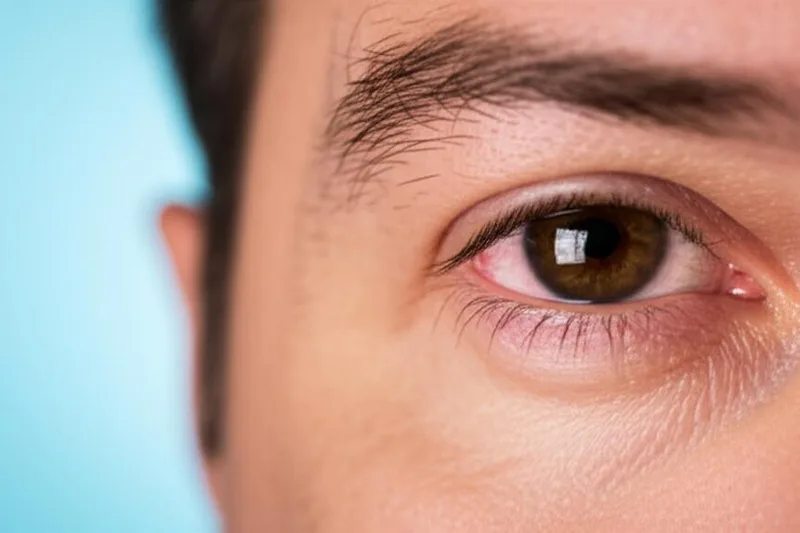
If you have Ankylosing Spondylitis (AS), a type of arthritis that affects the spine, you probably know all too well about back pain and morning stiffness. It can really affect your life. But did you know that this back problem can also affect your eyes? Yes, it's true. Sometimes this condition can cause inflammation inside the eyes. We call this uveitis . If it's not treated properly, it can damage your vision and, in some severe cases, even lead to blindness. That's why it's so important to be aware of this.
What is Uveitis ?
Simply put, uveitis is a general term for a number of inflammatory conditions that occur inside the eye. It gets its name because it primarily affects the uvea, the middle layer of the eye. However, it can actually occur anywhere inside the eye.
Doctors usually classify this condition of uveitis based on where it occurs within the eye. Let's take a look at how that works.
| Type of uveitis | Affected part and description |
|---|---|
| Anterior Uveitis (Also called Iritis) | This occurs in the front of the eye . That is, in the area of the iris, which gives the eye its color. This type is most common in people with Ankylosing Spondylitis. If not treated properly, it can lead to conditions such as cataracts, glaucoma, and retinal edema. |
| Intermediate Uveitis | This occurs in the jelly-like substance called the vitreous inside the eye. This part is connected to the light-sensitive layer of cells inside the eye, the retina. |
| Posterior Uveitis (Also called Choroiditis) | This attacks the back of the eye . It can affect the retina and the optic nerve that connects the eye to the brain. |
| Panuveitis | This is the most severe type. As the name suggests, it affects all parts of the eye . If not treated immediately, there is a high risk of blindness. |
Why do people with AS develop this?
It is estimated that about one in two people with ankylosing spondylitis will develop uveitis at some point in their life, making it a very common complication of AS.
Imagine, sometimes your eye doctor may be the first to diagnose you with AS. That's because the same inflammatory process in your body that causes your back pain also causes inflammation in your eyes and other parts of your body.
Some experts believe that this inflammation starts where you least expect it - in your gut. Trillions of microorganisms called microbes live in our gut. These microbes perform many important functions for our bodies. One of their main functions is to regulate our immune system. When these microbes are out of balance, our immune system becomes compromised.
In this way, there is a theory that uveitis can start when bacteria in the gut give the wrong signal to our immune system's T cells to "go and attack the eyes." But the story doesn't end there. Many people with AS and anterior uveitis have a gene called HLA-B27 . Having this gene greatly increases the risk of eye inflammation.
What are the symptoms of this?
Take great care of your eyes. These symptoms can appear suddenly in one or both eyes. If you see these, you should definitely be concerned.
- Redness of the eyes: The eyes turning blood red.
- Pain: A sharp pain coming from inside the eye.
- Blurred vision: Not seeing clearly, appearing like fog.
- Sensitivity to bright light: Difficulty seeing in sunlight or outside lights, eyes turning blue.
If you notice these symptoms, don't ignore them thinking, "It's just an eye injury." This is not a normal eye injury. It's very important to see a doctor as soon as possible and have your eyes checked.
Sometimes uveitis occurs once and never recurs. For others, it may occur once every few years. For others, it may be a chronic condition that requires long-term treatment.
How is it treated?
The main goal of uveitis treatment is to control the inflammation as quickly as possible, because the more inflammation there is, the more damage to the eye.
For anterior uveitis, doctors typically prescribe two types of eye drops:
1. Steroid eye drops: These reduce inflammation.
2. Dilating eye drops: These reduce pain inside the eye and provide rest to the eye.
For other types of uveitis, you may need to take steroid pills or have injections around the eye. In some severe cases, doctors may implant a small capsule containing steroids into the eye.
Very important: Steroids are powerful drugs. They can cause side effects such as glaucoma and cataracts. Therefore , never use or stop them without your doctor's advice. Steroids are usually not given for more than 3 months. As your doctor gradually reduces the dose, you may be started on a different medication.
Are there other ways?
Some experts believe that maintaining a healthy population of beneficial bacteria in the gut can help control uveitis. You may want to discuss this with your doctor.
- Probiotics: These are beneficial bacteria. They are found in fermented foods like yogurt and yogurt. They can also be taken as supplements.
- Prebiotics: These are plant-based fibers. They feed the good bacteria in our intestines, strengthening them. They are found in foods like bananas and onions.
There are also supplements that can help with gut health, such as butyrate. Also, eating a diet that is more plant-based (vegetables, fruits, and herbs) can help.
But remember, all of this should only be done after talking to and getting approval from your treating doctor. He or she will decide the treatment that is best for you.
Take-Home Message
- Ankylosing Spondylitis (AS) is not just a disease that affects your spine. It can also affect your eyes.
- This inflammatory condition of the eyes is called Uveitis .
- Always be aware of symptoms such as eye redness, pain, blurred vision, and sensitivity to light.
- If you notice any of these symptoms, see a doctor without delay. Prompt treatment can save your vision.
- Follow the treatment your doctor gives you exactly as he or she tells you. Be especially careful when using medications like steroids.


💬 Comments (0)
No comments yet. Be the first to share your thoughts here.
Add Your Comment