
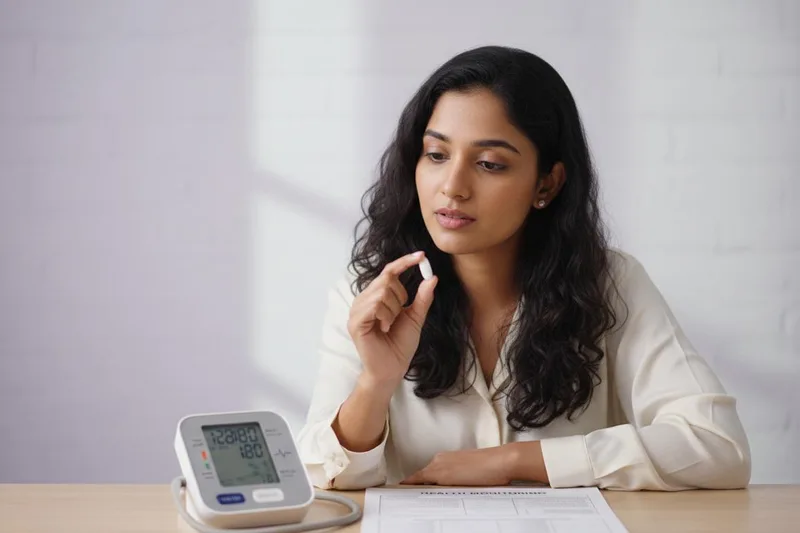
A common health problem for many people in our country is "high blood pressure". Perhaps you, a family member, or a friend is taking medication for this condition. But what exactly does this medication do? Why is each person given a different type of medication? Why does the pressure sometimes not go down even after taking medication? Today, let's talk about all this very simply and in a friendly way.
What are these antihypertensive medications?
Simply put, these are medications that help control your high blood pressure and bring it back to normal. These medications work in the same way. Think of your blood vessels as pipes carrying water. When your blood pressure increases, the pressure inside these pipes increases.
Some medications work by widening these "reeds" or blood vessels . This allows blood to flow more easily without getting clogged. Other medications help the body get rid of excess fluid and salt through urine . Another type of medication blocks hormones that are naturally produced in the body that increase blood pressure.
The most important thing is that your doctor will choose your medication based on your age, gender, whether you have other medical conditions, and how high your blood pressure is. So the medication you are given may be completely different from the one your neighbor is given. Everyone's situation is different.
Often, more than one medication is needed to control your blood pressure. Your doctor may start with one medication and gradually add more medications to control your blood pressure. Also, if a medication is not working or is causing intolerable side effects, they may stop that medication and start you on a different medication.
Why take medicine for blood pressure? What are the benefits?
The main purpose of taking medication for hypertension is to protect your heart. When your blood pressure increases, your heart has to work harder than normal to pump blood. It's like a motor pumping water through a partially clogged pipe. Over time, this can weaken your heart.
By taking medication for blood pressure, we reduce this unnecessary burden on the heart. That way,
- The risk of heart attack is reduced.
- The risk of stroke is reduced.
- The risk of kidney failure is reduced.
- The risk of heart failure is reduced.
These medications make it easier for your heart to pump blood to your body's vital organs 24 hours a day.
Types of medications for blood pressure and their side effects
There are several types of medications that are given for blood pressure. Some of the first-line medications that doctors choose are Thiazide diuretics, ACE inhibitors, and Calcium channel blockers. Let's look at some of the main types of medications.
| Type of medicine | How it works (in simple terms) | Common side effects |
|---|---|---|
| Diuretics (Thiazide, Loop, Potassium-sparing) | The kidneys remove excess fluid and salt from the body through urine. It also helps to dilate blood vessels. | Low/high potassium/magnesium levels, dizziness, elevated uric acid levels. |
| ACE inhibitors | It inhibits the production of angiotensin II, a hormone that causes blood vessels to constrict. | Dry cough, increased potassium levels, dizziness, angioedema (swelling of the face and neck - this is dangerous, tell your doctor immediately). |
| ARB-type medications (ARBs) | It blocks the hormone angiotensin II from acting on blood vessels. | Increased potassium levels, dizziness. |
| Calcium channel blockers | It prevents calcium from entering blood vessels and relaxes the muscles in those vessels. | Headache, dizziness, increased/decreased heart rate, swelling of the lower legs. |
| Beta-blockers | Reduces the effects of hormones that increase blood pressure during stress and calms the heartbeat. | Fatigue/tiredness, dizziness, decreased heart rate, fainting. |
My blood pressure is still high even though I'm taking medication. Why is that?
This is a problem that many people have. There are several reasons why your blood pressure may not be under control, even if you take your medication correctly.
- You may need more than one medication: Sometimes your blood pressure cannot be controlled with just one medication. You may need two, three, or even four medications.
- Not taking your medicine correctly: It is very important to take your medicine at the same time every day . If you miss a day or two, your blood pressure readings may change.
- Improper diet: If you eat foods high in salt (pickles, dried fish, sauces, canned foods, instant noodles), the effectiveness of the medication may be reduced.
- Other medical conditions: Sometimes high blood pressure can be caused by another medical condition. We call this ``Secondary Hypertension``. For example, it can be caused by hormonal problems ``Hyperaldosteronism`` or narrowing of the blood vessels that supply blood to the kidneys ``Renal artery stenosis``. If your blood pressure is still too high despite taking several medications, talk to your doctor about this.
- Other medications: Other medications you are taking (some painkillers) or herbal remedies may also reduce the effectiveness of blood pressure medications.
When should you see your doctor?
- If you have unbearable side effects from your medication (e.g. persistent cough, severe dizziness, swelling in your legs), never stop taking your medication on your own. You can talk to your doctor and switch to another medication.
- If the readings are too high or too low when you measure your blood pressure at home.
- If you are planning to become pregnant, inform your doctor as soon as you plan to do so, as there are medications that are safe and medications that are not.
Especially in the elderly, sometimes when you stand up suddenly, your blood pressure drops (orthostatic hypotension), causing you to feel dizzy and fall. This medication may make this condition worse. So, get up slowly and carefully when you stand up.
What is a good lifestyle?
Along with taking medication, adopting a healthy lifestyle is also essential for controlling blood pressure.
- Reduce salt consumption: Stop adding salt to your food and eating foods high in salt.
- Limit alcohol consumption: Alcohol increases blood pressure.
- Regular exercise: Do simple exercise like walking for at least 30 minutes a day.
- Control body weight: Weight gain directly affects blood pressure.
Take-Home Message
- High blood pressure is a silent killer. If left untreated, it can lead to serious conditions such as heart attack, stroke, and kidney disease.
- Take your medicine exactly as prescribed by your doctor, at the right time, every day . Never change or stop the dose of your medicine on your own.
- Talk to your doctor about any side effects you may experience from your medication. He or she can help you choose the best medication for you.
- It is very important to follow a healthy lifestyle (low-salt diet, exercise, weight control) as well as taking medication.
- Attend medical checkups and blood tests on time and monitor your condition.




💬 Comments (0)
No comments yet. Be the first to share your thoughts here.
Add Your Comment