
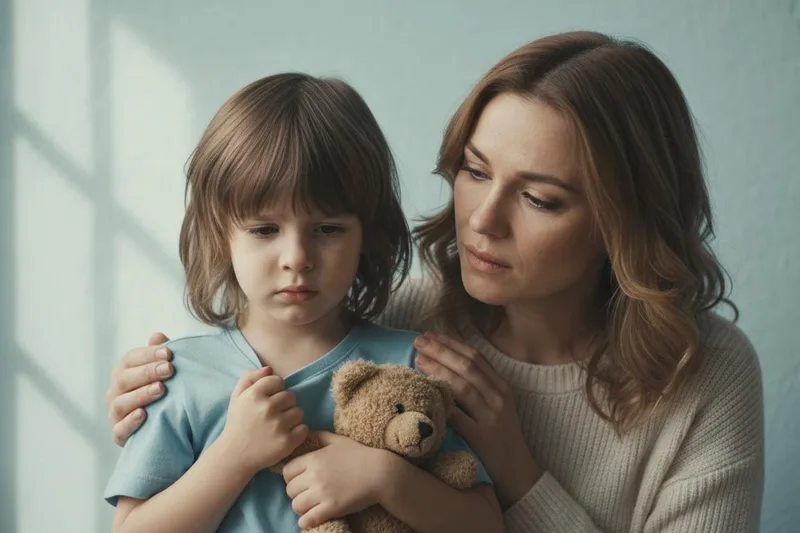
Mom, Dad, your little one probably gets scared of little things sometimes, right? That's normal. But there are some children, and their fear and anxiety increase to the point that it affects their daily activities. Today we are going to talk about this condition called childhood anxiety, or ``Anxiety''. If we understand this properly, it will be easier to help our children.
Are fear and anxiety the same thing? What is the difference between normal fear and anxiety that is at the level of a disease?
First, let's understand what fear and anxiety are. Fear is our response to a real danger. Imagine that a dog suddenly jumps out at you while you are walking down the street, and that's when you feel scared. That's fear. Anxiety is a feeling of unease and pressure about a possible danger or something uncertain. Being a little afraid of new things is normal in childhood. It shows that children are learning to solve problems on their own. As parents, we can help children understand this fear and anxiety and overcome them.
However, some children experience anxiety that goes beyond the normal range. Doctors say that about one in five children may develop an anxiety disorder . When a child has an anxiety disorder, they may avoid things, get very upset over small things, cry, or have tantrums. Sometimes they are constantly worried that something will happen. They may also experience physical symptoms such as stomach aches, headaches, vomiting, difficulty breathing, and insomnia.
Are there different types of anxiety in children?
Yes, there are several types of anxiety that affect children. Let's take a look at the main ones:
1. Separation Anxiety Disorder
This is something that many mothers are familiar with. Usually around 8-12 months, babies become afraid of leaving their mother or caregiver. They become afraid of strangers. This is a normal part of a child's development. This usually subsides as they start preschool.
However, `(Separation Anxiety Disorder)` is a slightly more serious condition. If your child shows excessive fear and anxiety about leaving their mother or father, going to school, being away from home, or not wanting to sleep alone, this could be the condition. If your child seems to be more distressed or anxious about these things than other children, it is a good idea to talk to a doctor.
Imagine, Nilu's daughter, Senuri. She is now six years old. She still cries a lot when she leaves her mother at the school gate and goes to class. She is fine as long as she stays calm until she sees her mother. When her mother leaves, she cries all day and doesn't eat. This could be a symptom of `(Separation Anxiety Disorder)`.
2. Specific Phobias
Fear protects us from danger. So it's normal for children to be afraid of certain things. Maybe your child is afraid of lightning, clowns, or something else specific. However, `(Specific Phobias)` are fears of something that are much more extreme than the actual danger. For example, a child might run away and hide when they see a dog, or they might spend days thinking about it and being afraid of it.
3. Social Anxiety Disorder
This is when there is an extreme fear of being judged or rejected in front of others, in society. Your child may not want to give speeches or participate in concerts. Or they may feel very uncomfortable talking to others at school, in other familiar places, or with new people. Some children may even avoid social situations altogether.
4. Generalized Anxiety Disorder
In this case, the child becomes excessively anxious and fearful about many different things in everyday life. He also worries about the future more than other children his age. He may have many worries about one thing at a time, or those worries may change from time to time. But he is always worried about something.
5. Panic Attacks (Panic Disorder)
Children with this condition experience sudden, intense fear and anxiety, along with physical symptoms . Think of it as a racing heart (`Heart Palpitations`), dizziness, and difficulty breathing (`Dyspnea`). These ``Panic Attacks`` can come on suddenly for no apparent reason. They last from a few minutes to a few hours and then disappear.
How common is this anxiety among children?
Childhood anxiety is actually more common than you might think. It affects between 15% and 20% of children and young people. Also, about one in three young people between the ages of 13 and 18 have anxiety. It is slightly more common among girls.
How do I know if my child has anxiety? What are the symptoms?
As a parent, it can be hard to know exactly what's going on in your child's mind, isn't it? Some children will express their anxiety in words. They might say something like, "I'm scared to go to school because I don't think I'll ever see you again." But some children don't know how to describe their feelings. But when children are anxious, they show it through their behavior. Look for signs like these in your child:
- He is more anxious and cries more than other children his age.
- They often say, "I don't feel well." They may say things like, "My stomach hurts," "My body hurts," or "My head hurts."
- I have trouble sleeping, wake up from nightmares, and am afraid to sleep alone.
- It's hard to stay calm, to stay in one place (a restless state).
- Gets angry easily.
- It's hard to focus.
- They say 'I'm not hungry', or they always say 'I'm hungry'.
- Tremor.
- They say they can't go to school.
- Going to the washroom frequently.
Why do children experience anxiety like this? What are the causes?
Some children are born with a slightly more sensitive nature. They have a harder time dealing with changes and strong emotions. These children may have a genetic predisposition to develop anxiety or a family history of anxiety . This means that if the parents have anxiety, there is a small chance that the child will also have it.
In addition, anxiety can also be triggered by stressful life events . Some children have to deal with a lot of stressful experiences from a young age. For example:
- Death of someone close.
- Moving to a new home or a new school, especially if it happens frequently.
- Not getting enough food and drink.
- Not being able to live in a safe place.
- Permanent inability to attend school.
- Parents fight, separate, and divorce.
- Bullying, abuse, and neglect from others.
What is the main cause of anxiety in children?
It's hard to say for sure what the main cause of childhood anxiety is. Fear is a normal part of growing up. Some children manage it well. However, in the case of children who have anxiety that affects their daily lives, it is thought that genetics, biological factors, and family history play a role.
What complications can occur if this anxiety condition is left untreated?
If a child's anxiety is not treated properly, they are at greater risk of developing depression and substance use disorders in the future. They may have difficulty with schoolwork and going to school. They are also at greater risk of suicide . These are scary things to hear, but remember that there are treatments. Get your child checked regularly by your child's doctor. If you think your child is harming themselves, seek medical advice immediately.
How do doctors determine if a child has anxiety?
To find out for sure if your child has anxiety, the doctor or nurse will talk to you and your child together. They will ask you about your child's behavior and how you know they are anxious. They will ask your child about the symptoms they are experiencing and when they are experiencing them. You may be asked to fill out questionnaires (`surveys`) . The doctor may also try to get more information about their symptoms from their child's teachers.
Then, they look for other causes for the child's symptoms. If no other cause is found, and the child's anxiety has been causing them distress and affecting their daily life for about six months , they may be diagnosed with an anxiety disorder.
How to treat anxiety in children?
There are two main approaches to treating anxiety in children: Cognitive Behavioral Therapy (CBT) and Medication Therapy. Both of these treatments can be effective on their own, but they appear to be even more effective when used together.
Cognitive Behavioral Therapy (`Cognitive Behavioral Therapy` - `CBT`)
`(CBT)` is a method of teaching children coping skills to help them deal with anxiety and control it . Simply put, it involves practicing small steps to calm the body's responses, think differently, and face fears. Children can learn these `(Coping skills)` either individually (`Individual Therapy`) or in groups (`Group Therapies`). Parents can also learn about these methods. Then it is easy to help children practice these skills at home.
Imagine that Senuri, whom we talked about earlier, has started CBT therapy. The therapist teaches Senuri how to breathe deeply when she feels scared and how to play games to calm her down. Gradually, she practices increasing the amount of time she spends in class without her mother. The mother is also taught these techniques to encourage Senuri at home.
Medicines (drugs)
Your child's doctor may prescribe medications from the Selective Serotonin Reuptake Inhibitor (SSRI) class, such as:
- Fluoxetine (e.g. Prozac®)
- Paroxetine (e.g., Paxil®, Pexeva®)
- Sertraline (e.g. Zoloft®)
If these don't work or don't work for your child, your doctor may prescribe a medication called a Serotonin and Norepinephrine Reuptake Inhibitor (SNRI):
- Duloxetine (e.g. Cymbalta®, Drizalma®, Irenka®)
Side effects of medications for childhood anxiety
If your child experiences any of these side effects , you should inform the doctor immediately:
- Allergic reaction ( e.g., hives, difficulty breathing)
- Blood in the stool.
- Fast or irregular heartbeat.
- Fainting, dizziness, chest pain, or difficulty breathing.
- High fever.
- Sudden change in vision or eye pain.
- Suicidal thoughts or worsening mental state.
In addition, medications for childhood anxiety can have minor side effects that usually don't require medical attention and go away in a few weeks . These can come back when the dosage is changed. Your child's doctor will explain all of this to you and answer any questions you may have. Some of these minor side effects include:
- Changes in appetite.
- Difficulty sleeping or drowsiness.
- Dry mouth.
- Headache.
- Tremors.
- Stomach upset, nausea, or diarrhea.
How soon will my child feel better after starting treatment?
Many families start with CBT therapy first. Additional therapy is added if needed. CBT therapy, whether done alone (with parents involved) or in a group, can help children quickly learn ways to reduce and cope with anxiety. Because children learn these things quickly, they can start to feel better and gain confidence after just a few sessions. But sometimes, even if CBT helps reduce symptoms a little, more help is needed to fully control anxiety. In such cases, medication is important.
Medications like SSRIs and SNRIs take a while to start working. Also, not all medications work the same for everyone. Your child's doctor will try one medication for a short period of time (usually a few weeks to a few months) to see if it helps. If it doesn't help, he or she may try another medication.
If my child has anxiety, what should I expect?
If your child has an anxiety disorder, they may act out of control and get angry. They may cling to you and tell you they can't leave the house. Although treatment for childhood anxiety takes time to work, symptoms usually improve. With treatment, many children with anxiety can participate in activities they enjoy, make friends, complete schoolwork, and enjoy life.
However, at certain times in a child's life, their anxiety may flare up again. At that time, it may be necessary to change the dosage of their medication or have more therapy sessions until the anxiety symptoms are well controlled.
How can I, as a parent, help my child with anxiety?
As a parent, you may not always be able to control the stressful events in your child's life. But you can help improve their mental health by ensuring the following:
- Encourage daily exercise .
- Create a safe, supportive environment at home and at school.
- Get enough sleep .
- Give a good balanced diet .
You can also teach your child meditation techniques and deep breathing exercises to help them calm down. Encourage your child to take small steps to overcome common fears and anxieties. For example, ask them to go somewhere social when you are away, or turn off the lights and try to calm down for a few minutes. This builds confidence and helps children develop coping skills.
When should you tell a doctor about your child's anxiety?
If your child is showing signs of anxiety, they don't go away, or they're not doing things you know they can do (e.g., going to the bathroom by themselves, leaving the house) , you should definitely talk to a doctor.
Most importantly: If your child is showing signs of suicide, get help immediately! That is, if he says things like 'I feel like dying', 'There's no point in living', or if he seems to be trying to harm himself, seek immediate medical attention. In Sri Lanka, you can also call the 1926 National Mental Health Helpline.
Caring for a child with anxiety can be difficult. It takes a patient, strong parent/caregiver to look at the child's demands and tantrums and understand that the cause of the behavior is anxiety. Sometimes it can take a while to find the right treatment for your child, but that's okay, don't give up.
Take time to think about yourself too. You may be feeling stressed and anxious without even realizing it. Just as you see your child's anxiety, your child sees your anxiety, and it affects them too.
Final Take-Home Message
Okay, so I hope what we talked about today has helped you remember some of the most important points.
- Childhood anxiety is a real condition. It's not the child's fault, nor is it your fault.
- There is a difference between normal fear and an anxiety disorder. If it is affecting your child's daily life, be concerned about it.
- Be aware of the different types and symptoms of anxiety.
- With the right treatment (CBT, medication if necessary), this condition can be well controlled. Don't be afraid.
- As a parent , your love, support, and patience are invaluable to your child.
- Don't delay seeking medical advice if necessary, especially if you are concerned that your child may harm themselves.
- Take care of your mental health too.
If your child has a problem like this, you are not alone. There are places to get help. The most important thing is to act quickly.
` Child Anxiety, Anxiety, Children's Fears, Mental Health, Separation Anxiety, Social Anxiety, CBT




💬 Comments (0)
No comments yet. Be the first to share your thoughts here.
Add Your Comment