
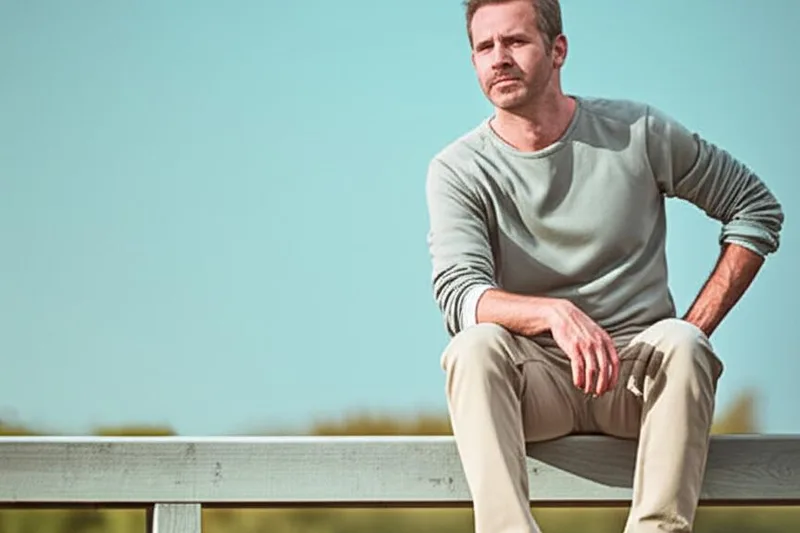
At the best time of your life, when you're in school, on campus, in a good job, and dreaming of having a family, do you constantly experience a constant, excruciating back pain that doesn't make sense? Perhaps this pain starts in your hips and gradually travels up your spine, squeezing your neck? This is often the beginning of a condition called Ankylosing Spondylitis (AS). It affects many young people who are just starting out in life. But there are those who, instead of giving up on life because of this pain, fight it and make their dreams come true. Today we will talk about a few such people.
'I appreciate even the little things now' - Jake's story
Jake was a good athlete in school and on campus. So he initially blamed his severe, chronic pain on sports injuries. But one day, he was listening to a podcast about autoimmune diseases.
"The symptoms mentioned in it are exactly the same as the ones I've always had," Jake says.
Simply put , an autoimmune disease is when the immune system, which is supposed to protect our body, mistakenly starts attacking our own body's cells. Ankylosing Spondylitis is one such disease.
Two weeks later, Jake was diagnosed with AS when he saw a rheumatologist. It was a relief to finally know what had caused his years of suffering, but the pain was still there. Some days, the pain was so bad that he had to be hospitalized five or six times during his first semester of law school.
But Jake didn't give up. Someone on the podcast said that he felt great relief when he switched to a meat-only diet. Jake decided to try it.
"I followed the diet exactly. I only ate meat and water. Surprisingly, within a week, the pain I was feeling was much less. My skin was red from the inflammation, and that was gone too," says Jake.
But here's something important that we all need to understand. This type of diet is not right for everyone. It's not a good idea to jump into something like this without talking to your doctor. Because you might end up depriving your body of many of the nutrients it needs. So , be sure to consult your doctor before doing anything.
Jake had another problem. His pain increased when he sat in a chair in class all day. So he found a solution for that too. It was a daily exercise routine he created for himself.
- Every morning, I spend 15 minutes in a cold pool with cold water up to my neck.
- Then, he stretches his psoas muscle, a long muscle that runs from his lower back to his thigh.
- I also do yoga and deep breathing exercises.
"I couldn't breathe properly for a while. It was only when I could stretch my muscles a little that I realized it," Jake says. "It hurts a lot when I do this stretching. But the relief I feel afterwards is so much more than worth it."
Jake says that living with pain is not easy. But having overcome that challenge, he now thinks about life differently. "I now appreciate even the little time I can spend with my family without pain. I don't take anything for granted anymore."
'I have to keep moving forward' - Jess's story
Jess is a young woman from Canada. She was 18 years old when she first started experiencing pain in her right hip and buttock while on a trip with friends. At first, she thought it was because she had been sitting in the van too long. But after a few days, the pain became so severe that she couldn't even get out of bed.
It took doctors four years to figure out exactly what it was that Jess had. Because the condition is less common in women, it can sometimes be a late diagnosis. Jess was very depressed while she was trying to figure out what it was. But when she found out what she had, Jess felt a huge sense of relief.
Today, Jess is taking a medication prescribed by a doctor to control her inflammation, which blocks a protein called interleukin-17 (IL-17), which causes inflammation in the body.
"That medicine is really amazing. I only feel pain now the week before my next injection," she says.
Jess has realized that the best way to live with this pain is to exercise.
"I lost four years of my young life due to pain and immobility. So I promised myself that while I was still able to move, I would make the most of it," says Jess.
She joined an exercise program with physical therapists at a hospital and is now able to exercise on her own.
- She does exercises every day to strengthen her lower back and core muscles.
- Doing yoga exercises like `child's pose`, which stretches the spine.
- Trying to maintain proper posture.
She has also decided to eat foods that reduce inflammation (vegetables, fruits, fish, nuts), avoid being around people who smoke, and stop drinking alcohol completely.
"I know that one day my spine may fuse completely, and my medication may stop working. But I always ask myself, 'What else can I do?' I tell myself that I have to keep moving forward, literally, always moving forward."
What methods did these people use to control pain?
Jake and Jess used different methods to manage their pain. Let's look at some of them in a table.
| Method / Strategy | How does that help? | Who used it? |
|---|---|---|
| Medicines prescribed by the doctor | It controls the chemical processes in the body that cause inflammation and pain. | Jess |
| Exercise and Stretching | Reduces joint and muscle stiffness, increases flexibility, and builds strength. | Jake and Jess |
| Cold Therapy | Temporarily reduces muscle inflammation and pain. | Jake |
| Changes in diet | For some, symptoms can be controlled by reducing inflammatory foods ( only under medical advice ). | Jake and Jess |
| Lifestyle changes | Avoiding things that can aggravate the disease, such as smoking and alcohol. | Jess |
Things you can do
If you have these symptoms, the first thing you should do is not be afraid and see a qualified doctor. It would be better if you could see a rheumatologist, a doctor who specializes in bone and joint diseases.
- Correct diagnosis: The most important thing is to first find out exactly what the condition is.
- Medical treatment: Your doctor will prescribe painkillers, anti-inflammatory drugs, or biologic drugs that are right for you.
- Physiotherapy: Learn which exercises and stretches are right for you with the advice of a physiotherapist.
- Always talk to your doctor: Before starting a new exercise, diet, or anything, talk to your doctor to make sure it's right for you. Not everything you see on the internet may be right for you.
Ankylosing Spondylitis is a challenge. But it's not the end of life. With the right treatment, exercise, and a positive attitude, you too can control this pain and pursue your dreams.
Take-Home Message
- Ankylosing Spondylitis (AS) is a real condition that affects the spine and joints at a young age. It's not something you've imagined.
- If you have persistent unexplained back pain, especially if it feels like your back is stiff when you first wake up in the morning, see a doctor immediately.
- Getting an accurate diagnosis is the first and most important step in treatment.
- Pain management is not one thing. It's a combination of medications, physical therapy, exercise, and lifestyle changes.
- Exercise is essential for living with this disease, but be sure to talk to your doctor before starting a new exercise routine.
- You are not alone. There are many people who are living successfully and happily with this condition. So stay strong.


💬 Comments (0)
No comments yet. Be the first to share your thoughts here.
Add Your Comment