
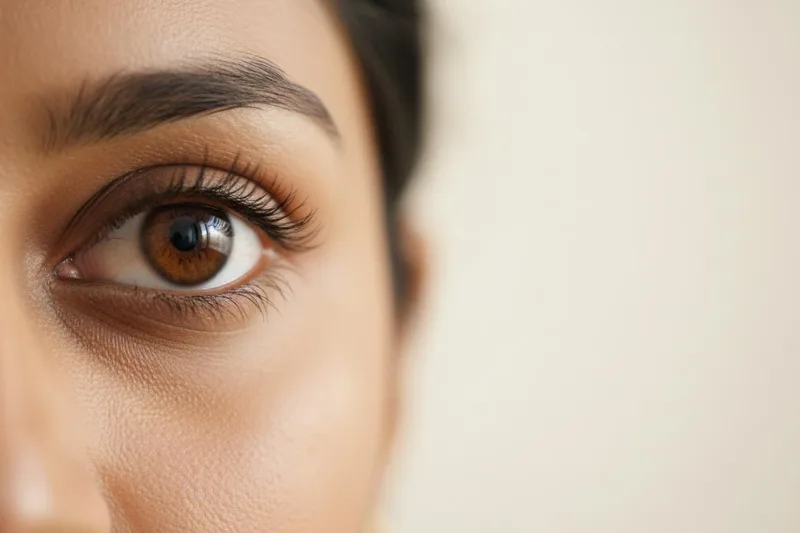
Have you ever looked at your eyes in a mirror? The small black circle in the middle of our iris, called the pupil, constantly expands and contracts depending on the light around it. It shrinks when there is bright light and expands in the dark. But sometimes this process doesn't work properly. Today we're talking about one such rare, but very important health condition. It's called the Argyll Robertson Pupil.
Simply put, what is this Argyll Robertson Pupil?
Argyll Robertson Pupil is a special behavior seen in the pupil of our eye. The pupil of a person with this condition shrinks, that is, shrinks, when we look at something close to us (for example, when we read a book). However, when a bright light falls on the eye, it does not shrink as it should.
Think of the iris in our eyes as being like the aperture in a camera lens. It works well to focus on something close up, but it doesn't work to control light. This condition is medically called "light-near dissociation." It means there is a "mismatch" between the response to light and the response to looking up close.
This is usually seen in both eyes at the same time. Also, the black dots in people with this condition are usually small and irregularly shaped.
The name is in honor of Douglas Argyll Robertson, a Scottish ophthalmologist who first described the condition in the late 19th century.
What are the main reasons for this situation?
When doctors see the Argyll Robertson Pupil, they first suspect another serious underlying medical condition.
The main and most common cause of this is untreated, advanced stage syphilis, a sexually transmitted disease. Syphilis is a disease that can be completely cured if detected and treated early. However, if left untreated, it can spread throughout the body, damaging the brain and nervous system, and ultimately leading to death. Scientists believe that syphilis damages the part of the brain that responds to light, but not the part that responds to near vision. This is believed to be the cause of the Argyll Robertson Pupil.
But in addition to syphilis, there are several other conditions that show similar symptoms.
| Condition | A simple explanation |
|---|---|
| Alcohol use disorder | Health problems caused by frequent or excessive alcohol consumption. |
| Diabetes (Diabetes Mellitus) | Blood sugar levels rise due to the body's inability to properly use sugar (glucose). |
| Brain infection (Encephalitis) | A potentially serious infection that causes the brain to swell. |
| Multiple Sclerosis (MS) | An autoimmune disease in which the body's own immune system destroys the nerve sheaths (myelin) in the brain and spinal cord. |
How is this condition treated?
The most important thing we need to understand here is that Argyll Robertson Pupil is not a disease, but a symptom . Therefore, the treatment is not for this change in the iris of the eye, but for the underlying disease that caused it.
Although Argyll Robertson Pupil can get worse over time, it cannot be completely cured. The good news is that this condition usually does not cause vision loss.
Treatment methods depend on the underlying cause.
Treatment for Syphilis
Your doctor will first suspect syphilis. He or she will also check for other symptoms, such as a rash, difficulty walking, or severe pain. They will ask about your medical and sexual history, and will confirm the infection with a blood test. They may also recommend a lumbar puncture .
If the disease is confirmed, your doctor will prescribe you an antibiotic, usually penicillin . This is usually given as an injection into a vein (IV) in a hospital.
Controlling Diabetes
If the cause is diabetes, it's important to keep your blood sugar levels under control. Your doctor may recommend the following:
- Follow a pattern of eating at specific times.
- Aim for a diet high in fiber, lean protein, and healthy carbohydrates, and low in fat, salt, and sugar.
- Exercise regularly.
- Take special care of your feet and skin.
- Check your blood sugar levels regularly.
- Take your medications on time.
Multiple Sclerosis (MS) Management
MS is a complex disease. There is currently no cure. Treatment is aimed at controlling symptoms. In addition to medications, physical therapy and mental health counseling are also very important.
- Eat healthy foods, avoiding processed foods, added sugar, salt, and unhealthy fats.
- Rest well.
- Manage stress.
- Avoid smoking completely.
- Limit alcohol consumption.
Can this situation be prevented?
There is no way to directly prevent Argyll Robertson Pupil. However, we can reduce the risk of developing the underlying conditions that cause it.
For example, to protect yourself from sexually transmitted diseases like syphilis, it is essential to practice safe sex , which means always using protective methods like condoms.
When should you see a doctor?
Often, this symptom is not noticed by you, but by the doctor examining you. It can be detected during a routine physical examination or eye exam.
Your doctor or ophthalmologist can tell a lot about your health just by looking at you.
Therefore, it is very important to have regular medical checkups and eye exams. If your doctor notices any of these symptoms, he or she will order further tests to find the cause. Early detection and treatment are the best ways to achieve the best results. So, don't delay seeing your doctor.
Take-Home Message
- Argyll Robertson Pupil is a condition in which the pupil of the eye contracts when viewed up close, but does not respond to light.
- This is not a disease, but a symptom of an underlying condition such as syphilis. Other conditions such as diabetes and MS can also cause similar symptoms.
- Treatment is not for the eye symptom, but for the underlying disease that caused it.
- This symptom usually does not cause vision loss, so there is no need to worry about it.
- Regular physical and eye checkups with your family doctor are important for early detection of these symptoms.


💬 Comments (0)
No comments yet. Be the first to share your thoughts here.
Add Your Comment