

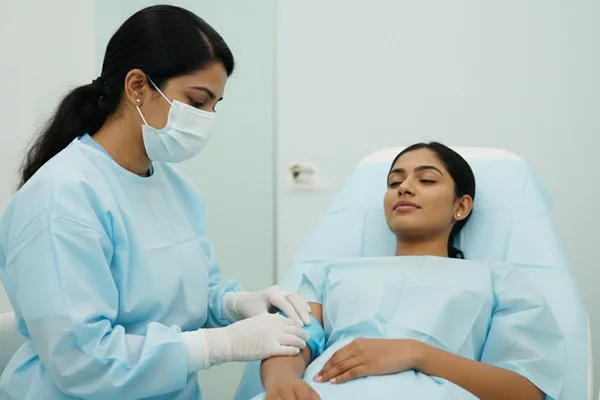
Have you ever had an operation? Or have you ever seen doctors and nurses dressing up in green or blue clothes, gloves, and masks? Have you ever wondered why they dress in such a special way? There is a very important reason for that. It is to prevent harmful germs from entering your body and protect you from infections. In medicine, we call this Aseptic Technique . Today, let's talk about this simply and politely.
Simply put, what is Aseptic Technique?
Aseptic Technique is a very strict set of rules that healthcare workers, such as doctors and nurses, follow to prevent the spread of infection when treating you. They make sure that the treatment environment, the equipment used, and everything else is free of disease-causing germs.
Think of it this way. A good chef cleans the kitchen, utensils, and vegetables thoroughly before preparing a delicious meal, right? Similarly, a doctor prepares for a 'battle' with germs before cleaning a wound on your body or performing an operation. This preparation is called Aseptic Technique. The main goal here is to completely eliminate or prevent the entry of Pathogens (disease-causing germs).
When is this method particularly needed?
Doctors use this method almost every time they need to stop the spread of harmful germs, such as bacteria, viruses, and fungi. This is especially important in the following situations:
- During surgery: An operation is an opening in the body, so there is a high chance of germs entering.
- When applying medicine to wounds: This method is followed to prevent infection when applying medicine to large, deep wounds.
- When inserting a tube into a vein: When inserting long-term cannulas or PICC lines into veins to give saline or medication.
- When treating kidney patients: During dialysis, it is very important to prevent germs from entering the body as blood is being taken out of the body and re-entered.
What is the difference between the three words 'Clean', 'Aseptic', and 'Sterile'?
Although these three words may sound similar, they have different meanings in medicine. Let's understand this difference clearly. Because then you will understand this entire process easily.
There are germs all around us. In the air we breathe, in the water we drink, even on our skin. But don't worry, most of these germs are harmless to us. But during medical treatment, we need to protect ourselves from harmful germs (pathogens).
| Concept | Simple meaning | Example |
|---|---|---|
| Clean | Removing visible dirt and dust from surfaces. This reduces the number of germs, but does not eliminate them completely. | A new pair of gloves that a doctor takes out of a box for a routine checkup. They are clean, but not sterile. |
| Aseptic (sterile method) | This is the process . All the actions taken with the aim of completely eliminating harmful germs. | The complete procedure followed by doctors and nurses in an operating theatre (cleaning equipment, hands, environment). |
| Sterile | This is the result . The absence of any living germs (harmful or not). 100% germ-free. | Surgical instruments, surgical gloves, and operating room drapes prepared using aseptic techniques. |
To be precise, doctors use 'aseptic' methods, creating a 'sterile' environment and equipment, and treat you.
What are the four main elements of Aseptic Technique?
This safety method consists of four main parts. Only by following all four exactly will you be completely protected from infection.
1. Equipment and patient preparation
All instruments used for treatment, such as scissors and knives, must be sterilized. A machine called an autoclave is most commonly used for this. This uses high-pressure steam to kill all germs on the instruments. Special indicators are even used to check whether the instruments have been sterilized. Also, the area of your body that will be treated (e.g. the area of skin that will be operated on) is thoroughly cleaned with an antiseptic solution.
2. Applying Barriers
This means things that prevent germs from spreading. Think of it like holding an umbrella up in the rain.
- Sterile Gloves: Prevents germs from the doctor's hands from getting into the wound.
- Masks: Prevent germs from entering the wound through breathing.
- Gowns & Drapes: Prevent germs from entering the doctor's clothing and the surrounding environment.
3. Contact Guidelines
This is a very important rule. It's called "Sterile to Sterile." That means that a sterilized item can only touch another sterilized item. For example, after a doctor puts on sterile gloves, he can only touch sterile instruments and sterile drapes. If he accidentally picks his nose or touches something that is not sterile, the gloves lose their sterility. Then he has to put on a new pair of sterile gloves.
4. Environmental Controls
Controlling the entry of germs from outside the treatment room. You may have seen that during an operation, the doors of the operating room are always closed. Also, the number of people who can come in is limited. All of this is done to protect you from germs that come in through the air.
Why is Aseptic Technique so important?
Our skin is a natural shield against germs. When this shield is cut, such as during surgery, it creates an easy path for germs to enter the body. Aseptic Technique blocks that path and gives your body the strength and time to heal, rather than fighting infection.
This method can be a lifesaver, especially for someone with a compromised immune system.
So, if you ever see a doctor or nurse coming to perform a treatment without washing their hands, or if you have any doubts about the equipment they are using, never be afraid to ask . Asking, "Doctor/Nurse, don't you wear gloves?" is both your right and very important for your safety. A good healthcare worker will never get angry with you for asking such a question.
Take-Home Message
- Aseptic Technique is a very important, strict set of rules used to protect you from germs during surgery or other medical procedures.
- There are clear differences between the words 'Clean', 'Aseptic', and 'Sterile'.
- This method includes the main elements of equipment disinfection, use of barriers (masks, gloves), touch rules, and environmental control.
- If you have any concerns about your safety, never be afraid to ask your treating doctor or healthcare staff. It is your right.




💬 Comments (0)
No comments yet. Be the first to share your thoughts here.
Add Your Comment