

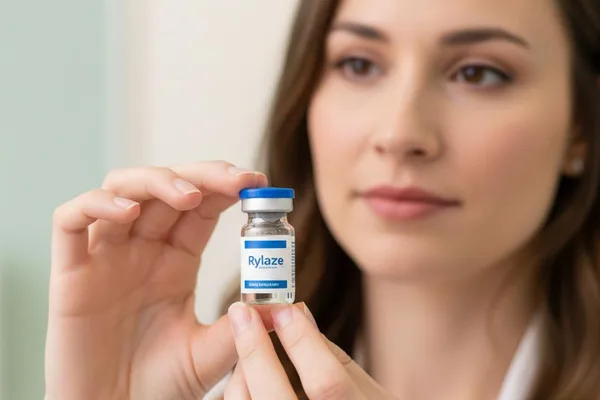
It's normal to feel a little scared and nervous when you or a loved one is about to start treatment for cancer. Especially when you hear about a drug called 'chemotherapy', many things come to mind. Today we will talk about a special injection used for such cancer treatment. That is the drug called Asparaginase Erwinia Chrysanthemi (Recombinant) that comes under the brand name Rylaze. Since this name is a bit complicated, we will just call it Rylaze. This article will try to answer your questions about this drug in a simple way.
What is Rylaze (Asparaginase)?
Simply put, this is a chemotherapy drug that is given to kill cancer cells. It is not used for all cancers, but is specifically used for two types of blood-related cancers. These are:
- Acute Lymphoblastic Leukemia (ALL)
- Lymphoblastic Lymphoma
This drug works in a very strange way. Cancer cells need an amino acid called asparagine to grow. Normal healthy cells in our body can make this asparagine themselves. But these leukemia and lymphoma cancer cells do not have that ability. So this Rylaze drug breaks down and destroys this asparagine in the blood. Then the cancer cells lose the nutrition they need and they die. Healthy cells can make the asparagine they need, so they are not harmed much.
Things you need to tell your doctor before starting medication
Before starting this treatment, it is very important to inform your doctor about your complete health history. Be sure to tell him/her if you have any of the following conditions:
| Your health condition | Why is it important to inform about it? |
|---|---|
| Bleeding disorders or blood clotting problems | This medicine can affect the blood clotting process. |
| Diabetes | The medicine can cause blood sugar levels to rise. |
| If you have pancreatitis | This medicine can rarely cause pancreatitis. |
| Liver disease | The medicine can affect liver function. |
| Allergies to a medicine, food, or dye | To assess the risk of an allergic reaction to the medication. |
| If you are pregnant or trying to get pregnant | This is very important . The medicine can harm the unborn baby. |
| If the baby is breastfed | The medicine can pass to the baby through breast milk. |
How can I give you this medicine?
This is not a medicine you can take home. It is given to you by trained medical staff in a hospital or clinic . It is usually given as an injection into a muscle .
It is very important that you take your medicine on the days that are scheduled for you. Do not skip these days for any reason. If for some reason you are unable to take your medicine on the day that is scheduled, call your doctor immediately and let them know.
Since this medicine is given under the supervision of a doctor, there is no chance of an 'overdose'. However, if you feel unusually uncomfortable after taking the medicine, inform the medical staff immediately. In an emergency, you can also call the National Poison Information Centre at the Colombo National Hospital .
Things to consider during treatment
Constant medical supervision
The doctors will monitor your condition very closely throughout the time you are taking this treatment. They will order regular blood tests . They will check to see if the medicine is working, if it has affected your liver, and how your blood sugar levels are.
Pregnancy and breastfeeding
This is a matter of great concern.
Do not become pregnant while taking this medication. Avoid becoming pregnant for at least 3 months after stopping the medication.
Common hormonal birth control pills may not work well with this medication. Therefore, be sure to talk to your doctor about another safe method of birth control that is right for you. This medication can cause serious harm to an unborn baby.
Also, avoid breastfeeding your baby while taking the medication and for a week after stopping.
Being aware of other medications
Tell your doctor about all the medicines you are taking. This includes medicines for other conditions, vitamins, painkillers, herbal medicines, Ayurvedic medicines, and dietary supplements. Some medicines may interact with Rylaze. For example:
- Corticosteroids (e.g. Prednisolone)
- Methotrexate
- Vincristine
- Zonisamide
- Cytarabine
- Thyroid hormones
This list is not complete, so it is very important to tell your doctor about everything you are taking.
Side effects that may occur due to medication
Like any medicine, this can cause side effects. Not everyone gets them. However, it is important to be aware of this so that you can act quickly if any symptoms arise.
| Side effect | Symptoms you are experiencing |
|---|---|
| Serious side effects that should be reported to the doctor or hospital staff immediately | |
| Allergic reactions | Skin rash, itching, swelling of the face, lips, tongue, difficulty breathing. |
| Abnormal bleeding | Black or bloody stools, dark red/brown urine, vomit that looks like coffee grounds, bleeding from the nose/gums, red spots on the skin. |
| Blood clot | Chest pain, shortness of breath, leg pain, swelling, or warmth. |
| Pancreatitis | Severe pain in the upper abdomen, radiating to the back, fever, nausea, and vomiting. |
| Liver injury | Yellowing of the eyes and skin (jaundice), dark yellow/brown urine, pain in the upper right side of the stomach, extreme fatigue. |
| High blood sugar | Unusually increased hunger, excessive thirst , frequent urination, blurred vision, extreme fatigue. |
| Side effects that are usually not serious, but should be reported to the doctor if they persist | |
| Headache | General headache. |
| Appetite | Loss of appetite. |
| Muscle pain | Body ache. |
| Mouth sores | Small sores inside the mouth. |
If you experience any other unusual symptoms not on this list, please inform your doctor about them as well.
Take-Home Message
- Rylaze (Asparaginase) is a chemotherapy injection used to treat blood cancers called leukemia and lymphoma.
- This medicine is given in a hospital or clinic under medical supervision.
- Tell your doctor about all your medical conditions and all other medications you take.
- If you experience any serious side effects such as allergic symptoms, unusual bleeding, or severe stomach pain, seek medical advice immediately.
- Avoid pregnancy completely during treatment and for 3 months afterwards.
- If you have any questions or concerns, never be afraid to talk to your doctor. They are there to help you.




💬 Comments (0)
No comments yet. Be the first to share your thoughts here.
Add Your Comment