

Have you ever wondered why our own immune system, instead of protecting us, can sometimes start attacking our own cells? That's a somewhat complicated, but understandable condition called Autoimmune Neutropenia (AIN) . What happens is that our own immune system attacks a very important type of white blood cell in our body, called `neutrophils.` So let's talk about this simply, in a way that you can understand.
So, what is Autoimmune Neutropenia (AIN)?
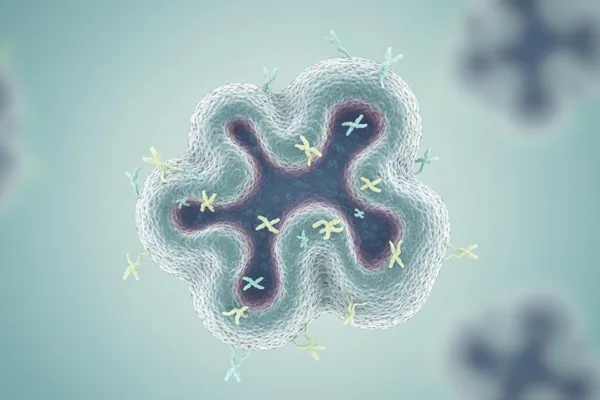
Simply put, `Autoimmune Neutropenia` (AIN) is a blood-related condition. What happens here is that our immune system, which is supposed to protect us, mistakenly attacks our own white blood cells called `neutrophils`. Imagine this, like the army protecting our country mistakenly attacking our own people.
What are `Neutrophils`?
Neutrophils are very important parts of our immune system. They are like little soldiers in our bodies. Their main job is to find and destroy harmful things that enter the body, such as bacteria and fungi that cause diseases. So, in the case of `Autoimmune Neutropenia`, our own immune system destroys these valuable `neutrophils` cells, so the number of `neutrophils` in the blood decreases below normal levels.
There are two main types of AIN:
1. Primary Autoimmune Neutropenia (AIN): This is most often seen in infants and young children . What happens here is that the number of `neutrophils` decreases without any other reason. But the good news is that this condition usually resolves itself within a few years.
2. Secondary Autoimmune Neutropenia (AIN): This is more common in older children and adults . Here, the low neutrophil count is caused by another medical condition. For example, it can be caused by an infection, another blood disorder, or another autoimmune disease (a condition in which the immune system attacks its own body). This secondary AIN condition is usually chronic .
How low is the number of neutrophils called neutropenia?
Autoimmune Neutropenia is just one type of the broader condition called Neutropenia. Neutropenia is classified as mild, moderate, or severe, depending on the number of neutrophils per microliter (microL) of blood.
- Mild Neutropenia: 1,000 – 1,500 neutrophils per microL.
- Moderate Neutropenia: 500 – 1,000 neutrophils per microL.
- Severe Neutropenia: Neutrophils less than 500 per microL.
The most important thing is that these values should be confirmed by a doctor. If you have any doubts about this, it is very important to seek medical advice.
How does AIN affect my body?
The way AIN affects you can vary from person to person. It depends on a number of factors, so it's best to talk to your doctor about this. If your neutrophil count drops too low, you're more likely to get infections . Sometimes these infections can be life-threatening, especially if you don't get prompt medical attention.
However, in some cases, autoimmune neutropenia can only cause mild infections. Or it can be asymptomatic. That's why it's important to work with a doctor to find out what's causing your neutropenia. Depending on the cause, your doctor can monitor your condition and help you control the infection.
Who gets Autoimmune Neutropenia (AIN)?
- Primary AIN: This mainly affects infants and young children . It is usually diagnosed around 8 months of age.
- Secondary AIN: This often occurs with another autoimmune disease, such as lupus or rheumatoid arthritis. Children with secondary AIN are usually diagnosed around age 10. Adults with AIN are most often diagnosed between the ages of 40 and 60.
How common is autoimmune neutropenia?
Primary AIN is a very rare condition. It affects only about one in 100,000 children under the age of 10. So you can see how rare it is.
What are the symptoms of Autoimmune Neutropenia?
Autoimmune Neutropenia doesn't always cause major symptoms. However, sometimes you may see signs of infection. For example:
- Ear infections: This is one of the most common symptoms. Imagine your little one keeps getting earaches, and when you go to the doctor, they tell you it's another ear infection.
- Respiratory infections: Frequent colds, coughs, and fever.
- Mouth infections: Things like mouth ulcers and gingivitis.
- Skin infections.
- Pneumonia.
- Meningitis.
- Urinary tract infections (UTIs).
- Sepsis: This is a very serious, life-threatening infection.
Infections associated with primary AIN are usually mild, but serious infections such as pneumonia, meningitis, and sepsis are more common in secondary AIN.
What causes autoimmune neutropenia?
AIN is classified as primary or secondary depending on the cause of the low neutrophil levels.
Primary Autoimmune Neutropenia (Primary AIN)
In primary AIN, antibodies target and destroy neutrophils. Antibodies are a type of protein in our immune system. Their normal job is to destroy harmful substances, such as viruses and bacteria, that enter the body. But at this point, researchers still don't know exactly why our own antibodies attack these neutrophils.
Secondary Autoimmune Neutropenia (Secondary AIN)
In secondary AIN, the number of neutrophils is reduced due to another cause or condition. This causes the immune system to destroy the neutrophils.
Some things that could cause this are:
- Other autoimmune diseases: Examples include rheumatoid arthritis, lupus, and autoimmune hemolytic anemia.
- Cancer: For example, `large granular lymphocyte leukemia`.
- Infections: Infections like `HIV`, `Parvovirus`, `hepatitis B`.
- Tumors: Like `Wilms tumor`, `Hodgkin's disease`.
- Neurological diseases: For example, multiple sclerosis.
- Kidney or bone marrow transplants.
- Certain medications: Especially some chemotherapy drugs given for cancer.
How is Autoimmune Neutropenia diagnosed? (Diagnosis)
When you have a fever or an infection, your doctor may find that your neutrophil count is low during blood work to determine the cause. Diagnosing AIN can be a bit tricky, as there are many possible causes. Your doctor may diagnose AIN after ruling out other conditions that could be causing your neutrophil count to be low.
To diagnose or monitor `Autoimmune Neutropenia`, your doctor may perform the following tests:
- Complete blood count (CBC): A CBC can check the number of neutrophils in your blood. Because these levels can vary, your doctor will often do more than one CBC to confirm neutropenia and monitor your neutrophil levels. Regular CBCs can also help determine if your AIN is chronic.
- Peripheral blood smear: A blood sample is examined under a microscope to check the shape and nature of the neutrophils. This also helps in diagnosis.
- Vitamin B12, folate, and copper tests: These tests can check for deficiencies in these nutrients. The body needs these to make neutrophils.
- Liver function tests: These can also check liver function and whether there is viral hepatitis.
- HIV and other viral studies: Viral infections like HIV can also cause a decrease in white blood cells.
- Flow cytometry: This is a laboratory test that looks at the cells for signs of disease. It is used to determine if neutropenia is caused by an autoimmune condition.
- Imaging: If there is a suspicion that AIN is caused by a cancer such as lymphoma, an MRI or CT scan may be performed.
- Bone marrow aspiration and biopsy: Here, the doctor takes a small sample of bone marrow and examines it for signs of disease. This can help determine whether neutropenia is caused by a blood cancer, such as leukemia.
Your doctor may also order a blood test to check for antibodies in your blood that attack neutrophils. The most common tests are the I-GIFT (Indirect granulocyte immunofluorescence test) and the GAT (Granulocyte agglutination test).
Unfortunately, these tests are not always reliable in detecting AIN. Depending on the cause of your neutropenia and the time of testing, these tests may not detect antibodies or may give false-positive results. A false-positive result is when the test shows that antibodies are present when they are not.
If the doctor suspects that neutropenia is caused by a specific condition, he or she may order additional tests.
How is Autoimmune Neutropenia treated?
Treatment depends on the severity of your condition. For example, a baby with asymptomatic neutropenia may only need to have regular CBCs and neutrophil counts, but may not need immediate treatment. If your baby has frequent infections, your doctor may prescribe prophylactic antibiotics to prevent infections. Antibiotics are usually given to treat infections, but these prophylactic antibiotics are given to prevent infections from occurring.
For someone with secondary AIN, the doctor will treat the underlying condition that is causing the low neutrophil levels. They may also prescribe:
- Granulocyte colony-stimulating factor (G-CSF): This is the main treatment for severe cases of neutropenia. It helps the body make more neutrophils. G-CSF can also prevent frequent infections associated with primary AIN.
- Corticosteroids: Corticosteroids, such as prednisone, suppress your body's immune system response, reducing the number of antibodies that attack neutrophils.
- Other treatments: Other drugs such as IVIG, rituximab, and alemtuzumab have also been used in critically ill patients with severe autoimmune neutropenia.
Can Autoimmune Neutropenia be prevented?
Neither Primary AIN nor Secondary AIN can be prevented . However, you can prevent the complications associated with `Autoimmune Neutropenia`, that is, the development of infections. To do this, you need to take the necessary steps to protect yourself from infections. For example, avoiding crowded places, washing your hands frequently, and staying away from sick people.
What kind of future can someone with Autoimmune Neutropenia expect?
Primary AIN usually resolves on its own . About 95% of children with AIN have their neutrophil levels return to normal by the age of two to three years. Almost all children with primary AIN make a full recovery by the age of 11. This is really reassuring, isn't it?
In other cases, called secondary AIN, your recovery depends on several factors, especially the underlying condition that caused your neutropenia. Treating that condition and preventing infections can help bring your neutrophil count back to normal.
When should I seek medical advice?
If you have severe autoimmune neutropenia and develop a fever, see a doctor immediately . Sometimes, your doctor may have prescribed antibiotics in advance to take if you develop a fever. In most cases, you will need to be treated in a hospital.
If you have severe, long-term autoimmune neutropenia, your doctor will explain to you what symptoms you should be aware of and what you can do to prevent complications.
Remember: If you or your child is diagnosed with AIN, talk to your doctor about how it affects you. While symptoms and causes vary, the good news is that treatments like G-CSF are very effective at increasing neutrophil levels.
If your child has AIN, get regular blood tests as directed by your doctor. Be on the lookout for signs of infection, and seek treatment as soon as possible if you notice any, to prevent possible complications.
Summary (Take-Home Message)
Okay, so I hope you now have a better understanding of the `Autoimmune Neutropenia` (AIN) we talked about.
- AIN is a condition in which our own immune system destroys our white blood cells called `neutrophils`.
- This can occur in young children (Primary AIN) or in adults (Secondary AIN). Primary AIN in young children often resolves on its own.
- The main risk is frequent infections.
- There are blood tests and other tests to diagnose.
- Treatment includes observation, anti-infective medications, G-CSF, and corticosteroids.
- The most important thing is to not panic or panic and seek medical advice if you or your child has these symptoms. If diagnosed early and managed properly, you can live a healthy life even with AIN.
If you have any further questions about this, be sure to talk to your doctor. They are the ones who can give you the best advice.
` Neutropenia, Autoimmune Neutropenia, White Blood Cells, Immune System, Infections, Blood Diseases, Pediatric Diseases




💬 Comments (0)
No comments yet. Be the first to share your thoughts here.
Add Your Comment