

Do you sometimes feel like you have small blisters on your back that hurt when you put on clothes, and sometimes they get a little bigger and bother you? This is what we often call 'back acne'. So, shall we talk about this in a little more detail today?
What exactly is back acne?
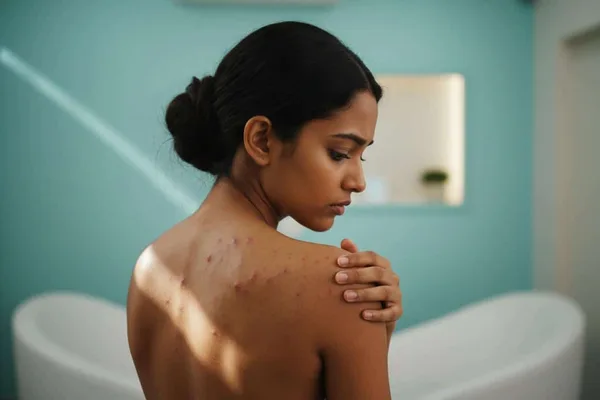
Simply put, these are pimples that develop on the skin of your back. They are similar to acne on your face. They can sometimes appear as small red bumps, white bumps (whiteheads), or blackheads. Sometimes they can be quite large and painful. It's really annoying to have them on your back, isn't it? It can be uncomfortable to even put on clothes.
Okay, now let's see how these pimples form. Our skin has tiny holes, we call them pores . These pores are filled with oil (we call them sebum ), dead skin cells, dirt, and sometimes bacteria. The main reason for acne, especially on the back, is sweat. When you exercise, run, play, or do your daily chores, you sweat a lot. When that sweat is not absorbed by your clothes, but gets stuck between your skin and your clothes, the sweat and dirt collect and clog those pores. That's when acne starts to appear more on your back. Sometimes, tight clothing can make this situation worse.
Who is more likely to get acne on their back?
Actually, back acne can affect anyone, at any age, regardless of gender. However, it is especially common in young people, from the ages of twelve to thirteen to their early twenties. It has also been found that young men are more likely to be affected by this condition.
This skin disease called acne is actually very common. Many people in the world have this problem. Just as acne occurs on the face, it can also occur on other areas such as the back, shoulders, chest, and neck.
Why do we get acne on our backs?
Okay, let's now look at the main causes of back acne. There is not just one cause, but several reasons that can contribute to this.
- Family history: If your mother, father, or someone in your family had acne, you are more likely to get acne too. This is a genetic condition.
- Friction from clothing and equipment: This is something that affects many people. Imagine if the T-shirt you wear when you are sweating, the straps of your bag, or the equipment you use while playing sports (for example, the ``pads'' you wear when playing cricket) constantly rub against your skin, this can cause acne and even worsen existing acne. This problem is especially exacerbated by wearing tight clothes made of synthetic fabrics like polyester, which do not absorb sweat and remain on the skin.
- Hormonal changes: It is common to get acne during times when our body's hormone levels change, for example during pregnancy or puberty. During these times, hormones increase the production of oil (which I mentioned earlier as ``sebum''). This can clog pores and cause acne.
- Certain medications: Certain medications you take, such as corticosteroids, can also cause acne or worsen existing conditions. So, if you are taking any medications, be careful about that as well.
- Poor hygiene: This is also an important factor. If the scalp is not kept clean, the oil from the scalp can spread to the skin and cause acne. Also, wearing sweaty clothes repeatedly, using dirty bed sheets and towels are also major causes of acne.
- Skin care products: Sometimes the lotions and creams we use on our skin can clog our pores and cause acne. Oily products in particular can cause this.
- Stress and anxiety: You may be surprised, but things like stress and anxiety can also increase the risk of acne. When we are under a lot of stress, our body produces more of a hormone called `(Cortisol)`. When this `(Cortisol)` level increases, the skin produces more oil. So the result is acne.
- Trapped sweat: I've mentioned this before. When sweat is trapped in the body, it clogs the pores of the skin and increases the risk of acne. Some people have a condition called ``Hyperhidrosis'' where they sweat excessively. People like that are more likely to get back acne.
What are these back pimples like? What are the symptoms?
When it comes to back acne, it comes in different forms for each person. Some people may only get it on their shoulders or upper back. Others may have acne all over their back, even down to their waist. These pimples can sometimes be painful and can form in clusters. You may see one type of pimple, or a combination of several types:
- Blackheads: These are black spots that appear due to the open pores of the skin, where the oil and dirt inside combine with oxygen to form black spots.
- Whiteheads: These are white bumps that appear when the pores of the skin are clogged and oil and dirt accumulate inside, causing them to rise to the surface.
- Red bumps without a "head": These are red, slightly swollen, and sometimes painful bumps that appear under the skin. They do not have a white "head" on top.
- Cysts: These are a more severe type of acne. Also called ``Cystic acne.`` These are large, painful cysts that form deep under the skin. They may be filled with pus-like material.
- Nodules: This is also a severe type of acne, called ``Nodular acne.`` These are large, hard lumps that form under the skin and are hard to the touch. These can also be very painful.
The most important thing is, no matter what type of pimple you have, don't squeeze or pop it. Doing so can make the condition worse, causing scarring and infection.
How does a doctor recognize this?
Most of the time, you can tell if you have acne on your back. However, if you have a lot of acne on your back, or if it keeps coming back, you should definitely see a doctor. The doctor will examine your skin. Sometimes, they may also recommend that you see a dermatologist.
So, what can be done about this back acne? What are the treatments?
The good news is that back acne can often be treated with simple, at-home treatments. But it does take a little patience.
Things you can do at home:
- Avoid popping or popping pimples: I'll say this again, popping pimples can damage your skin. Not only that, but there's also a much higher chance of scarring and infection.
- Keep your skin clean: Wash your body at least twice a day using an oil-free, noncomedogenic body wash. Be sure to shower and wear clean clothes, especially after exercising or sweating. But remember, don't scrub your skin too hard. Doing so can make acne worse.
- Use topical creams, gels, cleansers: Over-the-counter products containing benzoyl peroxide are great for acne. If you're using a cleanser with benzoyl peroxide, leave it on the acne for about 5 minutes before rinsing it off. You can also try a retinoid gel or an acne sticker that contains salicylic acid. These can be left on for a few hours, allowing the medication to be absorbed into the acne.
- Use clean sheets and towels: This is also very important. Wash your sheets, pillowcases, and towels at least once a week, dry them thoroughly, and reuse them. This will reduce the accumulation of bacteria.
If, after these home remedies, your back acne persists or recurs, you should definitely see a dermatologist. He or she can prescribe you appropriate topical creams, possibly prescription medications (such as antibiotics), or oral medications.
How do you prevent back acne from coming back?
It may not be possible to completely prevent back acne, but you can reduce your risk by doing the following:
- Change clothes quickly after sweating: This is a must-do. Don't wait for the sweat to dry on your body.
- Keep your skin clean: Take a good shower in the morning and evening, especially if you do work that makes you sweat.
- Limit the use of equipment that is tight and increases friction: For example, avoid wearing heavy backpacks for long periods of time, or wearing pads that pinch your body while playing sports. Or, wear breathable clothing while using them.
- Manage stress: Try to reduce stress through things like meditation, exercise, and engaging in a hobby you enjoy.
- Use sunscreen when going out in the sun: Some acne medications can make your skin sensitive to the sun. It's also important to protect your skin from the sun.
- Use `noncomedogenic` (non-clogging) products: When choosing lotions, creams, and soaps, look for this label.
- Wear loose, sweat-wicking clothing made from fabrics like cotton: This type of clothing is especially good when you're exercising and sweating.
What can you expect if you have acne on your back?
Most of the time, back acne can be cleared up with simple home remedies. However, if over-the-counter medications don't work, dermatologists can prescribe prescription medications for severe acne.
Depending on the amount of acne you have on your back, you may need to try different treatments. Sometimes it can take a few weeks for these to clear up. So be patient. Your doctor may recommend a combination of medications to get the results you need.
When should you definitely see a doctor about back acne?
In these cases, you should definitely see a doctor:
- If the acne on your back is very severe, or if it heals and then comes back.
- If you feel hard, painful lumps (`nodules`) or cysts (`cysts`) under the skin.
- If there is severe pain or swelling.
- If you have symptoms of an infection, such as a fever.
So, in conclusion, remember this (Take-Home Message)
While back acne may seem like a minor annoyance, for some people it can be very painful and embarrassing. Especially if you play sports or use equipment that gets in your way, it can take a while to heal.
The most important thing is to clean your skin immediately after sweating and put on dry, clean clothes. Also, try to reduce friction and pressure on the skin on your back. Be careful when using tight clothing and heavy bags. If these pimples do not reduce with home remedies, or if they are painful, definitely seek medical advice. There is nothing to worry about, with proper treatment, this condition can be controlled!
Remember, taking care of your skin is very important for your health.
` Back acne, acne, skin diseases, back acne, sweating, skin care, acne treatment




💬 Comments (0)
No comments yet. Be the first to share your thoughts here.
Add Your Comment