
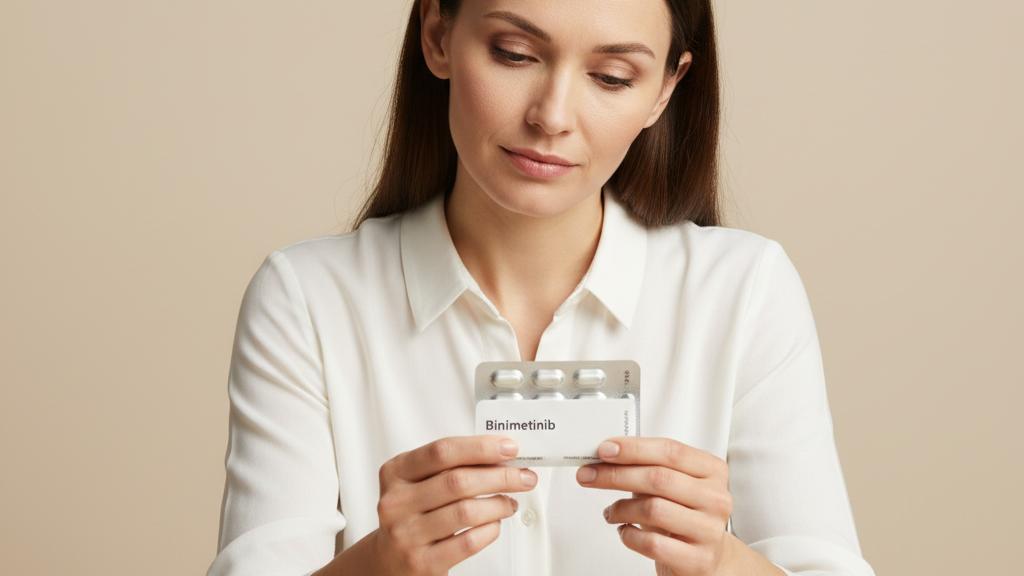
Finding out that you or someone close to you has been prescribed a new medicine for cancer can bring a mix of fear and curiosity. You might wonder how it works, what to expect, or how to take it safely in your daily routine. Understanding your treatment gives you confidence and helps you take an active role in your healing journey every single day.
Today, we will talk about Binimetinib, a specialized cancer medicine often known by its brand name, Mektovi. Knowing what to watch for and how to follow your doctor instructions will help you navigate this treatment safely and with peace of mind.
Key Takeaways
- Binimetinib is a targeted therapy medicine used primarily to treat a type of skin cancer called melanoma.
- Always take your medicine exactly as your doctor tells you, and never stop taking it without asking your doctor first.
- Tell your doctor about all your health conditions, especially bleeding issues, eye problems, heart disease, or high blood pressure.
- Watch closely for serious side effects like vision changes, bleeding signs, or severe fatigue, and report them right away.
- You must strictly avoid pregnancy while taking this medicine and for at least 30 days after your last dose.
BMI Calculator
Know your body mass index (BMI) and weight classification
What Is Binimetinib?
Put simply, Binimetinib is a type of medicine known as a targeted therapy. Unlike older chemotherapy medicines that affect many normal cells in your body, this medicine focuses on specific proteins inside cancer cells to stop them from growing.
Think of it like finding one specific troublemaker in a crowded room instead of stopping everyone around them. This medicine is mainly used to treat melanoma, a serious type of skin cancer.
In medical pharmacies, this medicine is often known by the brand name Mektovi. Remember that this is a very powerful, specialized medicine and is not like a common pain reliever you pick up at the store.
Things to Tell Your Doctor Before Taking This Medicine
Before you start taking Binimetinib, having an open chat with your doctor about your complete medical history is vital. Your care team needs to know if your body has any specific health conditions before you take your first dose.
Be sure to tell your doctor right away if you have any of the following health concerns:
- Bleeding disorders: Any condition where your blood does not clot easily or you bleed or bruise too much.
- Eye problems: Past or current vision issues, cataracts, or other eye diseases.
- Heart conditions: A history of heart attacks, weak heart function, or other heart diseases.
- High blood pressure: Uncontrolled or high blood pressure readings.
- Blood clot history: Past blood clots in your veins.
- Kidney disease: Any kind of kidney illness or reduced kidney function.
- Liver disease: Any condition affecting how your liver works.
- Lung problems: Breathing conditions such as asthma or chronic lung issues.
- Muscle problems: Unexplained muscle pain, soreness, or weakness.
- Allergies: Any past allergic reactions to Binimetinib, other medicines, foods, or dyes.
- Pregnancy: If you are pregnant, planning to become pregnant, or think you might be pregnant. This is extremely important.
- Breastfeeding: If you are currently nursing or breastfeeding a baby.
How to Use Binimetinib Properly
Taking this medicine correctly is straightforward, but following the exact instructions given by your care team matters a great deal.
- Swallow the tablet whole with a full glass of water.
- You can take this medicine with or without food. However, if it upsets your stomach, taking it with a meal or snack can help you feel better.
- Take your dose at the exact times and intervals prescribed by your doctor. Never take more than your prescribed amount.
- Most importantly, never stop taking this medicine for any reason without talking to your doctor first.
What if You Take Too Much?
If you think you have taken more Binimetinib than prescribed, do not panic. Call your local emergency services right away (such as 911 in the US/Canada or 999 in the UK) or go straight to the nearest hospital Emergency Department (ER or A&E). Always bring the medicine container with you so medical staff can see what you took.
This medicine was prescribed just for you based on your unique health needs. Never share your medicine with anyone else, even if they have a similar health condition.
What to Do If You Miss a Dose
Missing a dose of medicine can happen to anyone. If you miss a scheduled time, follow these simple guidelines:
- Take the missed dose as soon as you remember it.
- However, if it is almost time for your next scheduled dose (less than 6 hours away), skip the missed dose completely. Just take your next dose at the normal scheduled time.
- Never take two doses at the same time to make up for a missed dose.
Things to Watch While Taking This Medicine
While you are taking Binimetinib, keeping a close eye on how your body feels and responding quickly to changes is very important.
- Regular medical checkups: Your doctor will ask you to visit the clinic regularly. You may need routine blood tests to check how well your liver and kidneys are working and how your body is handling the treatment.
- Vision monitoring: If you notice any sudden changes in your eyesight, such as blurred vision or trouble seeing clearly, tell your doctor right away.
- Pregnancy and breastfeeding (Crucial): Keep these strict rules in mind at all times.
- You must strictly avoid getting pregnant while taking this medicine.
- Continue to prevent pregnancy for at least 30 days after you stop taking your last dose.
- This medicine can cause severe harm to an unborn baby.
- Do not breastfeed while taking Binimetinib and for at least 3 days after stopping the medicine.
Potential Side Effects
Like all powerful medicines, Binimetinib can cause side effects. Some side effects are mild. This others can be serious. Knowing what signs to look out for helps you get medical help quickly if you need it.
Side Effects That Need Immediate Medical Attention
| Side Effect Category | Signs and Symptoms to Watch For |
|---|---|
| Allergic Reactions | Skin rash, itching, swelling of your face, lips, or tongue, and trouble breathing. |
| Bleeding Signs | Black or tarry stools, red or dark brown urine, vomiting blood or material that looks like coffee grounds, unusual bruising, or bleeding from your gums or nose. |
| Blood Clot Signs | Shortness of breath, chest pain, sudden severe headache, pain or swelling in one leg, feeling warm in that leg, trouble speaking, or sudden numbness in your face, arm, or leg. |
| Liver Damage Signs | Dark yellow or brown urine, yellowing of your skin or the whites of your eyes, pain in the upper right side of your belly, poor appetite, nausea, or unusual tiredness. |
| Muscle Damage Signs | Dark colored urine, trouble urinating or changes in urine amounts, unusual tiredness, and severe muscle aches or cramps. |
| Heart Strain Signs | New or worsening shortness of breath, and swelling in your lower legs, ankles, or feet. |
| Other Serious Signs | Blurred vision, persistent cough, lightheadedness, dizziness, or fainting spells. |
Common Mild Side Effects (Tell Your Doctor If They Continue)
| Category | What You Might Feel |
|---|---|
| Stomach and Gut Issues | Constipation, diarrhea, mild belly pain, or occasional vomiting. |
| General Discomfort | Mild dizziness or feeling lightheaded when standing up. |
💡 Take-Home Message
As you begin or continue your treatment with Binimetinib, keep these core points in mind:
- Binimetinib is a targeted therapy medicine used for melanoma, and it must be taken strictly under your doctor supervision.
- Share your complete medical history and list of other medicines with your doctor before you start taking it.
- Take your exact dose at the right time every day, and never stop treatment on your own.
- Seek medical help right away if you notice serious warning signs like severe skin rashes, trouble breathing, vision changes, or unusual bleeding.
- Strictly prevent pregnancy while taking this medicine and for at least one full month after your last dose.
- Never feel shy about asking your doctor or nurse questions, no matter how small they might seem.






No comments yet. Be the first to share your question or experience below.