

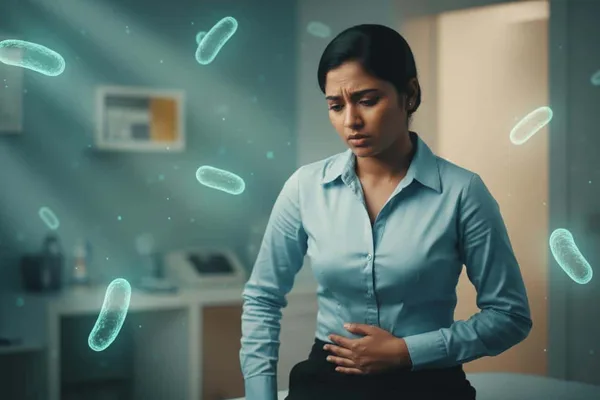
You too sometimes have an upset stomach, a stomach ache, a feeling of fullness, or maybe diarrhea... You must have experienced these things, right? We often think that some food is bad or poisonous. But that is not always the case. Sometimes, a very small, single-celled parasite that is invisible to our eyes can be responsible for this. One such parasite is `Blastocystis hominis`. The infection caused by this parasite is called `Blastocystosis`. So today, let's talk about this in a little more detail .
What is this `Blastocystis hominis`?
Simply put, `Blastocystis hominis` is a tiny parasite made up of a single cell . Just like the amoeba. They can live in the digestive system, that is, inside the intestines, of humans and some animals. Previously, this organism was called `Blastocystis hominis`. But later research found that there are many different types, or `subtypes`, of these `Blastocystis` parasites. So far, scientists have found about 22 types of `Blastocystis`, out of which about 9 types can infect humans. Therefore, scientists now commonly call this group of parasites `Blastocystis species`.
Is this `Blastocystis` really harmful to us?
Here's where things get a little complicated. Scientists discovered the Blastocystis parasite in the early 1900s. But there's still no consensus on whether it actually causes disease . Isn't that amazing? Some healthy people have this parasite in their intestines without causing any symptoms. But for others, it can cause stomach upset, aka gastrointestinal illness.
There are several reasons for these contradictory views:
- Different types (`subtypes`): I mentioned earlier that there are different types of `Blastocystis`. Some types are more likely to cause disease than others. But it can be a little difficult to distinguish these types from each other.
- Life cycle: This parasite takes on different forms during its life cycle. Scientists believe that each form may have different disease-causing abilities.
- Intestinal microorganisms: Did you know that our intestines naturally contain many different types of microorganisms, or microbes? These are part of our immune system. So, the composition of these microorganisms in each person's intestines is different. Some people's guts may be better at fighting off a Blastocystis infection than others.
Think of it this way, these good microbes inside our gut are like our own little army. They are the ones who fight off the bad things that come from outside. So if this army is strong, parasites like Blastocystis can't bother us so easily.
How widespread is this condition called `Blastocystosis`?
Blastocystosis is a common condition that is seen almost all over the world . However, since many people do not even know they have it, it is difficult to say exactly how widespread it is. Generally speaking, it is seen more in developing countries, that is, in countries like ours.
How does a person get Blastocystis?
This is the most important point. Blastocystosis is a contagious disease . That means it can be transmitted from one person to another. It is mainly spread through the feces of infected people or animals. Imagine, if someone with this parasite goes to the toilet and doesn't wash their hands properly, they can infect someone else through the things they touch, the food they prepare.
The main ways this is transmitted are:
- Not washing hands properly: People who work with animals, and those who work in daycare centers with young children, especially after using the bathroom, need to be very careful about this.
- Contaminated food or water: This can be easily transmitted by eating food contaminated with parasites or drinking contaminated water.
What are the symptoms of `Blastocystosis`?
It has been found that inflammation of the digestive system, that is, the intestines (enteritis), can occur with the condition `Blastocystosis`. However, as mentioned earlier, it is still unclear whether this `Blastocystis` parasite itself causes this stomach upset, or whether this parasite is simply present in the intestines of a person who has stomach upset for another reason.
However, there are several symptoms that may be associated with Blastocystosis:
- Stomach ache
- Itching around the anus
- Diarrhea (stomach ache)
- Bloating and passing air (gas)
- Nausea (feeling like vomiting)
- Weight loss
Does Blastocystosis cause skin lesions?
Yes, some people with Blastocystosis can develop skin rashes, especially hives (urticaria) . Urticaria is a type of rash that causes the skin to become red, swollen, and very itchy. Sometimes, these rashes can also be accompanied by swelling.
How is this condition called `Blastocystosis` diagnosed?
If you continue to have symptoms like stomach upset and diarrhea, it's best to see a doctor. The doctor will ask you a few questions:
- Your medical history: Have you had any previous illnesses like this, have you recently traveled far (especially abroad), and do you have contact with animals?
- Then a physical examination is performed.
- The most important thing is to get a stool sample tested . This stool sample can be examined under a microscope to see if the Blastocystis parasite is present.
There are other tests that can detect Blastocystis and its different subtypes. But they are usually only done on a research basis. Even if you are diagnosed with Blastocystosis, your doctor will also check for other parasites or bacteria that could be causing your symptoms.
What are the treatments for Blastocystosis?
Here again comes the uncertainty mentioned earlier. Since it is not known for sure whether the Blastocystis parasite actually causes disease, it is not clear whether it should always be treated .
However, there are several treatments that doctors use for those who have symptoms:
- Antibiotics: Examples include metronidazole and cotrimoxazole (a combination of trimethoprim and sulfamethoxazole).
- Antiparasitic medications: For example, a drug called nitazoxanide.
These medications can sometimes help relieve symptoms. However, they are not always effective . This may be because there are differences between different strains of the Blastocystis parasite, or because some parasites have become resistant to these medications (antibiotic resistance). It is possible that your symptoms are caused by a different organism.
There are natural treatments, special diets, and herbal supplements available for blastocystosis. However, the effectiveness of these treatments has not been well studied . Therefore, it is important to talk to a doctor before using any of these products to make sure they are safe and suitable for you.
How can we protect ourselves from Blastocystosis?
There are some simple things we can do to stay safe from this:
- Avoid contaminated food and water: Especially in countries where the safety of the water is questionable (including some parts of our country), boil water thoroughly before drinking and cooking. Or use bottled water.
- Wash fruits and vegetables that are eaten raw thoroughly, remove the skin, and eat them.
- Be sure to wash your hands thoroughly with soap after using the toilet, after changing the baby's nappy, before eating and before preparing food. This is the most important thing!
Research has shown that keeping our digestive system healthy can also help. Probiotics are the good, beneficial bacteria that live in our intestines . They help our digestion and immune system. So, eating more foods containing probiotics (like yogurt) or taking a probiotic supplement can reduce the chance that parasites like Blastocystis can live in our intestines.
What happens if this happens? Will it get better?
Many people with Blastocystosis do not show any symptoms . They simply live with the parasite. However, those who do experience symptoms such as stomach upset usually recover well with treatment.
When should we see a doctor?
If you have diarrhea that doesn't improve after a few days, or if you are showing signs of dehydration, you should definitely see a doctor. Symptoms of dehydration include:
- Decreased urine output or dark urine.
- Dizziness, sudden confusion, or headache.
- Dry mouth or excessive thirst.
- Hard work.
- Frequent anger.
Scientists are still researching the Blastocystis parasite and whether it causes disease in humans. However, we can protect ourselves from these stomach problems by washing our hands often and avoiding contaminated food and water . If you have persistent diarrhea or other stomach problems, your doctor will examine you based on your symptoms, test results, medical history, and travel history. Talk to your doctor about the cause of your illness and the best treatment for it, and get well soon.
Finally, let's remember the most important things!
Okay, so from what we've talked about today, I hope you've got a good idea about Blastocystis hominis infection, or Blastocystosis.
Remember, not all stomach upsets are caused by food poisoning. Sometimes, even a tiny parasite like this one can be responsible.
The most important thing is to maintain personal hygiene, especially washing your hands thoroughly . Also, eating safe food is very important . If you have persistent stomach pain, do not ignore it and see a doctor for advice. Then you will be able to recover quickly. Stay healthy!
` Blastocystis, stomach ache, diarrhea, parasitic infections, digestive system, health, Sri Lanka




💬 Comments (0)
No comments yet. Be the first to share your thoughts here.
Add Your Comment