

We see many beautiful, colorful beetles and insects in our gardens and flower beds. Sometimes, small children like to play with these animals. However, if some of these insects come into contact with us, they can cause minor problems for our health. So, today we are going to talk about a species of insect that we should be a little careful about. That is "Blister Beetles" or in Sinhala, "Billie Dana Kherumiyo".
Who are these Blister Beetles?
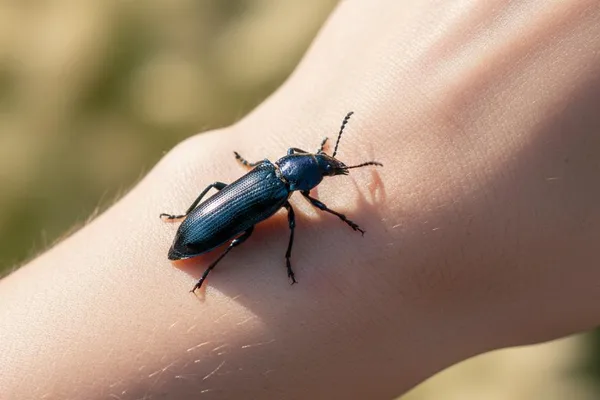
Simply put, this is a species of beetle belonging to a family of insects. Scientifically, they are known as members of the family `(Meloidae)`. There are more than 2,500 species in this family alone. Although they differ in shape, color, and size, they all have one common dangerous characteristic. That is, a chemical substance secreted by their bodies can cause painful blisters if it comes into contact with our skin.
Although in the past, people in some countries used these beetles for some special medicines, it is very dangerous. Because if this animal is put in the mouth or swallowed, it can even lead to death. Therefore, it is very important to properly identify these beetles and avoid handling them.
So how do you recognize this beetle?
These beetles come in a variety of colors, shapes, and sizes.
- Body: Usually has a soft, oval body.
- Neck: The most distinctive feature is the very narrow neck compared to the body.
- Size: They come in various sizes, from 10 millimeters to 25 (about an inch).
- Color: Some are bright colors (yellow, orange), while others may be black, brown, or gray.
What is the life cycle and diet of these beetles?
The life cycle of these beetles consists of four main stages: egg, two larval stages, and pupa. But we are only concerned with the pupal stage of these beetles, because during the larval stage, they are mostly found in the vicinity of bee colonies.
The most important thing is what they eat. All of these species are herbivores. That means leaves and flowers are their main food. Because of this, they sometimes cause damage to crops. In particular, they can damage the following crops:
- Potatoes
- Tomato
- Beet
- Sunflower
- Some legumes
- Grasses such as alfalfa
Therefore, it's a good idea to keep a close eye on these beetles in your vegetable beds.
What happens if it gets on your body? What are the health risks?
This is where we need to focus the most. Why are these beetles dangerous?
When we crush, squeeze, or rub these animals on our skin, their joints release a chemical called Cantharidin . This is a colorless, odorless chemical belonging to the terpene group. This substance, Cantharidin, is what causes blisters when it comes into contact with our skin.
Important: Never crush a beetle with your hands or press it against your skin. If you see one on your body, gently blow it off or remove it with a piece of paper.
The symptoms vary depending on how this chemical enters the body. Let's see how.
| How to get into the body | Possible symptoms |
|---|---|
| Skin Contact | Within a few hours of contact with the skin, redness, inflammation, and painful, water-filled blisters develop at the site. These blisters heal on their own within a few days. |
| Eye Contact | Severe eye pain, tearing, blurred vision, and damage to the cornea. This is an emergency. |
| Swallowing | This is a very dangerous and potentially fatal condition. It can cause swelling of the lips, nose, and throat, difficulty swallowing, severe stomach pain, vomiting, blood in the urine, kidney failure, and shock. |
Animals can also develop severe symptoms from eating these beetles, so if you have pets, be careful with them too.
What should we do if something like this happens?
Okay, now we know what this could lead to. Now let's see what we should do if something like this happens.
1. If you get skin blisters:
- Usually, blisters on the skin heal on their own within a few days and do not require any major treatment.
- First, wash the area where the animal was bitten with soap and water . This will help remove any chemicals on the surface of the skin.
- Avoid popping the blister, as this can lead to infection.
- If the inflammation and pain are severe, see a doctor for advice. He or she may prescribe a corticosteroid cream or antibiotics to prevent infection.
2. If it gets into the eyes or is swallowed:
- This is an emergency! Go to the nearest hospital Emergency Department (ETU) immediately without any delay.
- Especially if you have swallowed a beetle, call the National Poison Information Centre at the Colombo National Hospital as soon as possible and get advice. It is very important.
- If it affects your eyes, the best thing to do is to see an eye doctor and get checked out.
How do you get rid of these beetles from the garden?
If you see these beetles in your garden, don't panic. There are safe ways to get rid of them.
Safety first! When removing these animals, be sure to wear gloves. Don't touch them with your bare hands.
If the number of beetles in the garden is small, the best and safest way is to wear gloves and pick up the animals one by one and put them in a bucket of soapy water. In large crops, it is necessary to use insecticides, but it is essential to seek the advice of a qualified person.
Take-Home Message
- Blister beetles are a species of beetle that cause painful blisters on the skin due to a chemical they secrete.
- If you see this beetle on your body, do not crush it, but gently blow it away or remove it with a piece of leaf.
- Wash the affected area immediately with soap and water. Normal blisters heal in a few days.
- Never eat these animals. It can be fatal.
- If the animal gets into the eye or is swallowed, it is an emergency. See a doctor immediately or go to a hospital's Emergency Department (ETU) .
- If you are removing these animals from the garden, be sure to wear gloves.




💬 Comments (0)
No comments yet. Be the first to share your thoughts here.
Add Your Comment