
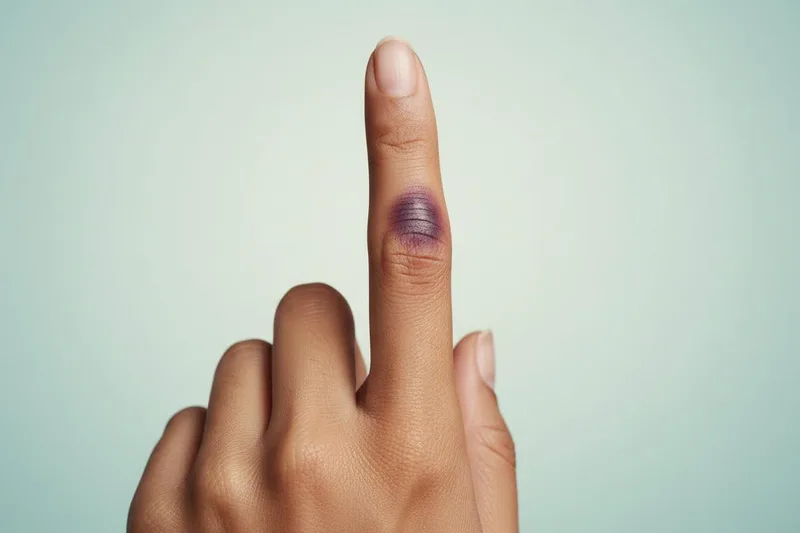
Oh my, what is this blister that has suddenly appeared on my body? Sometimes this blister, which looks red, purple or black, can also look like blood inside, right? You might feel a little scared when you see it. Don't be afraid , most of the time this is what we call a 'blood blister' . Are these really dangerous? How do they form? Can they be treated at home? Today we will talk about all this simply, in a way that you can understand.
Do you know what a blood blister is?
Simply put, a blood blister is a small blister filled with blood instead of fluid . Did you know that our skin is made up of three main layers?
1. The top layer is called the epidermis .
2. Beneath it is the middle layer or `Dermis` .
3. Even below that is the subcutaneous tissue or `Hypodermis` .
Usually, a blister forms under the epidermis. Sometimes it is filled with a white liquid. However, if the small blood vessels under the skin are damaged during an injury, then the blister fills with blood. Our body's immune system responds to this, which is why the area becomes a little swollen and painful, which is called inflammation .
Blood blisters are most commonly seen on the hands, fingers, legs, and toes . Sometimes, they can also form in hard-to-reach areas, such as near your joints, on your heels, and on the balls of your feet . Most of the time, these blood blisters that form on the skin heal on their own . However, if you have blood blisters inside your mouth, on the inside of your cheeks, or on your lips, it may be a cause for concern . Therefore, if you have a blood blister around your mouth, it is best to see a doctor .
What does a blood blister look like?
Blood blisters are similar to the blisters that usually form when the skin is broken, which means they look like small bumps that have risen above the skin . However, they don't contain a white liquid inside, but rather blood, which makes them appear red, purple, or black . They may be light red at first, but as the blood clots, they can darken in color. Blood blisters can come in different sizes, some are small, some are a little larger.
You may feel pain or discomfort at the site of the blister. This is because of the injury that caused the blister. Sometimes, you may scratch the area when the blister bleeds.
What causes blood blisters?
If your skin gets pinched, pinched, or pinched somewhere, but the skin doesn't break and bleed, a blood blister can form. Think of it like getting your finger stuck in a drawer, or stubbing your toe. When this happens , the blood vessels under your skin break, damaging the layers of skin underneath , and the blood pooling there, causing a blister. A blister is actually formed to protect your injured skin and help it heal faster .
Let's look at a few more reasons:
- Getting your finger stuck in a door or drawer: This happens to us all the time, doesn't it? Even with a small mistake, this can happen.
- Stab your toe somewhere: This can happen if you stub your toe, such as on a table leg, even while walking indoors.
- Sweaty feet: When your feet sweat, friction inside your shoes increases, which can lead to blisters on your feet and toes. This is especially common in the first few days of wearing new shoes.
- Frostbite: Exposure to extreme cold can cause blood blisters. This is not common in our country.
- Certain medications: For example, people taking blood thinners may sometimes develop blood blisters.
Special cases of blood blisters inside the mouth
Blood blisters inside the mouth can be caused by a condition called `Angina Bullosa Hemorragica` . In this , a painful, blood-filled blister suddenly appears on the tongue, gums, or inside the roof of the mouth. However, this condition called `Angina Bullosa Hemorragica` is not cancerous . Most of the time, these blisters burst and heal on their own , and no special treatment is required.
But remember! Blood blisters in and around the mouth can sometimes be caused by more serious medical conditions . That's why we've always said to see a doctor if you get a blister in your mouth.
What are such serious situations?
- Oral Cancer
- Blood disorders
- Rheumatoid Arthritis
- Diabetes `(Diabetes Mellitus)`
- High blood pressure (Hypertension)
- Kidney Failure
People with these conditions can also develop blood blisters in their mouths. That's why it's important to seek medical advice rather than self-diagnosing .
How do you recognize a blood blister?
Most of the time, even a doctor can tell right away that a blood blister is a blood blister. This means that you usually don't need any special tests to diagnose a blood blister.
However, if you go to see a doctor, he or she will look at the blister carefully and check for infection . Especially if the blister is in an unusual place, such as the mouth, eyes, or genital area, the doctor may do a biopsy . A biopsy involves taking a small sample of the fluid from the blister and sending it to a lab to find out exactly what caused it.
How do you treat a blood blister?
The good news is that most blood blisters heal on their own within a week . The blister heals as new skin forms underneath the blister, and the blood in the blister dries up. But if you need help healing your blood blister faster, you can follow these steps:
1. First, wash your hands thoroughly with soap.
2. Then, gently wash the area with a mild soap and water . Do not rub vigorously.
3. Apply an antibacterial cream or ointment over the blister.
4. Cover the area with a bandage or a piece of gauze to protect it.
You should change the bandage at least once a day . It is also very important to keep the area clean and dry .
Most importantly: Never try to pop a blood blister or pull the skin around it! The skin over the blister protects the layers of skin underneath from infection. If you break it, germs can easily enter and cause an infection.
If there is pain, you can apply an ice pack or take an over-the-counter pain reliever, such as Paracetamol (Tylenol®) or Ibuprofen (Advil®).
Can blood blisters be prevented?
Blood blisters are often caused by a part of your skin getting pinched somewhere, so there are things we can do to prevent them. They are especially common on the hands and feet.
Here are some tips for that:
- Be careful when using tools or other objects that can pinch your skin. For example, if you are using pruners or pliers while working in the garden, be careful not to get your hand caught.
- Wear gloves when working with such equipment.
- Wear socks and well-fitting shoes to protect your feet and toes. If your shoes are too tight or too loose, you may develop blisters.
- Put a drying powder inside the shoes to absorb moisture.
- If you feel pressure on your feet somewhere inside your shoes, add some padding. You can buy these at pharmacies.
What to expect if you get a blood blister?
Most blood blisters will heal on their own within a week . Keep the blister clean, apply an antiseptic cream, and protect it with a bandage until it heals. If you have a blood blister on your foot or toe, try to avoid wearing shoes as much as possible , or wear open-toe shoes . This will help the blister heal more quickly without putting pressure on it.
If you think your blood blister is infected , see a doctor immediately .
When should you see a doctor?
If your blister doesn't heal after a week, see a doctor. Also, if the blister looks infected, you should definitely see a doctor. If a blister becomes infected, the skin around it will become red and swollen . Instead of blood, the blister may be filled with white, yellow, or green pus . If left untreated, an infected blister can lead to a skin infection or even a blood infection .
Not only that, but also see a doctor in cases like these:
- If the blood blister is very painful or comes back repeatedly .
- If you suddenly have several blood blisters for no apparent reason .
- If you have a blood blister in your eye, mouth, genital area, or other unusual place .
Blood blisters are a common skin condition. Although they can be uncomfortable to see, they are usually nothing to worry about . If you get a blood blister, it will usually start to heal on its own within a week. However, if the blister looks infected, or if it is in an unusual place, such as the mouth, it is wise to see a doctor for advice. Because blood blisters can occur for a variety of reasons, it is always a good idea to get checked out by a doctor.
The most important things to remember (Take-Home Message)
Okay, so let's review the main points you need to remember from what we've talked about:
- Blood blisters are blood-filled blisters under the skin. They are usually harmless and heal on their own .
- It is most commonly caused by things like skin tightness, tightness, and friction.
- Never try to pop a blood blister! It can cause infection.
- Keep the blister area clean, apply an antiseptic cream, and cover it with a bandage.
- If you develop blood blisters in unusual places, such as inside the mouth, eyes, or genitals , if you develop blisters continuously for no reason , or if the blisters appear to be infected (red, swollen, and filled with pus) , you should definitely see a doctor .
I hope this information is useful to you. Stay healthy!
` Blood blisters, skin diseases, blisters, skin infections, first aid, skin wounds, blood blister


💬 Comments (0)
No comments yet. Be the first to share your thoughts here.
Add Your Comment