

Today we are going to talk about something that is important to many people, but perhaps they are not very aware of it. Do you sometimes feel chest tightness, difficulty breathing? Or have you ever heard a friend of yours talk about heart disease? At such times, one of the problems we hear about is a problem related to the blood vessels of the heart called 'Bifurcation Blockage'. Simply put, this is a blockage that occurs at the point where a branch of a vein that supplies blood to the heart branches. Let's look at this in a little more detail, shall we?
What is this 'Bifurcation Blockage'?
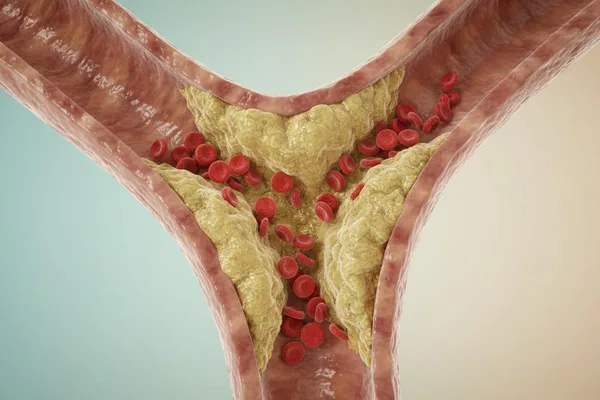
Okay, now let's see what this 'Bifurcation Blockage' is simply. Imagine, our heart is like a water pump. In order for this pump to continue working, it needs a constant supply of blood. That blood is carried to the heart muscles by a special system of blood vessels called the Coronary Arteries . These main blood vessels divide into small branches at some places, just like the branches of a large tree branching off. Or, you can think of it like a crossroads where a road splits into two.
The place where a main artery divides into a smaller branch is called a 'bifurcation' . So, if this division, to be precise, is at a point like a 'Y'-shaped junction, and a blockage occurs inside the artery due to a build-up of fat (we call this 'plaque' ), then that is called a 'bifurcation blockage' . This 'plaque' is a deposit made up of cholesterol, fat, and calcium. Doctors also call these smaller branch arteries 'side-branch vessels' . The fatty deposits that cause this blockage are also called 'bifurcation lesions' . Do you understand? It's like a traffic jam at a junction on the road.
Are there types of these blockages?
Yes, this blockage can also be of different types. That is, doctors determine the severity of this depending on how much the vein is blocked. When a vein becomes narrow, we also call it 'Stenosis' in medical terms. There are mainly two types of 'Bifurcation Blockage':
- Simple occlusion: This occurs when less than 70% of the inner diameter of the vein is blocked. This means that blood flow is still somewhat restricted, but there may be some obstruction.
- Complex occlusion: This is where the problem gets a little more serious. More than 70% of the vein, or more than three-quarters of the inside of the vein, may be blocked. Sometimes there may be more than one occlusion in several places. Or a blood clot may be blocked, or calcium deposits (we call this 'calcification' ) may have hardened the vein wall and reduced its flexibility. Another thing is that sometimes this occlusion may be in a place where the small branch vein is drawn at a very sharp angle (more than 70 degrees). When this happens, it is a little more difficult to treat, because it is difficult to treat with medical equipment.
How common is this 'bifurcation blockage'?
You might be wondering how common this is. In fact, it's estimated that between 15% and 20% of all cases of coronary artery disease (CAD) requiring medical attention, or roughly one in five, are caused by this 'bifurcation blockage.' So, while it may not be that common, it's a condition that can affect a lot of people.
What causes this?
Well, what is the main cause of this blockage? As I said before, the root cause of this is the accumulation of oils and fats, that is, that 'plaque' , inside the walls of our blood vessels. It is like an old water pipe that over time rusts and accumulates dirt and gets clogged in the pipe. Over time, this 'plaque' builds up and narrows the passage inside the artery. Then the amount of blood that the heart needs, that is, oxygen and nutrients, does not flow properly. This 'Bifurcation Blockage' also belongs to the same category of coronary artery disease (CAD) .
Who is more at risk of developing this condition?
Now let's see who is more likely to develop this condition, or what the risk factors are. It is very important to be aware of these, because some things we can control.
Generally, women are more likely to develop CAD and Bifurcation Blockage after menopause , which means they stop having monthly periods, and men are more likely to develop CAD after the age of 45.
In addition, there are several other risk factors:
- Diabetes Mellitus: People with diabetes are more likely to develop blood vessel problems because diabetes can damage the walls of blood vessels.
- Overweight or Obesity: When body weight increases, it becomes difficult for the heart to handle it and it has to work extra hard.
- Family history of cardiovascular disease: Sometimes this can be due to genetic influences.
- High blood pressure (Hypertension): High blood pressure means that there is constant unnecessary pressure on the veins. This can damage the veins.
- High cholesterol: Cholesterol is the main cause of plaque formation, especially high levels of "bad" cholesterol (LDL).
- Lack of exercise: When the body lacks exercise, it is more likely to accumulate fat and heart health also weakens.
- Poor diet: If you regularly eat foods high in oil, sugar, and salt, the risk is high. Think about the junk food we eat, fast food, sugary drinks, and fried foods... If you continue to eat these, problems can arise.
- Smoking or using tobacco products: Smoking is one of the biggest enemies of the heart. The chemicals in tobacco directly damage the blood vessels.
What are the symptoms of this?
Since Bifurcation Blockage is also a type of coronary artery disease (CAD) , the symptoms are similar. However, sometimes this condition can be present without any symptoms. However, the most common symptoms are:
- Angina: This is a feeling of pain or tightness in the chest, a feeling of constriction. Some people describe it as a weight on the chest, or as if the chest is being squeezed. This pain is usually worse during exercise, climbing stairs, or when there is pressure on the heart.
- Cold sweats: You may suddenly feel cold and sweat, especially with chest pain.
- Dizziness or feeling lightheaded: Feeling as if you can't stand up, your eyes are turning blue.
- Fatigue and weakness: You may feel tired and unable to do anything. You may also find it difficult to do tasks that were previously easy.
- Heart palpitations: Feeling like you can hear your heart beating, or your heart beating faster and faster, like your chest is pounding.
- Nausea: A feeling of being sick, possibly even vomiting.
- Shortness of breath: You feel short of breath even after doing a little activity. Sometimes, you may have difficulty breathing even while sleeping.
- Shoulder or arm pain: Sometimes this pain can start in the chest and travel down the neck, jaw, shoulder, or left arm.
Important: If you have one or more of these symptoms, don't just assume it's a physical ailment. See a doctor right away.
How do doctors detect this?
If you have these symptoms, when you see a doctor, he or she may run several tests to determine if this is a 'bifurcation blockage' or another heart condition. Some of these include:
- Cardiac catheterization and angiogram: This involves passing a small tube (catheter) through a vein in your arm or leg to the coronary arteries of your heart, injecting a special dye into it, and taking X-ray images. This can clearly show if there is any blockage in the arteries and how much.
- Coronary computed tomography angiogram (CCTA): This is a special CT scan that uses three-dimensional (3D) images to see how blood flows to the heart and whether there are any blockages in the arteries.
- Intravascular optical coherence tomography (IVOCT): This is a very advanced technique. As soon as the catheter is inserted, another thin instrument is passed through it and the plaque deposits inside a blood vessel, the layers of the vessel wall, can be seen in very clear, high-definition images.
- Intravascular ultrasound (IVUS): This is also an ultrasound test that looks inside the blood vessels. Like IVOCT, it can provide a good look at the condition of the walls of the veins and the nature of the 'plaque'.
- Fractional flow reserve (FFR): This measures the difference in pressure inside a blood vessel, on either side of the blockage. It can accurately assess the extent of the blockage and determine whether treatment is needed.
What are the treatments for this?
Treating a 'bifurcation blockage' can sometimes be a bit challenging. Because the side-branch vessels I mentioned are much smaller, and the angle at which they branch off from the main artery is also affected. So it can be a bit more complicated to reach and treat than the main blood vessels.
Doctors usually perform a procedure called angioplasty . This involves widening the narrowed artery. Then, a small wire mesh tube called a stent is inserted into the artery to keep blood flowing without constricting it again. Both angioplasty and stenting are called percutaneous coronary interventions (PCI) .
Simply put, this is what happens during angioplasty and stent placement:
1. The doctor makes a small cut in your skin, either on your wrist or in your groin, and inserts a catheter (a thin, flexible tube) through it into a blood vessel.
2. This catheter is then carefully guided through the blood vessels to the site of the blockage in the heart. This is done under X-ray guidance.
3. There is a small balloon at the end of the catheter. When it reaches the blocked area, when the balloon is inflated, the plaque stuck in that vein becomes stuck to the walls of the vein, and the vein becomes wider.
4. Then the stent (either over the balloon or separately) is inserted into the vein, the balloon is inflated, and the stent is pressed against the wall of the vein. Then the balloon is removed, and the stent remains in the vein, preventing the vein from narrowing again.
After this treatment, your doctor will prescribe you a type of blood-thinning medication called 'dual antiplatelet therapy' (such as aspirin and clopidogrel) for a period of time to prevent blood clots from forming inside the stent. It is very important to take this medication exactly as your doctor tells you, for the entire duration.
Special stent techniques for 'bifurcation blockage'
There are two types of stents used to treat coronary artery disease (CAD) . One is a bare metal stent. The other is a drug- eluting stent. This drug-eluting stent works to reduce the risk of the artery narrowing again (restenosis).
There are several main stenting techniques used to treat bifurcation blockages:
- Provisional stenting: In this, the doctor places a stent only in the main artery. The side-branch vessel is not stented. However, if the main artery becomes blocked, or if you continue to have symptoms, a stent can be placed in that artery later.
- Two-stent procedures: In very complex blockages, or if the blockage in the branch vein is also significant, the doctor will place stents in both the main blood vessel and the smaller branch vein. There are various techniques for this (e.g., Culotte, T-stenting, Crush).
Clinical trials are currently underway on dedicated side-branch stents designed to fit into those small branch veins.
Can treatments cause complications?
Complications can sometimes occur in some, but not all, people who have had angioplasty and stenting for a 'Bifurcation Blockage' . Two main ones are:
- In-stent restenosis: This is when scar tissue forms at the site of the stent, under or inside the stent, causing the artery to narrow again. This usually happens within six to twelve months of stent placement. If this happens, the artery will need to be widened again with angioplasty or other treatment. Drug-eluting stents have greatly reduced this risk.
- Stent thrombosis: This is when blood clots form at the site of the stent and inside the blood vessel. This is called 'thrombosis' . This is a dangerous condition, because this blood clot can suddenly completely block the vessel and cause a heart attack. Taking 'dual antiplatelet therapy' correctly can greatly reduce this risk.
Can't these kinds of jams be prevented?
Are there really things we can do to prevent these types of blockages? Absolutely! Following these steps to protect your heart can reduce your risk of coronary artery disease (CAD) and atherosclerosis – a condition in which fatty deposits build up inside the arteries, causing them to thicken and lose their elasticity.
- Control high blood pressure: It is important to reduce salt in your diet, take your medication as prescribed by your doctor, and have your blood pressure checked regularly.
- Limit alcohol consumption: Reduce alcohol consumption as much as possible. Avoid drinking alcohol daily. If you are addicted, get help.
- Eat a heart-healthy diet: This is very important to lower cholesterol levels. Stay away from high-fat, high-sugar, and processed foods, and eat more fruits, vegetables, legumes, fiber-rich foods (like brown rice, oats, and lentils), and fish (especially fish rich in omega-3s like salmon and mackerel) .
- Be aware of your fats: Reduce your intake of foods high in saturated and trans fats (e.g., red meat, processed meats, baked goods, deep-fried foods). For example, coconut oil is not good for you in excess. Use healthy oils like olive oil and canola oil in moderation.
- Control diabetes: If you have diabetes, it is essential to control it well. Diet, exercise, and taking prescribed medication are important.
- Avoid smoking: If you smoke, seek help to quit. Being around people who smoke (passive smoking) can also be harmful.
- Be physically active: Exercising for at least 30 minutes a day, 5 days a week, can help maintain a healthy weight and strengthen your heart. You can do things like walking, cycling, or swimming.
- Reduce stress: Try to relax your mind through things like yoga and meditation.
What is the health status of someone with 'bifurcation blockage'?
Some studies suggest that the success rate of treating a bifurcation blockage with angioplasty and stenting is about 40%. However, this can vary from patient to patient, depending on the nature of the blockage. This means that some people may still have heart symptoms after treatment. Therefore, it is very important to continue to protect your heart by eating a heart-healthy diet, losing weight if necessary, and taking your prescribed medications. It is also important to maintain regular contact with your doctor and get the necessary tests done.
When should you see a doctor?
If you think you are having a heart attack (e.g., severe chest pain, shortness of breath, sweating, vomiting), call 911 or the nearest emergency ambulance service (e.g., 1990 Suwaseriya) immediately. Don't waste time!
Additionally, see a doctor if you have any of these symptoms that persist or occur frequently:
- Chest pain (angina) , arm or shoulder pain.
- Cold sweats.
- Difficulty breathing.
- Extreme fatigue or weakness for no reason.
- Dizziness or a feeling of rapid heartbeat.
What should I ask the doctor?
It's a good idea to ask these questions when you visit your doctor. This will help you get a better understanding of your condition:
- What could be the reason why I developed this 'Bifurcation Blockage' ?
- Am I at risk of developing similar blockages in other blood vessels?
- What treatment is recommended for me? How much will angioplasty and stenting improve this blockage?
- What type of stent do you recommend? (e.g., drug-eluting stent?)
- How many stents will I need?
- What are the risks and benefits of the treatment?
- How long do I need to take medication after treatment?
- What changes should I make in my lifestyle to protect my heart?
- What are the possible complications after treatment, and how should I take care of them?
The most important thing we can learn from this (Take-Home Message)
Bifurcation Blockage is a blockage that occurs at the junction of a coronary artery in the heart, blocking blood flow to the heart. Although it can sometimes be complicated to treat, there are advanced treatments such as angioplasty and stenting.
However, the most important thing is to try to prevent this condition from occurring and, even with treatment, to protect your heart by making positive lifestyle changes (good diet, exercise, and quitting smoking). If you have symptoms like chest pain or shortness of breath, it is important to seek medical advice without ignoring them. Remember, your heart is your most valuable asset! It is your responsibility to take care of it.
` Heart disease, bifurcation blockage, CAD, angioplasty, stent, chest pain, heart




💬 Comments (0)
No comments yet. Be the first to share your thoughts here.
Add Your Comment