

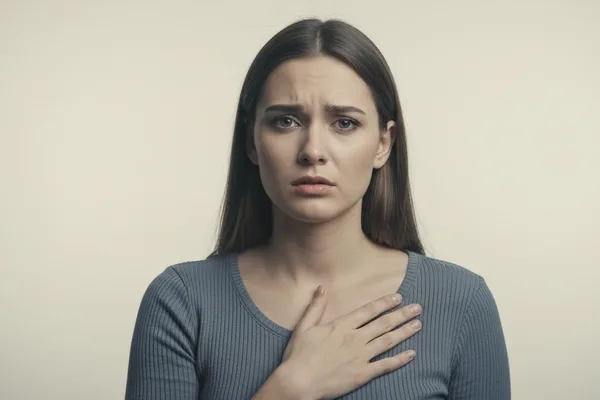
Do you sometimes feel something strange or heavy in your chest? Or do you have times when your heart suddenly beats faster and your chest feels tight? In fact, these things can be symptoms of some heart diseases. But they don't always happen. Sometimes this can be due to excessive fear in your mind, or mental anxiety.
What is Cardiophobia?
Simply put, `(Cardiophobia)` is an excessive, abnormal, and uncontrollable fear of heart-related diseases, especially things like ``Heart Attack``. You may experience chest pain, palpitations, and other symptoms. You may think that these are actually signs of a heart attack. But in reality, these may be physical symptoms caused by your fear, that is, anxiety.
Fear is something we all experience in life. It's normal. But a `(Phobia)` is an uncontrollable, excessive fear of something or a situation. In a `(Phobia)`, the level of fear is completely out of proportion to the actual danger.
If you have `(Cardiophobia),` when you are under `(Stress),` your entire attention is focused on your heart. This focus is so intense that even though medical tests clearly confirm that you do not have a heart condition, you feel as if you really do have a heart problem. You may constantly ask your doctors about this to try to be sure, you may visit your doctor frequently, and you may even avoid activities and places that you think may increase your symptoms. This `(Cardiophobia)` condition can be a major obstacle to your normal life and can also lead to constant anxiety about your heart health.
How common is `(Cardiophobia)`?
Researchers don't know exactly how many people have cardiophobia. But one study found that about 30% of people who visit a cardiologist for the first time have symptoms like chest pain that aren't actually due to heart disease. The study says the cause is anxiety, depression, or another mental health condition. The study also found that between 2% and 5% of all emergency department visits are due to cardiophobia. So it's not as unusual as you might think.
What are the symptoms of `(Cardiophobia)`?
According to the DSM-5, a guide used by doctors to diagnose mental illnesses, Cardiophobia is a specific Phobia. When you have a Phobia , you can have a Panic Attack. A Panic Attack is a sudden, intense fear that is accompanied by a variety of physical symptoms. The symptoms of Cardiophobia are very similar to those of a Panic Attack. Imagine that you are just standing still and suddenly feel your chest tightening, you have difficulty breathing, you are sweating, and you feel dizzy. At this point, you may think, "Am I having a Heart Attack?"
Here are some of the symptoms that can be seen in `(Cardiophobia)`:
- Chest pain or tightness
- Dizziness (vertigo)
- Excessive sweating
- Feeling faint or fainting
- Feeling of rapid heartbeat (palpitations)
- Numbness in the limbs
- Rapid heartbeat (Tachycardia)
- Body tremors
- Difficulty breathing (Dyspnea) or a feeling of suffocation
Are you having a ``Heart Attack''? Or a ``Panic Attack''? How do you know for sure?
This is a question that many people ask. The only way to know for sure whether you are really having a ``Heart Attack'' or a ``Panic Attack'' is through medical tests. You need to do things like an ``ECG'' test. So if you think you are having a ``Heart Attack'', meaning if you have severe chest pain, difficulty breathing, etc., the most important thing is to seek medical advice immediately.
However, if you have a constant fear of your heart, have had similar symptoms in the past, and have been tested and found to have no heart problems, then it is a good idea to talk to your doctor about the possibility of you having ``Cardiophobia''.
Why does this `(Cardiophobia)` occur?
Phobias occur when our brain takes fear and anxiety to an extreme. Fear and anxiety actually help us to some extent, protecting us from danger. This is what we call the 'fight or flight' response. But sometimes this response can occur at an inappropriate time, or in an inappropriately severe way. That's when a phobia occurs. Researchers still don't know exactly why this happens to some people. But they have found that several factors may contribute to the development of cardiophobia:
- Traumatic Experiences: If you or someone you know has had a serious heart problem, such as a heart attack, you are more likely to develop cardiophobia because of that experience. Imagine if you saw someone in your family suddenly have a heart attack, it could cause you great fear.
- Genetics: If someone in your family has had a condition like cardiophobia or other anxiety-related conditions, you may be more likely to develop the condition.
- Informational Transmission: If you constantly hear, read, or see about heart disease or heart attacks (for example, in newspapers, on TV, or on social media), you may think about those things over and over again, and develop an unnecessary fear that something similar will happen to you.
- Learned Fears: You can learn to be afraid of cardiophobia or heart disease by hearing scary stories from others and seeing how they are afraid.
What are the complications that can occur due to `(Cardiophobia)`?
If left untreated, cardiophobia can have long-term effects on your physical and mental health. Problems can worsen, especially if you are constantly exposed to triggers that cause this fear.
Effects on physical health
Here are some physical health problems that can occur with or be made worse by `(Cardiophobia)`:
- Balance problems/dizziness
- Chronic Obstructive Pulmonary Disease (COPD)
- Diseases that gradually decrease brain function (e.g. `(Frontotemporal Dementia)`)
- Heart disease (even if you don't actually have heart disease, ongoing stress can increase your risk of developing heart disease in the future)
- Parkinson's Disease
Impact on mental health
People with ``Cardiophobia`` are at increased risk of developing certain mental health conditions. Some of these include:
- Bipolar Disorder
- Depressive Disorders
- Other Anxiety Disorders
- Personality Disorders
- Substance Use Disorders (SUD)
How do I know if I have `(Cardiophobia)`?
Cardiophobia can be difficult to diagnose at first. Your primary care provider (PCP) will likely refer you to a cardiologist for a heart test. However, if you are frequently seeing your doctor about heart-related symptoms without any medical reason, it could be a sign of a condition called cardiophobia. Your doctor may refer you to a psychiatrist or psychologist for further testing and counseling.
The psychiatrist or counselor will ask you about your symptoms. They may also have you fill out a questionnaire to better understand what you are experiencing. Based on your answers to these questions, they can determine whether you have `(Cardiophobia)`. According to the guidelines `(DSM-5)`, `(Cardiophobia)` has several criteria for diagnosis:
- You constantly have an intense fear or anxiety that you are going to have a ``Heart Attack''.
- This fear causes you to avoid certain situations, activities, or places.
- If you can't avoid such things, you will experience intense fear or anxiety .
- The fear or anxiety you feel is actually much greater than the situation or reason.
- This fear or anxiety has been present for at least six months .
- This fear or anxiety interferes with your daily activities (such as work, schoolwork, family life) .
- Your symptoms cannot be explained by another medical condition (such as a true heart condition).
How to get rid of `(Cardiophobia)`?
The good news is that cardiophobia is a treatable condition. Cardiophobia is treated in the same way as other phobias. Your doctor may recommend psychotherapy, medication, or a combination of both. The treatment you receive will depend on the severity of your symptoms, your lifestyle, and your preferences.
Psychotherapy
Psychotherapy helps you change the way you think and the behaviors that are built around your fears. Cognitive Behavioral Therapy (CBT) is a very effective treatment for this. Over time, CBT (or other psychotherapy) can help you deal with and manage your fears and anxiety.
Exposure Therapy
This is also a special type of psychotherapy. There are two main types:
- Systematic Desensitization / Graded Exposure: In this method, you are gradually and systematically exposed to the things you fear (triggers). Your therapist will help you face your fears in order from the least frightening to the most frightening. This also helps you change the way you think and behave.
- Flooding: This is similar to the method above, but in this case you are exposed to the things that cause you fear, not one by one. This allows you to adapt to those triggers and learn to control your anxiety.
Medication
Sometimes, medication may be the best way to manage your phobia symptoms. Your doctor may recommend antidepressants or anti-anxiety medications. There are many different types of medications that can help with phobia symptoms, and your doctor can explain your options. They can also tell you about possible side effects and complications.
What can you expect if you have `(Cardiophobia)`?
Cardiophobia can have a significant impact on your mental health and well-being. If left untreated, this condition can lead to you avoiding the things that cause you fear and limiting your life. It can also affect various aspects of your physical health.
What is the outlook for the condition `(Cardiophobia)`?
The sooner you get treatment for `(Cardiophobia)`, the better your chances of getting the best results. If left untreated, this condition can have a significant impact on your physical and mental health. `(Cardiophobia)` affects the way you live. Therefore, getting treatment for this condition can make a big difference in your life.
Can Cardiophobia be prevented?
Unfortunately, there is no way to completely prevent the development of `(Cardiophobia)`. Because we all experience fear differently. What affects one person may not affect another. There is no clear way to reduce the risk of developing `(Cardiophobia)`.
How do I take care of myself if I have `(Cardiophobia)`?
If you think you have `(Cardiophobia)`, there are several ways you can take care of yourself:
- Seek help: As soon as you realize that your symptoms of `(Cardiophobia)` are interfering with your life, talk to your doctor. The sooner you seek help, the sooner you can begin to recover.
- Listen to your doctor: Follow the treatment your doctor recommends (which may be psychotherapy, medication, or both).
- Lifestyle changes: There are many things that can affect mental health. Getting some exercise every day, eating a nutritious diet, getting enough sleep, and staying away from alcohol and drugs can help you.
When do you need to go to the Emergency Treatment Unit (ETU) ?
Cardiophobia can increase the risk of developing mental health conditions such as depression. If you have thoughts of harming yourself or taking your life, you should seek immediate medical attention. In such a case, go to the nearest hospital emergency room immediately, or talk to someone you trust and get urgent medical advice. There are also telephone services in Sri Lanka that can help you in such times (for example, Sumithrayo - 0112696666 or 1333 National Mental Health Helpline). Don't suffer alone, ask for help.
In summary, things we need to remember
While fear and anxiety are normal, conditions like ``Cardiophobia`` take this fear to an extreme. This can make your daily life very challenging. Also, this can affect your physical and mental health.
If you think you are having symptoms of a `(Heart Attack)`, it is essential to seek medical help immediately. However, if you are still afraid of having a heart attack even though doctors say you do not have a heart problem, you may have `(Cardiophobia)`. Don't worry, there are treatments for this. You can get over this condition by talking to your doctor about it and, if necessary, meeting with a psychiatrist or a counselor. You are not alone, get help.
` Cardiophobia, cardiophobia, fear of the heart, chest pain, anxiety, phobia, mental health




💬 Comments (0)
No comments yet. Be the first to share your thoughts here.
Add Your Comment