

Have you ever heard of stroke? It is a serious condition that scares many people and can change their lives. So the main reason for this stroke is the blockage of the main blood vessels that carry oxygen and nutrients to our brain. It is like a blocked main pipe that carries water to the garden. Today we are going to talk about a very important treatment method that reopens these blocked blood vessels, allows good blood flow to the brain, and reduces the risk of stroke.
Simply put, what is Carotid Artery Stenting?
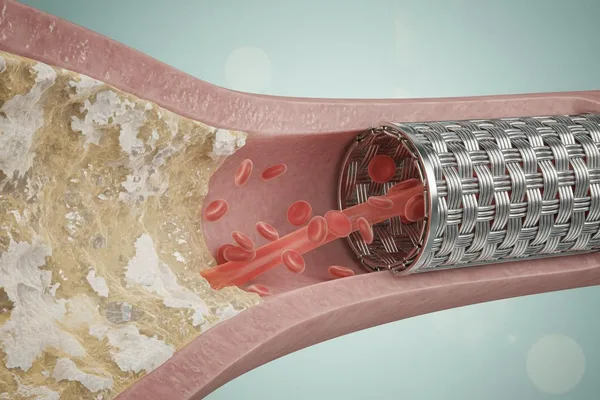
Imagine that we have two main "arteries" on either side of our neck that supply blood to our brain, face, and neck. These are what we medically call the Carotid Arteries . Over time, fatty deposits, especially cholesterol (which doctors call `plaque`), begin to build up on the walls of these blood vessels. It's like rust building up inside a water pipe. Gradually, these deposits build up and the blood vessel narrows, sometimes completely blocking it. This condition is called Carotid Artery Stenosis .
This is where a very small, mesh-like metal tube is inserted into the blocked area and the narrowed blood vessel is widened again. This is what we call a carotid artery stent .
This stent is like a sturdy bridge. It is permanently placed inside the blood vessel, and it is opened without shrinking again. Over a few weeks, the blood vessel wall heals around this stent, and it becomes part of the body.
This treatment is performed by specially trained specialists, such as an Interventional Cardiologist, Vascular Surgeon, or Endovascular Neurosurgeon.
Who really needs this treatment?
Before your doctor recommends this treatment, they will usually do an ultrasound scan, CT scan, or MRI scan of your neck blood vessels to see how much they are blocked. This treatment is often needed for people who:
- Those who have shown symptoms of a stroke or ministroke and whose carotid artery has been confirmed to be more than 50% blocked by scans.
- For those who have no symptoms, but whose carotid artery is more than 70% blocked on scans.
How should I prepare before treatment?
Although this is not as major as surgery, it does require some preparation. Your doctor will likely say the following:
- Anticoagulants: You may be asked to start taking aspirin and other similar medications (e.g., Clopidogrel, Ticagrelor) three to five days before your treatment. It is important to take these medications exactly as your doctor tells you to, as prescribed. Failure to do so may result in your treatment being delayed.
- Food and Drink: You will be asked to fast for a few hours before the treatment. Your doctor will give you specific instructions on this as well.
What happens during treatment?
There are two main ways to insert the stent into the blood vessel in your neck. Your doctor will decide which method is best for you.
| Procedure Type | Stent insertion point (Access Point) |
|---|---|
| Transfemoral or Transradial method | A small tube (catheter) is inserted through an artery in the groin of the leg or wrist , and the stent is guided through it to the jugular vein. |
| Transcarotid Artery Revascularization (TCAR) | In this method, a small incision is made in the neck, just above the collarbone, and the stent is inserted directly into the carotid artery. |
During this treatment, you will be given medication such as heparin to prevent blood clotting. The entire procedure usually takes an hour or two. However, you will have to stay in the hospital for a day, including preparation time and observation afterwards.
What happens after treatment?
After the stent is successfully placed, the medical team will do the following:
- A test like an angiogram is performed to see if the stent is wide enough and if blood flow is good.
- All catheters are removed. The stent remains in place permanently.
- You will be given the necessary medication to reduce the discomfort you are feeling.
- The results of the treatment will be explained to you and your family.
- After you go home, you will be given instructions on how to take your medication, what to eat, and how to exercise. In particular, you will be told to continue taking aspirin and other blood-thinning medications.
Very important: Do not stop taking any medications prescribed by your doctor, especially those that prevent blood clots, for any reason, without talking to him. These usually need to be taken for at least a month, and often for 6 months or more.
What are the benefits and risks of this treatment?
There are several advantages to stenting compared to the traditional carotid endarterectomy.
Main advantages
- No need for major surgery: This is a method that has less impact on the body.
- Small incision or no incision: In some methods, there is only a puncture site.
- Reduced risk of damage to the nerves in the neck.
- Reduced pain after treatment.
Possible risks (Complications)
As with all medical treatments, there are some risks. But these don't happen to everyone.
- Decreased (`Hypotension`) or increased (`Hypertension`) blood pressure.
- Slow heart rate (Bradycardia).
- Bleeding from the site where the tube was inserted.
- Blood clotting.
- Stroke: There is a small risk of stroke from a small blood clot traveling to the brain during or after treatment.
- Bleeding into the brain.
This risk can vary depending on your age, whether you have other medical conditions, and the extent of the blockage in the blood vessel. So, be open about this with your doctor and ask any questions you have.
What should you do to get the best results?
The condition that caused the blockage of the blood vessels (atherosclerosis) after the stent is placed will not be completely cured. Therefore, it is extremely important to change your lifestyle to prevent similar problems from occurring in the future.
- Avoid smoking completely: Not only cigarettes, bidis, and cigars, but even `vaping` should be stopped.
- Take your medications correctly: Take the medications prescribed by your doctor at the right time and in the correct dosage.
- Maintain a healthy weight.
- Exercise regularly: Even walking for 30 minutes a day is good.
- Follow a heart-healthy diet: eat less oil, salt, and sugar, and more fruits and vegetables.
- Control other diseases: If you have diabetes, high blood pressure, or cholesterol, keep them well controlled (e.g., keep blood pressure below 130, LDL cholesterol below 70, and HbA1c below 7).
- Go for follow-up checkups: Be sure to go to the doctor on the days he or she tells you to come and check the condition of the stent.
What is the recovery period and when should I call the doctor?
You need to rest a bit for the first week after going home.
- Avoid lifting heavy objects (more than 10 kg).
- Do not immerse the area where the tube was inserted in water for a week (e.g., taking a bath, swimming). Bathing is not a problem.
- If you're climbing stairs, climb them a little slower.
Situations that require immediate attention:
If you experience any of the symptoms of paralysis that you had before treatment (such as drooping on one side of your face, difficulty speaking, or loss of sensation in an arm or leg), go to a hospital's Emergency Treatment Unit (ETU) immediately without delay.
Also, if the site of the tube continues to bleed, swell, or oozes pus, call your doctor immediately.
Take-Home Message
- Carotid stenting is a highly effective treatment for removing blockages in the arteries in the neck that supply blood to the brain and reducing the risk of stroke.
- This has less impact on the body than traditional surgery, but there are still some risks.
- The success of the treatment depends not only on the placement of the stent, but also on how you adjust your lifestyle and take your medications correctly .
- It is very important to be aware of the warning signs of a stroke and to take action as soon as you notice such a symptom.
- If you have any doubts, fears, or questions about this treatment, discuss them openly with your doctor.




💬 Comments (0)
No comments yet. Be the first to share your thoughts here.
Add Your Comment