

Finding a soft lump on your newborn baby's head can be very scary. You might wonder if your baby is in pain or if something went wrong during delivery. This condition is actually quite common and usually harmless. We want to help you understand what a cephalohematoma is and how it heals over time.
Most lumps of this type go away completely on their own without any special medicine. As you care for your newborn at home, knowing what to expect can bring you peace of mind. Let us walk through everything you need to know about this newborn head condition in clear, simple terms.
Key Takeaways.
- A cephalohematoma is a collection of blood under the scalp, sitting between the skull bone and its outer tissue layer.
- It happens due to pressure on the baby's head during childbirth, especially during long labors or assisted deliveries.
- It is generally not dangerous and usually goes away on its own within a few weeks or a couple of months.
- Never try to press, squeeze, or massage the lump, as your baby's body will absorb the blood naturally.
- Watch for red flags like spreading redness, fever, poor feeding, or worsening jaundice and call your doctor right away.
What Is a Cephalohematoma?
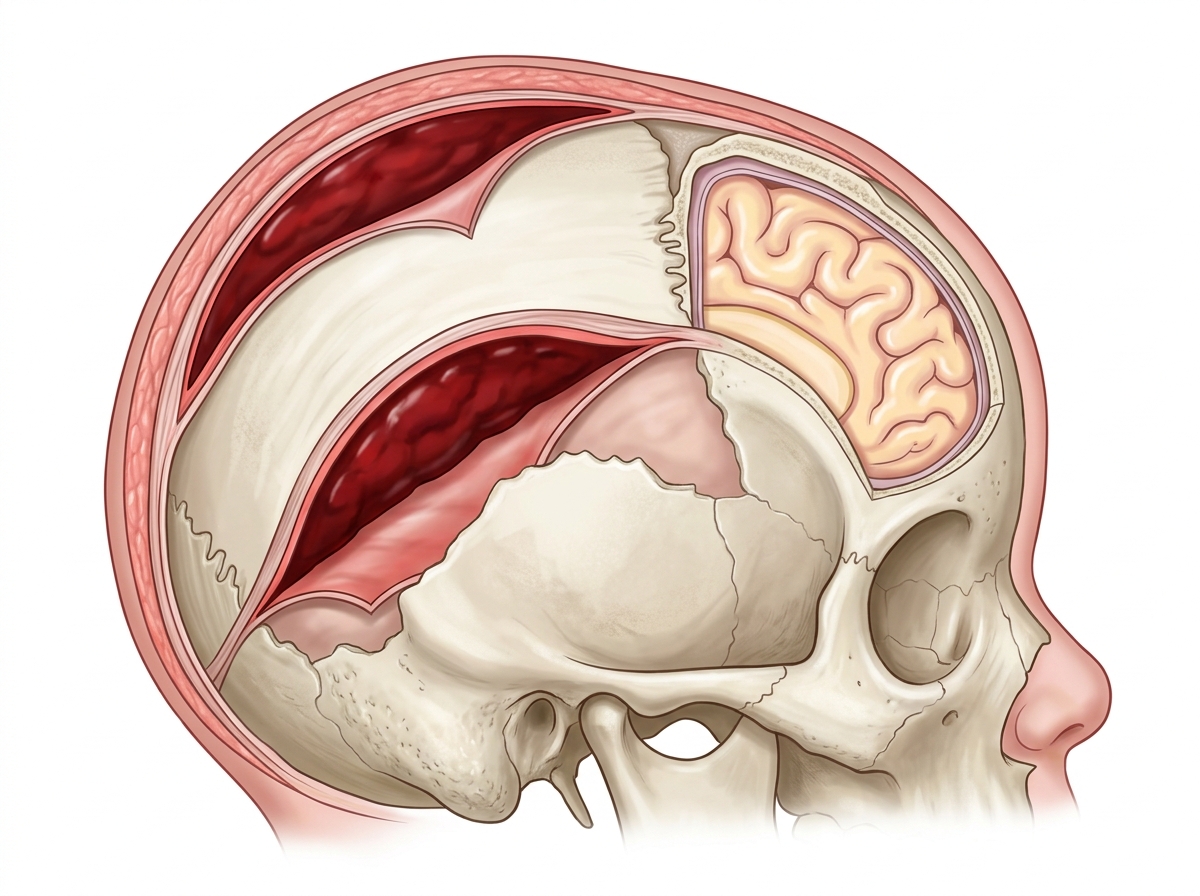
Simply put, a cephalohematoma (pronounced sef-uh-loh-hee-muh-toh-muh) is a collection of blood on a newborn baby's head. It forms right between the skull bone and the thin tissue covering the bone called the periosteum. In medical terms, a hematoma means blood that has leaked out of blood vessels and pooled in one spot. The prefix cephalo simply means relating to the head.
This pooling happens because of the pressure placed on your baby's head during the birth process. The tiny blood vessels beneath the scalp can stretch and break under this pressure. The leaked blood gets trapped under the skin, creating a soft lump or bump. It is important to know that this blood sits outside the skull bone, so it does not press directly on your baby's brain.
How Common Is This Condition?
You might wonder if every baby gets this kind of lump. The truth is that it is not extremely common. This condition typically happens in about two to three percent of all vaginal births. That means roughly two to three out of every one hundred babies will experience it.
Sometimes doctors need to use special tools to help guide a baby safely into the world. For example, doctors might use vacuum extraction or forceps during a difficult delivery. When doctors use these delivery tools, about ten percent of those babies may develop a cephalohematoma.
Why Does It Happen?
Let us look closely at the risk factors that make a cephalohematoma more likely to happen during birth. Understanding these causes can help you see why your baby developed the lump.
- Using vacuum extraction or forceps during delivery can increase the risk of scalp pressure.
- Taking an epidural for pain relief during labor can sometimes lengthen the second stage of labor.
- Having a larger baby, especially if the birth weight is over eight pounds and thirteen ounces.
- Carrying twins, triplets, or multiple babies in the womb where space is tight.
- having a long, difficult, or slow labor process where the baby's head faces prolonged pressure.
What Does It Look Like?
When your baby is born, the pressure on their head can cause tiny blood vessels to break. The blood collects under the scalp, right between the skull bone and the protective tissue layer. This creates a soft lump or swelling under the skin.
- Most of these lumps appear on the back part of the baby's head or off to one side.
- The lump often starts to show a few hours or a couple of days after birth and can grow slightly larger over the first few days.
- The skin over the lump might look bruised, with a slight blue or purple tint.
- Over time, the soft lump starts to feel harder as calcium deposits form around the outer edges.
- The center of the lump may feel soft or crater-like while the edges become firm and hard.
What to Expect and Is It Dangerous?
If your doctor tells you that your baby has a cephalohematoma, you might feel worried. Dear parents, please know that this condition is usually not dangerous at all. It is a very treatable and self-resolving birth mark.
The pooled blood under the skin will absorb back into your baby's body completely on its own within two to three weeks, or sometimes up to two to three months, without needing any special treatment.
Potential Complications to Know About.
Even though most cases are mild and harmless, rare complications can sometimes happen. Being aware of these possibilities helps you monitor your baby's health closely.
- Anemia: Because the blood in the lump comes from your baby's overall blood supply, a very large lump can sometimes cause a mild drop in red blood cells.
- Calcification: If the lump stays for more than five weeks, calcium deposits can form hard bone-like edges. Doctors can remove these rare calcium deposits through minor procedures if needed.
- Infections: Pooled blood can sometimes attract germs. Though very rare, infections like osteomyelitis or cellulitis can happen, which require immediate medical care.
- Jaundice: As the body breaks down the extra blood cells from the lump, it produces bilirubin, which can cause yellowing of the skin or eyes.
- Skull Fractures: About twenty-five percent of babies with a cephalohematoma also have a tiny linear crack in the skull bone that heals completely on its own without surgery.
Difference Between Cephalohematoma and Caput Succedaneum.
Parents often hear about another condition called caput succedaneum, which involves swelling on a baby's head during birth. Both conditions can happen alone or together, and both usually heal without treatment.
| Feature. | Cephalohematoma. | Caput Succedaneum. |
|---|---|---|
| What is it? | Blood trapped between the skull bone and its outer tissue layer. | Fluid swelling in the scalp tissues above the skull bone. |
| When does it appear? | A few hours or days after birth. | Visible right away at birth. |
| Border limits. | Stays strictly within one skull bone and does not cross suture lines. | Can spread across the scalp and cross skull suture lines. |
| Healing time. | Takes several weeks or months to disappear. | Disappears within a few days after birth. |
Simply put, a cephalohematoma contains blood. This caput succedaneum contains watery fluid. A cephalohematoma stays neatly within one skull bone. This caput swelling can spread across the entire head.
When to See a Doctor.
While most lumps heal safely on their own, your pediatrician will keep a close eye on your baby during routine clinic visits. However, certain warning signs mean you should contact your doctor right away.
Emergency Red Flags: When to Seek Immediate Care.
- Your baby cries constantly and cannot be comforted or seems unusually fussy.
- You notice signs of infant jaundice, such as yellow skin or yellowing in the whites of the eyes.
- Your baby refuses to feed, drinks much less milk than usual, or seems very sleepy and sluggish.
- The lump on the head grows larger, feels hot to the touch, turns red, or starts oozing fluid.
- Your newborn develops a fever or shows other signs of illness.
What You Should Remember at Home.
Taking care of a newborn with a head lump can feel stressful, but keeping a few key home care tips in mind will help you stay calm and confident:
- Remember that this is a common, non-harmful condition that usually heals completely on its own.
- Never press, massage, or try to drain the lump, as your baby's body will absorb the blood naturally over time.
- Attend all routine baby clinic appointments so your doctor can track your baby's growth and healing.
- Watch out for signs of complications like yellow skin from jaundice or sluggish feeding habits.
- Call your pediatrician right away if your baby develops a fever, extreme fussiness, or signs of skin infection.
A Note from Dr. Priya Sammani.
Blood collections under the scalp in newborns usually result from birth pressure and will heal naturally within a few weeks. Avoid pressing, massaging, or rubbing the lump on your baby's head, as the body absorbs the blood naturally over time.
Keep a close watch on your baby for signs of yellow skin or poor feeding habits. If jaundice symptoms worsen or if your baby drinks less milk than usual, contact your pediatrician right away. Reach out to your doctor if the lump grows larger quickly or if your baby cries constantly and cannot be calmed.


💬 Comments (0)
No comments yet. Be the first to share your thoughts here.
Add Your Comment