

Do you also have problems like severe neck pain and numbness that goes down your arm? Your doctor may have told you that a disc in your neck has slipped and is pinching a nerve. So when we talk about a surgery to replace an artificial disc as a solution, it's normal to feel a little scared. But don't worry. We'll talk about this surgery, how it's done, what the benefits are, and whether there are any risks, in a very simple way that you can understand.
What is this artificial disc replacement surgery (CDR)?
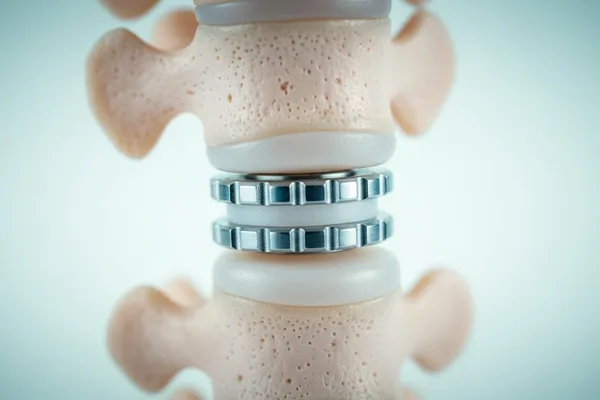
Simply put, this involves removing a damaged, worn-out disc between the vertebrae in your neck (medically known as the ``cervical spine'') and replacing it with a prosthetic disc.
Imagine that between the vertebrae in our spine, there are rubber cushions that act like shock absorbers in a car. We call these discs between the vertebrae . They are what allow us to bend, twist, and move our necks and backs easily. Over time, as these discs wear down and our spines lose height, the vertebrae begin to rub against each other, and the nerves that run nearby can become compressed.
So the main goal of this surgery is to restore the space that was once occupied by the worn-out disc. This allows the neck to move properly, and it also relieves symptoms such as pain and numbness by freeing the pinched nerves. These artificial discs are usually made of metals such as cobalt, titanium, or stainless steel.
It's normal to feel scared when you hear the word neck surgery. But this surgery, called ``Cervical Disk Replacement'', although a relatively new technique, is now performed very successfully and safely all over the world. Your doctor will explain everything about this surgery to you.
Who really needs this surgery?
This surgery is mainly recommended for people with cervical degenerative disk disease. It can be a good solution, especially for those who have radiculopathy (for example, pain, numbness, weakness that radiates down the arm) or myelopathy (for example, compression of the spinal cord) .
Typically, a doctor will only recommend this surgery if symptoms have not improved after at least six weeks of non-surgical treatments such as medication and physiotherapy.
Also, not everyone can have this surgery. There are certain conditions that may make you unsuitable for this surgery. Let's see what they are.
| Conditions that may make surgery unsuitable | Simply put... |
|---|---|
| Active infection | Having an untreated infection anywhere in the body. |
| Metal allergies | Your body is allergic to the metal that the artificial disc is made of. |
| Osteoporosis | The bones are very weak and brittle. |
| Unstable cervical spine | Cervical vertebrae are unstable and slip. |
| Severe facet arthropathy | Severe wear and tear of the small joints between the vertebrae at the back. |
You should talk to your doctor and make the final decision about whether this surgery is right for you.
How do you prepare before surgery?
After your surgery is scheduled, you will need to meet with your surgeon (who may be an orthopedic surgeon or neurosurgeon) again. Here are some things that may happen:
- You will be given a complete physical exam.
- We will ask about your medical history and current symptoms.
- They will order tests like a neck X-ray and MRI scan.
- They ask about the medications and vitamins you are currently taking.
- You may be asked to stop taking certain medications or start new ones before surgery. Do not stop taking any medications on your own until your doctor tells you to.
- Tell your doctor if you use tobacco products (cigarettes, chewing tobacco). The nicotine in tobacco slows down the healing of wounds. Therefore, you will be advised to stop using them at least four weeks before surgery.
At this point, you have the right to ask the doctor any questions, fears, or doubts you may have about the surgery. That is your right.
How is the surgery performed?
On the day of your surgery, an anesthesiologist will give you general anesthesia. This means you will be completely asleep during the surgery. You will not feel any pain. The surgeon will then follow these steps:
1. Making a small incision: A small cut (incision) is made along a crease in the skin on the front of your neck. The length and location of the incision may vary depending on your condition.
2. Reaching the spine: Then, very carefully moving the trachea and esophagus to the side to avoid damaging the organs, the surgeon reaches the cervical vertebrae.
3. Removal of the damaged disc: Throughout the surgery, a special X-ray technology called ``fluoroscopy'' is used to look at the exact location and completely remove the damaged, worn disc.
4. Artificial disc implantation: An artificial disc of the appropriate size is implanted into the space where the removed disc was.
5. Stitching the incision: The organ that was moved aside is then brought back to its original position, and the incision is carefully closed and stitched shut.
What happens after the surgery?
After the surgery, you will be taken to a recovery room. The medical team will monitor your heart rate and blood pressure until you wake up from the anesthesia.
You may usually have to stay in the hospital overnight. The doctor will let you know when you can go home. You won't be able to drive home, so you will need someone to drive you home.
Your doctor will give you a series of instructions to help your wound heal quickly after you go home. These may include:
- Taking pain medication on time.
- Getting plenty of rest and limiting physical activity for a few days (for example, avoiding heavy lifting, running, and jumping exercises).
- Keeping the incision site clean and how to care for it.
- Participating in physical therapy.
What are the benefits and risks of this surgery?
Like any surgery, this one has benefits as well as minor risks.
Advantages and success
Research has shown that most people who undergo this surgery experience significant short-term and long-term pain relief . It also helps maintain good neck mobility. Most people are able to return to their normal activities after about six months.
Risks and complications
Complications after this surgery are very rare, but it's important to be aware of them.
| Type of complication | Description |
|---|---|
| Short-term complications (which can occur quickly) | |
| Wound infection | Fermentation of the incision site. |
| Difficulty swallowing (Dysphagia) | Difficulty swallowing food or liquids. This is usually temporary. |
| Hoarseness of voice | A change in voice. This is also often temporary. |
| Long-term complications (which may occur over time) | |
| Adjacent segment degeneration (ASD) | The discs above or below the artificial disc wear out over time. |
| Artificial disc problems | Very rarely, a disc can become loose or rupture. |
| Bone growth in the wrong place (Heterotopic ossification - HO) | New bone growth around the artificial disc may limit neck movement. |
How long does it take to fully recover?
It can take up to six months to fully recover. But you can gradually return to your normal activities. The typical recovery time frame is as follows:
- Two days after surgery: You can do daily tasks on your own, such as washing your face and making tea.
- Weeks two to three: You can engage in normal, light activities.
- Weeks four to six: You can return to most non-contact sports.
These times can vary from person to person, so it's important to ask your doctor about what you can and can't do and follow their instructions exactly.
When do you need to see the doctor urgently?
If you experience any of the following symptoms after going home after surgery, call your doctor or go to the hospital immediately .
- If the incision site is bleeding continuously.
- If a yellow or green pus-like fluid is coming out of the wound.
- If you have severe pain .
- If you get a fever .
- If the difficulty in swallowing food is increasing.
- If you develop new numbness or weakness in a leg or arm .
After surgery, you will need to see your doctor for several follow-up appointments to check how your wound is healing and whether the artificial disc is working properly. Your doctor will let you know when these appointments are.
Take-Home Message
- Cervical disc replacement surgery (CDR) is a safe and effective treatment for severe pain and nerve compression caused by degenerative discs in the neck.
- This surgery can reduce pain and maintain good neck movement.
- It takes several months to fully recover, and it is very important to follow the doctor's instructions exactly.
- If you have any questions about the surgery, the recovery time, or anything else, don't hesitate to ask your doctor.




💬 Comments (0)
No comments yet. Be the first to share your thoughts here.
Add Your Comment