
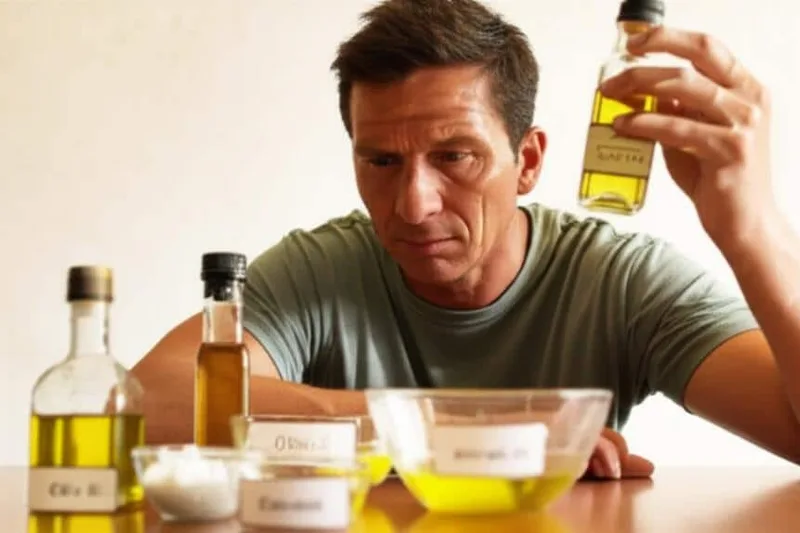
Has your doctor told you that your cholesterol level is a little high? When that happens, the first thing that many people think and do is to completely eliminate oils and fats from their diet. They think, "Eating oil is the cause of this, so don't eat oil." But did you know, according to nutrition experts, suddenly eliminating all types of oil will do more harm than good to your efforts to lower your cholesterol. When it comes to fats, the most important thing is to choose the right amount and type .
Why are fats/oils essential for our bodies?
Since there is a link between blood cholesterol levels and the fat in the foods we eat, you might think that cutting out fat from your diet altogether is the best thing to do. High cholesterol is a risk factor for serious conditions like heart disease and stroke. But experts say that such extreme dietary restrictions are bad for you.
"The worst thing you can do for your heart and overall health is to completely eliminate fat from your diet. It's hard for you to adjust to a fat-free diet, and it's not good for your health ."
Simply put, fatty acids are essential for our bodies to function properly. Some types of fat , especially omega-3 fatty acids, are actually very good for your heart. They also help transport and absorb fat-soluble vitamins like vitamins A, D, E, and K throughout the body. Not only that, but fat also provides our bodies with energy, or calories.
Besides, fat helps with the taste and smell of a meal, as well as helping you feel "full" after eating. Just think, can you continue eating a meal that doesn't contain any fat? It doesn't feel satisfying, right? So, rather than cutting out fat altogether, it's more important to choose the right kind.
What are the best oils to use when cooking to lower cholesterol?
To control cholesterol levels, it is important to limit the amount of fat we consume, and also to choose the right type of fat when cooking. The fat we use in things like butter, margarine, and vegetable oils can be divided into two main categories: good fat (unsaturated fat) and bad fat (saturated and trans fat).
| Fat type | Description and foods included |
|---|---|
| Good Fat (Unsaturated Fat) | These are good for the heart. They prevent blood vessels from becoming blocked. This is the type we should mainly use. - Monounsaturated fat: Olive oil, canola oil, sesame oil, avocados and avocado oil, nuts like peanuts and their oils. - Polyunsaturated fat: corn oil, sunflower seeds and oil, soybeans and soybean oil, fish oil. |
| Bad Fat (Saturated & Trans Fat) | These increase the risk of blood vessel blockage. Their use should be greatly limited. - Saturated fat: High-fat meats, full-fat dairy products (butter, cheese, ice cream), coconut oil , palm oil. - Trans fat: Processed foods such as stick margarine, shortening, store-bought biscuits, crackers, and pastries. (Cooking oils generally do not contain trans fat.) |
What you need to know specifically about our coconut oil
As you can see, coconut oil is categorized as a 'bad fat'. The reason for this is that coconut oil is high in saturated fat . But there is an important point that we need to understand here. Since coconut oil is a plant-based product, it does not contain cholesterol . However, because it is high in saturated fat, like anything else, coconut oil should be consumed in moderation . While you don't have to give it up completely, it is wise to avoid excessive consumption.
Our body produces the amount of saturated fat and cholesterol it needs. Therefore, there is no need to get more of these from outside. We don't need trans fats at all.
The real difference between good and bad oil
In fact, most of the oils we use to cook with are a mix of both good and bad fats. For example, olive oil is considered a "good" oil, but it also contains some saturated fat (bad fat). Similarly, butter is considered "bad," but it also contains some unsaturated fat (good fat). Whether an oil is good or bad depends on which type of fat it contains in greater abundance.
But remember, just because an oil is "good" doesn't mean you can use it in excess. Doing so will not help lower cholesterol.
Even good oils (like olive oil) can add unnecessary saturated fat and calories to your body when consumed in moderation. Like butter, olive oil also contains calories. When unnecessary calories are added to the body, body weight increases. Being overweight is another major risk factor for heart disease.
So what types of oils should you keep in the kitchen?
Okay, so what types of oils should we use when cooking to lower cholesterol?
- For general cooking: It's best to keep oils that are high in unsaturated fats and can withstand high temperatures in your kitchen. Examples include vegetable oil, canola oil, and sunflower oil. These are inexpensive and can be used to prepare a variety of dishes.
- For a special flavor: You can also use things like avocado oil and almond oil.
- About Olive Oil: You can cook with olive oil. However, oils like extra-virgin olive oil, sesame oil, and walnut oil should not be exposed to high heat. They burn easily, losing their properties and flavor. These are best used in salads or as a drizzle over cooked vegetables.
Aside from coconut oil and palm oil, other vegetable oils are the ones most recommended by experts. But that doesn't mean you have to give up butter or margarine completely. The important thing is to limit your use of them.
Okay, now let's cook in a way that lowers cholesterol!
There are a few simple ways to reduce bad fats in your diet.
- Use less than the recipe calls for: For example, if a cake recipe calls for 1/2 cup of butter, you should use 1/4 cup of butter and 1/4 cup of a good quality oil.
- Use healthier substitutes: Replace shortening with something like canola oil.
- Use fat-free substitutes: When making things like pancakes and muffins, you can replace part of the oil in the recipe with sugar-free applesauce or fat-free yogurt.
Here are some practical substitutes you can use.
| Instead of these... | Try these... |
|---|---|
| 1 cup sour cream | 1 cup low-fat Greek yogurt or skim milk |
| A tablespoon of butter for frying | 1 teaspoon butter + 1 1/2 teaspoons canola/other vegetable oil |
| 1/2 cup butter for baking | 1/2 cup canola or vegetable oil or 1/4 cup canola oil + 1/4 cup mashed bananas or 1/4 cup canola oil + 1/4 cup sugar-free applesauce |
| 1/2 cup butter for brownies | 1/4 cup oil + 3 tablespoons chopped dried plums |
| 1 cup whole milk | 1 cup 1% low-fat milk or A plant-based milk such as soy milk/almond milk |
Whichever method you follow, the result is the same: reducing the amount of bad fats (saturated and trans fats) added to your diet.
Take-Home Message
- Fat is essential for your body to stay healthy, so don't eliminate fat from your diet completely.
- The most important thing is to choose good fats (unsaturated fats) and reduce the consumption of bad fats (saturated and trans fats) as much as possible.
- Even good oils should be used in moderation, as they are also high in calories. Excessive use can lead to weight gain.
- Read the label of store-bought processed foods (biscuits, pastries) and check if they contain trans fat .
- If you have concerns about your cholesterol levels and diet, always talk to your doctor .


💬 Comments (0)
No comments yet. Be the first to share your thoughts here.
Add Your Comment