

Do you often have stomach pain, bloating, or severe diarrhea? You may have noticed that you sometimes have mucus-like things or even a little blood in your stool. While you may think that these are just stomach upsets, they could be symptoms of a condition called colitis . So let's talk about this in a little more detail today, shall we?
What is colitis? Simply put...
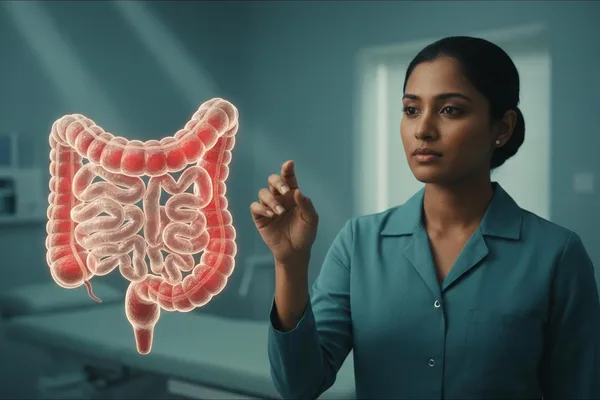
Simply put, colitis is inflammation of your colon , the main part of your large intestine. Think about it, the colon is the last part of the food we eat that travels through our body. So, when you have inflammation of the colon, which means swelling, redness, or pain, the last part of that food journey gets a little messed up. That's when you get stomach pain, diarrhea, and sometimes blood in your stool. Inflammation is actually our body's response to an injury or infection in our body.
Is colitis a serious disease?
There are different types of colitis, and their causes are also different. Some of them, for example, colitis that occurs when you have a bacterial infection like food poisoning, get better in a few days, and are easy to treat. However, there are also chronic colitis, which means it is ongoing and difficult to cure. We call these (Inflammatory Bowel Diseases - IBD) . Colitis becomes a little more serious if it is left untreated and continues. If that happens, it can cause serious damage to your colon over time. It can also have a big impact on your daily life.
What are the symptoms of colitis?
These are the symptoms that are commonly seen by many people:
- Abdominal pain
- Bloated stomach
- Urgent diarrhea (sudden, intractable diarrhea)
- Mucus or blood in your poop
- Loss of appetite
- Weight loss
In acute cases, the following can also be seen:
- Nausea and vomiting
- Fever
In chronic cases, the following symptoms may also occur:
- Extreme fatigue/fatigue
- Anemia (blood deficiency)
- Dehydration (water retention)
- Malabsorption and malnutrition
How does someone get colitis?
There are several types of colitis, each with a different cause. Let's take a look at what they are.
1. Infectious Colitis
This is caused by a viral, parasitic, or bacterial infection. For example , bacteria called Salmonella and E. coli are the main causes. It is often caused by eating dirty, contaminated food or water. Most of the time, it is temporary and gets better in a few days. However, some infections require antibiotics . Imagine that you have been on a trip and have a stomach ache.
2. Pseudomembranous Colitis
This type of colitis is mainly caused by a bacteria called (C. diff) or (Clostridioides difficile) . Surprisingly, it often develops after using antibiotics. (C. diff) bacteria are normally present in our intestines, but some antibiotics kill off the other good bacteria that help keep them in check. (C. diff) bacteria then multiply rapidly and cause this condition.
3. Allergic Colitis
This is especially true for breastfed babies . This is due to food intolerances. Most often, this allergy is caused by cow's milk (called lactose intolerance ) or soy milk (called soy allergy). Some proteins in the foods that nursing mothers eat pass to the baby through breast milk, causing this condition.
4. Ischemic Colitis
This is a side effect of a condition called intestinal ischemic syndrome . This is when your intestines don't get enough blood supply . This ischemia , or reduced blood supply, is caused by blockages in your blood vessels. For example, it can be caused by a blood clot , an aneurysm (a bulging blood vessel), or atherosclerosis (a buildup of fatty plaque on the walls of your arteries, making them thinner/harder).
5. Inflammatory Bowel Diseases (IBD)
This is a group of diseases that cause chronic inflammation of your colon. It includes conditions like ulcerative colitis , microscopic colitis, and Crohn's disease . It's hard to pinpoint a single cause. Doctors believe that these are autoimmune diseases . That means your immune system mistakenly attacks your own body's own tissues. These diseases are thought to have both genetic and environmental factors .
6. Radiation Colitis
This can occur as a side effect of radiation therapy for some types of cancer . Most of the time, it is temporary, but some people may have ongoing symptoms.
7. Diversion Colitis
This is a side effect that can occur in people who have had a colostomy (a surgical procedure in which part of the large intestine is removed and a pouch is created to hold stool). It occurs in the part of the large intestine that is no longer used. Doctors think that because stool is not passing through that part, it is not getting some of the nutrients that are needed to keep the tissue healthy. However, this only causes symptoms in a very small number of people.
What are the possible complications of colitis?
Complications often occur due to severe, long-term, chronic colitis. Some of them are:
- Perforation: The walls of your colon become weakened by ongoing inflammation, making them more likely to rupture. An ulcer in your colon can even completely rupture. If this happens, bacteria from your colon can enter your abdominal cavity and cause an infection ( peritonitis ). Not only that, but the bacteria can also get into your bloodstream and cause blood poisoning ( septicemia ). This is very dangerous, as septicemia can lead to a life-threatening condition called sepsis .
- Toxic Megacolon: Severe inflammation can cause the walls of the large intestine to dilate, disrupting normal muscle contractions (peristalsis, the regular movement that pushes food through the intestines). This can cause food and air to become trapped in the large intestine, causing a large bowel obstruction . This can cause severe abdominal distension and pain, and can increase the risk of intestinal perforation.
- Increased risk of colon cancer: Long-term inflammation causes cellular changes in the walls of the colon, which can sometimes turn into cancer cells. This risk increases rapidly after the first decade of chronic colitis.
- Increased risk of other inflammatory diseases: People with inflammatory bowel disease (IBD) are more likely to develop inflammatory diseases in other parts of the body. For example, osteoarthritis (joint inflammation) and primary sclerosing cholangitis (inflammation of the liver and bile ducts). It seems that uncontrolled inflammation in one area can cause similar problems in other areas.
How is colitis diagnosed?
Your doctor will first ask you about your symptoms, when they started, what you ate and drank at the time, and any medications you are currently taking and any recent medical conditions you have been treated for. They will then do a physical exam and order tests. These may include blood tests, stool tests , and imaging tests (such as a scan) to look at your colon.
In particular, endoscopic tests (e.g., colonoscopy , flexible sigmoidoscopy ) that use a camera to look inside the colon can be very helpful in determining what type of colitis you have. During these tests, doctors can take a small sample of tissue from inside the colon. This is called a biopsy . These tissue samples can be examined in a laboratory to learn a lot of important information.
How is colitis treated?
Treatment for colitis depends on the type and cause. This may include:
- Medications: Your doctor may prescribe medications such as antibiotics to treat infections, corticosteroids to reduce inflammation, immune modifiers to suppress your autoimmune response, and aminosalicylates to treat IBD.
- Diet: If you have temporary, sudden colitis, a low-fiber , easily digestible diet may be appropriate. If you have chronic colitis, you will need a customized diet plan. You may need to eliminate foods that aggravate your colitis and add other foods or supplements to make sure you are getting the nutrients you need.
- Surgery: People with some types of colitis, such as necrotizing enterocolitis , ischemic colitis, and inflammatory bowel disease (IBD), may need surgery to treat complications. Surgery does not always completely cure these conditions, but it may be necessary to stop bleeding, repair a hole, or remove a blockage.
Does colitis get better?
Acute colitis caused by a temporary infection, food intolerance, or radiation exposure usually resolves on its own. Some infections, especially parasitic infections, may require treatment. Most infections resolve within a week, but radiation colitis can take several months to resolve. Allergic colitis resolves when your child is completely free of the allergen.
Colitis that occurs as an emergency response to a chronic condition requires treatment. Ischemic colitis caused by intestinal ischemic syndrome can only be cured by restoring blood supply to the colon. Diversion colitis in people who have had a colostomy can only be cured by removing the colostomy and restoring full use of the colon (this is called anastomosis surgery - that is, reconnecting parts of the colon). Some people may not be able to do these solutions.
Chronic colitis caused by inflammatory bowel disease (IBD) is a lifelong condition. It doesn't go away completely, but you may be symptom-free for a while. This is called remission . The focus of treatment for IBD is to reduce your symptoms and prolong this remission as much as possible. This is the case if your colitis is caused by another disease that can't be cured. In some cases, surgery can be used to treat it.
What kind of diet helps when living with colitis?
Your doctor may suggest one or more of these diets, depending on the type of colitis you have:
- Low-residue diet: This type of diet is easy to digest, especially when your symptoms are suddenly worsening or severe. It limits fiber and fat and focuses on bland, well-cooked foods. If you have a temporary infection or radiation colitis, your doctor may suggest a low-residue diet .
- Anti-inflammatory diet: To keep chronic inflammation at a low level, your doctor may recommend that you avoid foods that increase inflammation, especially fast and processed foods that are high in sugar and fat. Instead, you may be advised to eat more healthy, unsaturated fats (e.g., olive oil , avocados , nuts , oily fish ) that reduce inflammation. The Mediterranean diet is a diet that naturally reduces inflammation.
- Elimination diet: If you have Inflammatory Bowel Disease (IBD), your doctor will often suggest an elimination diet to identify the foods that are causing your symptoms. In this method, you stop eating certain foods completely for a while, then gradually reintroduce them one by one to see how your gut responds. After this temporary elimination diet, you can use what you've learned to create a long-term maintenance diet that works for you.
Important: Although the exact cause of chronic colitis is unknown, the condition is becoming increasingly common in Western countries. Although we don't know exactly why, doctors suspect that the modern Western diet may be involved. This diet, which is high in processed foods and saturated fats, which increase inflammation, may contribute to chronic, low-level inflammation in the intestines. Adding whole foods and unsaturated fats to your diet, which reduce inflammation, can help protect your intestines.
The most important thing to remember (Take-Home Message)
Colitis is not something to be afraid of, but it is important to be aware of it. If you have symptoms such as persistent stomach pain, diarrhea, or blood in your stool, you should definitely seek medical advice . Early diagnosis and proper treatment can help prevent many of the complications of colitis. Also, maintaining a balanced, nutritious diet and a healthy lifestyle can go a long way in protecting yourself from these conditions. You are not alone, and there are many people to talk to and get help from.
` Colitis, inflammation of the colon, diarrhea, stomach pain, IBD, digestive system, health




💬 Comments (0)
No comments yet. Be the first to share your thoughts here.
Add Your Comment