
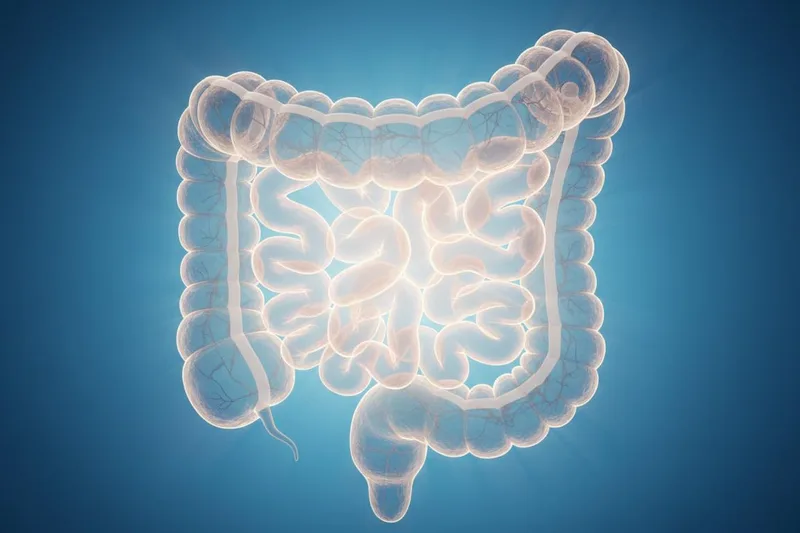
Has your doctor ordered you to have a colonoscopy? Then you may have been told about bowel prep before the procedure. Many people find this a bit scary, uncomfortable, and uncomfortable. But doing it right is essential for the success of your test. Only when your colon is completely clean will the doctor be able to see everything clearly and tell you exactly if there is a problem. So let's talk about how to overcome your fear and do it right.
What exactly is Colonoscopy Prep?
Simply put, colonoscopy prep is the process of completely emptying and cleaning your colon of stool. Think of how hard it is to find a small stool on the floor in a dirty room. Similarly, when there is stool inside the colon, the doctor cannot see well.
Even very small things like a growth of cancerous cells (Polyps) can be missed. These small ``Polyps`` can turn into colon cancer over time. Therefore, it is important that the inside walls of the colon are very clean, like taking a clear picture with a camera. This is why we do this bowel cleansing process, or ``Bowel Prep``.
What's in this Bowel Prep Kit?
This is an oral laxative that you usually get in the form of a liquid or a pill. You will need to take it the night before your test. You will need to go to the bathroom frequently after taking it. There are several types of this medicine. Your doctor will prescribe the one that is best for you.
These medicine kits have two main parts:
- Osmotic laxatives : These are the main active ingredients that make you go to the toilet. These are chemicals that our intestines cannot absorb. Therefore, the intestines pull water from the body into themselves. This extra water makes the stool very liquid, increasing the volume inside the intestines. This stimulates the muscles in the intestines, pushing everything inside out faster. We call this ``(Peristalsis)``.
- Electrolytes: Imagine what happens when a large amount of water is suddenly lost from the body. Dehydration can occur. Also, along with the water, many essential salts (such as sodium and potassium) are lost. If these salts, or electrolytes, are depleted, it can cause serious health problems. To prevent this, these stomach cleansing medicines have added the necessary electrolytes.
What are the main types of medicines for cleansing the stomach?
There are two main categories of medications. Let's look at them separately.
1. Polymer-based drugs (PEG Formulas)
These are the types most often prescribed by doctors. The main ingredient is polyethylene glycol 3350 , or (PEG) for short. This is a large molecule that is not absorbed by our intestines. These usually come in powder form. You have to dissolve it in a large amount of water (maybe 4 liters) and drink it.
Some names on the market:
- GoLYTELY
- CoLyte
- NuLYTELY
- TriLyte
- MiraLAX
- Halflytely
- GaviLyte
- MoviPrep
| Pros | Cons |
|---|---|
| These are very effective in cleansing the intestines. | Some people find it difficult to drink large amounts of water, such as 4 liters. |
| It does not cause any damage or discomfort to the inner walls of the intestines, making it gentler for those with inflammatory bowel conditions (such as IBS). | The taste of the medicine may be difficult for some people to swallow. |
| It is safest for people with kidney, liver, or heart disease, meaning they are at higher risk of dehydration and salt imbalances. | Some people may not be able to finish drinking this completely. If this happens, the test may have to be postponed because the stomach will not be properly emptied. |
Good news! There are new options to help you avoid these inconveniences. Some medications come with a flavor. You can also add a flavoring powder of your choice (one that isn't red). There are also brands that require less liquid and are combined with another laxative, such as MoviPrep, Halflytely.
2. Saline-based Formulas (NaP)
These mainly contain sodium phosphate (NaP) and other minerals such as potassium and magnesium. The biggest advantage of these is that you don't have to drink a lot of them as they are a liquid, and they also come in tablet form . But these are not suitable for everyone.
Some names on the market:
- Clenpiq
- Suprep
- Prepopik
- Visicol
- OsmoPrep
- SUTAB
| Pros | Cons & Risks |
|---|---|
| It's very convenient for people who don't like to drink a lot of fluids. Some people like this because it can be taken in pill form. | These salts can cause intestinal discomfort in people with inflammatory gastrointestinal disease. |
| If the instructions are followed exactly, they are as effective as PEGs. | There is a high risk of affecting the body's salt and fluid balance. Some minerals may increase in the body. |
Who is at risk from these types of NaP?
If you have any of the following conditions or risk factors, your doctor will likely recommend a PEG.
| Conditions and risk factors for which NaP types are not recommended | |
|---|---|
| Kidney disease `(Renal insufficiency)` | Liver disease `(Hepatic insufficiency)` |
| Congestive heart failure / Myocardial infarction | Heartbeat irregularities `(Arrhythmia)` |
| Inflammatory bowel disease | Some medications for high blood pressure (ACEIs and ARBs) |
| Diabetes | Being over 65 years of age |
| Continued use of NSAID painkillers (such as Aspirin, Ibuprofen) | Use of diuretics |
How do I choose the best prep that suits me?
This really depends on your personal health. Some people can do this without any difficulty. Others may have concerns about taking the medication, the side effects it may cause, or whether it will cause complications due to other medical conditions they have. Your doctor will consider all of this and choose the most appropriate and safest medication for you.
The most important thing: Tell your doctor about every illness you have and every medication you take (even vitamins) without hiding anything. That way, he or she can give you the safest option.
You may have a few more questions.
How many hours before the colonoscopy should I start the prep?
You should start preparing for this a few days in advance. That means controlling your diet. You will usually be asked to eat a low-fiber diet for two to three days beforehand. On the last day, you will only be allowed to eat a clear liquid diet. The time to start taking the medication will be clearly stated in the instructions you will be given. It usually starts the evening or night before the test.
How long after taking this medicine does it take for the stomach to start moving?
It depends on the type of medicine you take. A PEG can start working within one to three hours. A NaP can take three to six hours. If you have severe constipation, it may take a little longer. If you don't have a bowel movement even after taking the medicine for a long time, talk to your doctor.
Will I have to stay in the washroom all night because of this?
Most likely not. If you start taking the medicine on time, most people can finish this round of going to the bathroom before going to bed. Sometimes the medicine can be split into two doses. Then you take one at night and the other in the morning of the test. Either way, you will get the rest you need to sleep.
What do you do if you still have to go to the toilet during the test?
If your stool is clear as water (although it may be yellow, but it looks like water, and there is no dirt), it means that your prep is successful and your bowels are clean. It is not a big deal if you have to go to the bathroom a little at a time. If you started your prep on time, you will have stopped going to the bathroom by the time you get to the hospital. If you are worried about an accident, you can use something like an adult diaper to give you some peace of mind.
At this time, definitely call the doctor.
In the following cases, inform your doctor or hospital without delay.
| Opportunity | Description |
|---|---|
| If you miss the instructions | If you forget to stop eating at the scheduled time, or if you are late in starting to take the medicine. |
| If the medicine doesn't work | If your bowel movements haven't started to go away even after hours of taking the medicine. |
| If a severe reaction occurs | If you have severe stomach pain, persistent vomiting, or are unable to keep fluids down. |
| If you cannot complete the medication | If you feel unable to take the full dose of medication due to vomiting, nausea, or other reasons. |
| Sudden illness | To find out if the test should be postponed if you develop an illness such as a fever or cold in the days before the test. |
You already know how important it is to have a colonoscopy. It is also important to follow the instructions for this bowel cleansing procedure beforehand. If you don't, you won't get the full benefit of your test. You may have to do it all over again. So, even though it's a little difficult, it's very important to do it right.
Take-Home Message
- For a successful colonoscopy, a complete bowel preparation is essential.
- Tell your doctor about all your medical conditions and medications you take so he or she can choose the safest prep kit for you.
- Read the doctor's instructions carefully and follow them exactly. Do everything correctly, from controlling your diet to the timing of taking your medication.
- If you experience any problems or severe discomfort during the prep, don't be afraid to talk to your doctor.
- This discomfort is temporary. But this test could save your life. Therefore, it is very important to complete these steps correctly.




💬 Comments (0)
No comments yet. Be the first to share your thoughts here.
Add Your Comment