
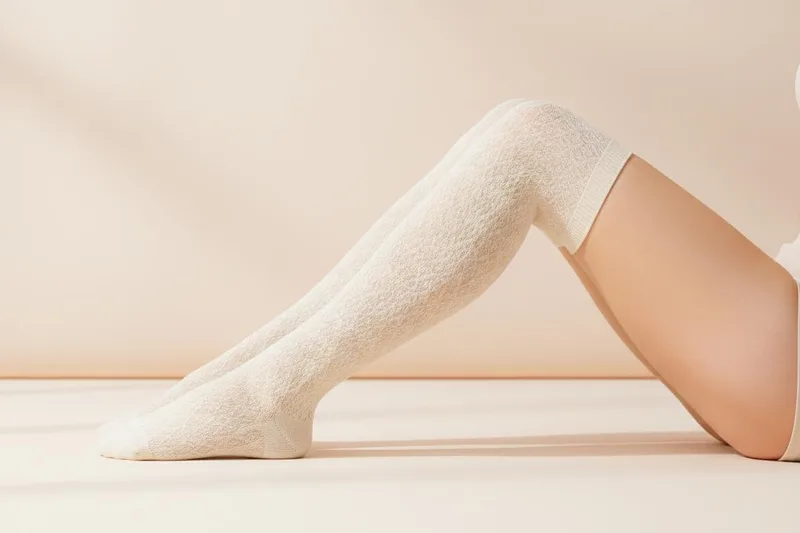
Are you someone who has to stand or sit in one place all day long? Do you come home at the end of such a day and your legs feel swollen and heavy? You may have seen blue veins on your mother's or grandmother's legs, which look like knots. Today we are going to talk about a very useful treatment that many people don't know about, which can help with things like this.
Simply put, what is Compression Therapy?
The name may sound like a big deal, but it's actually quite simple. Compression Therapy is a treatment that is used to improve blood flow in your legs. We use specially designed, stretchy stockings or wraps.
Think about it, blood travels from our legs back to our heart against gravity. This journey is aided by tiny valves inside our veins. Sometimes, when these valves become weak, blood doesn't flow properly and starts to pool in our legs, especially around our ankles and feet. That's what we call swollen legs.
When you wear a compression sock or band, it puts pressure on your leg. This pressure is like someone squeezing your leg. This squeezing forces the blood that has accumulated in the veins back up towards the heart. It also stops the accumulation of unnecessary fluids. Simply put, this treatment gives a little 'jump' to the blood circulation in the legs.
Are there different types of this treatment?
Yes, there are several types that you can use depending on your needs.
- Compression Stockings: These are the most commonly used type. Knee-length stockings are the most common. However, if the swelling extends above the knee, you may need to use thigh-length stockings or waist-length tights.
- Bandages and Wraps: For those who have difficulty putting on socks, these elastic bandages or wraps with Velcro are easy to use. These are sometimes wrapped in multiple layers when treating things like wounds.
- Inflatable Devices: These are like a garment that completely covers the leg. A machine attached to it periodically inflates it and applies pressure to the leg. These are mostly used by athletes to help them recover faster after exercise.
How are pressure levels determined?
The most important thing about these types of socks is the pressure they provide to the leg. This is measured in mmHg (millimeters of mercury). The level of pressure required will vary depending on your medical condition.
The most important thing is to ask your doctor what level of pressure you need. It's not a good idea to just use socks that have the pressure you feel comfortable with.
| Pressure Level | Pressure (mmHg) | Commonly used situations |
|---|---|---|
| Low | Less than 20 mmHg | During pregnancy, for those who stand or sit all day, for minor swelling. These are usually available over the counter. |
| Medium | 20-30 mmHg | Varicose veins, DVT prevention, moderate swelling. These require a prescription. |
| High | Above 30 mmHg | For severe venous thromboembolism, post-DVT, leg ulcers, and severe swelling (Lymphedema). These also require a medical recommendation. |
What are the main medical conditions for which Compression Therapy is recommended?
Doctors recommend this treatment for many conditions caused by poor blood circulation in the legs.
1. Chronic Venous Insufficiency
This is a very common condition. As mentioned earlier, this condition occurs when the walls of the veins in the legs become weak and the valves inside them do not work properly. Blood does not flow properly and pools in the legs. This can be caused by standing or sitting for long periods of time, aging, and even a deep vein thrombosis (DVT).
2. Varicose Veins
The main cause of this condition, which many of us are familiar with, is the previously mentioned Chronic Venous Insufficiency. The veins fill with blood, become twisted, swollen, and appear as blue cords above the skin. Compression Therapy provides great relief from the pain and swelling caused by this.
3. Deep Vein Thrombosis (DVT)
This is a serious condition. DVT is when a blood clot forms in a deep vein in the body, especially in the leg. This clot blocks blood flow, causing blood and fluid to collect behind it, causing the leg to swell.
This treatment is also used to prevent DVT in people who are at risk of developing it (e.g., pregnant women, after surgery, very obese people, cancer patients) . If you already have DVT and are taking blood-thinning medications (anticoagulants), you should definitely talk to your doctor before starting this treatment.
4. Swelling of the feet, ankles, or legs (Edema)
Swelling occurs when fluid builds up in the body's tissues. Leg swelling can occur for a variety of reasons, including congestive heart failure, lymphedema, and pregnancy. Compression therapy helps push this fluid back into the bloodstream, reducing swelling.
5. Leg Ulcers
These are open wounds that take a long time to heal. People with poor circulation, such as diabetes or varicose veins, are more likely to develop these types of wounds on their legs. Compression therapy increases blood flow to the wound, helping it heal faster.
6. Fainting upon standing (Orthostatic Hypotension)
Do you feel dizzy or light-headed when you suddenly stand up from a sitting position? This is because your blood pressure suddenly drops. This is caused by a delay in the blood returning from your legs to your heart. Compression stockings help control this condition by pushing the blood up into your legs.
How to use this treatment correctly?
To get the most out of this, you need to take care of these things.
1. Medical advice: First, see your doctor and find out exactly what pressure level and type of socks are right for your condition.
2. Correct Size and Fit: This is the most important thing. If the sock is too tight or too loose, it will not be of any use and may cause side effects. Usually, when you go to a medical supply store with a prescription, the trained staff there will take your leg measurements (ankle, calf, thigh) and choose the right size for you.
3. How to put it on: It's best to put the socks on when you get out of bed in the morning, before your feet swell. Some people find them a little difficult to put on. There are special devices (sock aids) that can help with this.
4. How long should you use it?: Usually, you are told to wear it during the day, when you are awake, and take it off at night when you sleep. However, in special cases, such as injuries, you may be asked to wear it overnight. So follow your doctor's instructions accordingly.
Can this cause side effects?
Most of the time, the problems that arise are not that serious, but it's good to be aware of these things.
- Numbness or redness of the skin.
- Discomfort or pain.
- Bacterial or fungal infections (when the skin is completely dry and no longer healing).
- Swelling in the toes (due to low pressure in that area).
Things like this often happen when the socks don't fit the right size or are not used correctly.
Warning: If you experience leg pain, numbness, or blue/pale toes while wearing the socks , remove the socks immediately and contact your doctor. This may be a sign that the socks are too tight.
Take-Home Message
- Compression Therapy is a very effective and safe treatment method used to improve blood circulation in the legs, reduce swelling, and reduce pain.
- If you have conditions like varicose veins, swollen legs, or leg ulcers, talk to your doctor about this treatment.
- Never use high-pressure socks (over 20 mmHg) without medical advice.
- Before buying socks, be sure to have your feet measured by a trained professional and choose the right size. This is the key to success.
- If you experience any skin changes, pain, or numbness while using the sock, seek medical advice immediately.




💬 Comments (0)
No comments yet. Be the first to share your thoughts here.
Add Your Comment