
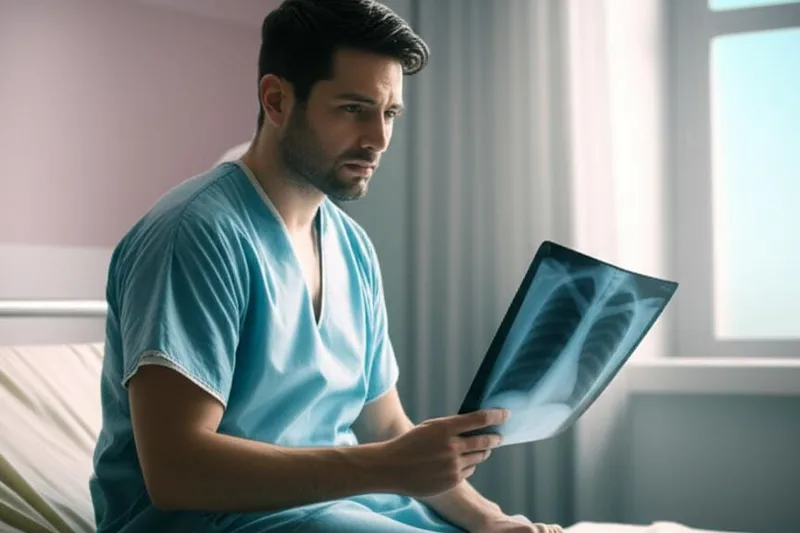
We all know about the coronavirus, or COVID-19, by now, right? Most people experience mild symptoms like fever, cough, and shortness of breath when they get it. But did you know that for some people, it can be more severe and develop into pneumonia, which can affect both lungs and can even be life-threatening? So today, let's talk about what COVID-19 pneumonia is and how to avoid it.
So what is this pneumonia?
Simply put, pneumonia is an infection of your lungs. It causes inflammation of the tiny air sacs in your lungs. When these air sacs fill with fluids like mucus and pus, it becomes very difficult to breathe.
In this condition, you may experience severe shortness of breath , cough , fever , chest pain , chills , and extreme fatigue .
Usually, a doctor can prescribe cough medicine and fever-reducing painkillers. However, if the condition is severe, you may need to be hospitalized and even be put on a ventilator to breathe.
Pneumonia can occur as a complication of viral infections, such as COVID-19, the common cold, and influenza (flu). It can also be caused by other microorganisms, such as bacteria and fungi.
What are the symptoms of pneumonia caused by COVID-19?
There is a slight difference between the initial symptoms of COVID-19 and the symptoms that develop into pneumonia. Let's break this down clearly.
| Early symptoms of COVID-19 | Symptoms that progress to pneumonia |
|---|---|
|
|
If you have COVID-19 and develop any of the symptoms in this second column, it could be a sign of pneumonia. Therefore, it is very important to seek medical advice immediately.
Who is most likely to develop this condition? (Risk groups)
Although anyone can develop COVID-19 pneumonia, some people are at higher risk.
- Anyone over the age of 65 is at increased risk. Those over the age of 85 are especially at increased risk.
- People living in nursing homes.
- People with other serious illnesses. For example:
- Asthma
- Other lung diseases
- High blood pressure
- Heart disease
- Diabetes
- Liver disease
- Renal failure
- Severe obesity (body mass index (BMI) over 40)
In addition to these people, anyone with a weakened immune system is at increased risk. This includes smokers, people undergoing cancer treatment, people who have had a bone marrow transplant, people with uncontrolled HIV/AIDS, and people who take medications that suppress the immune system, such as steroids.
How does a doctor diagnose this as pneumonia?
Your doctor will carefully examine your symptoms and perform tests such as a chest X-ray to determine if this is COVID-19 pneumonia.
In addition, blood tests can provide more information about this condition.
- Decreased number of lymphocytes in the blood.
- Elevated C-reactive protein (CRP) levels.
- Decreased oxygen levels in the blood.
Sometimes, on a chest CT scan, both lungs may appear to have spots of damage. Doctors call this a 'ground glass' appearance.
Is there a treatment for COVID-19 pneumonia?
Yes, there is definitely treatment. Pneumonia often requires a hospital stay . There, you will be given oxygen, connected to a ventilator if you have difficulty breathing, and given saline (IV fluids) to prevent dehydration.
There are other ways to treat people hospitalized with severe COVID-19, including steroids , other drugs that affect the immune system, and antiviral drugs such as Remdesivir (Veklury) .
How can we protect ourselves from this terrible situation?
If you belong to one of the risk groups mentioned above, be sure to take these points into consideration.
- Get your COVID and pneumonia vaccines on time. While the regular pneumonia vaccine doesn't protect against the coronavirus, it can help boost your overall health. Talk to your doctor about which vaccines are right for you.
- Wash your hands often. Scrub them thoroughly with soap for at least 20 seconds.
- If you don't have access to hand washing, use a hand sanitizer that contains at least 60% alcohol.
- Avoid touching your face, mouth, and eyes without washing your hands.
- Avoid people who are sick.
- Stay home as much as possible and minimize contact with others.
Take-Home Message
- COVID-19 is a disease that can be very serious for some people and can progress to pneumonia, which affects the lungs.
- Be especially careful if you experience symptoms such as severe difficulty breathing, rapid heartbeat, and excessive sweating.
- The elderly, and those with other medical conditions such as diabetes, heart disease, and asthma, are at higher risk.
- This condition can be protected by getting vaccinated, washing hands frequently, and avoiding crowded places.
- If you have severe symptoms, especially difficulty breathing, see a doctor immediately or go to the nearest ETU (Emergency Treatment Unit).


💬 Comments (0)
No comments yet. Be the first to share your thoughts here.
Add Your Comment