

Have you ever noticed that your baby 's head sometimes has a yellow or white, crusty coating? Some mothers get a little worried when they see this, thinking, "Oh, what's wrong with my baby?" But is this really something to worry about? Today, we'll talk about a condition called Cradle Cap, which is common in babies but isn't very dangerous.
What is Cradle Cap? Is it something to worry about?
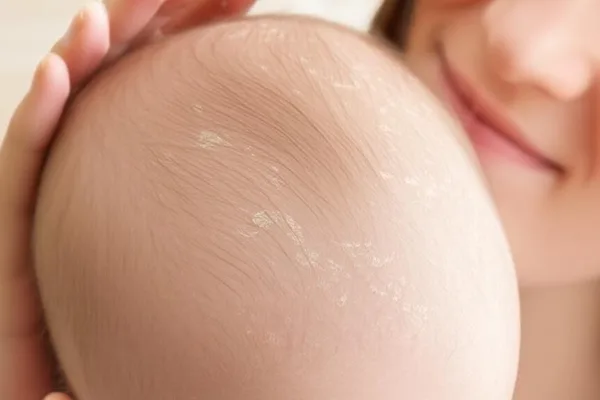
Simply put, Cradle Cap is a harmless skin condition that occurs on the scalp of a baby. In this case, you will see yellow, sometimes white, scaly, scaly patches on your baby's scalp. This scaly patch can sometimes be oily, or it can be dry and flaky. Sometimes, there may be a small amount of redness or a rash around the scaly patch.
But remember this: This will not cause any harm or discomfort to your baby. Cradle Cap will not have any adverse effects on your baby's health, nor will it affect your baby's eating or sleeping habits. Most importantly, it will not cause your baby any itching or pain. In most cases, it will get better on its own within a few weeks or months.
Cradle Cap is a very common condition . Most babies develop this condition at some point in their lives. It usually starts within three months of birth. It is most common in the first year of life. So, since it starts early in a baby's life, it usually gets better by the time the baby is about a year old. However, it can rarely develop in babies as young as one or two years old.
Cradle Cap is usually mild . Your baby will probably not need any treatment and it will go away on its own. If you have any concerns or questions about this, you can talk to your pediatrician. If you prefer, you can try some home remedies to help get rid of the crusts quickly.
What is the difference between Cradle Cap and Seborrheic Dermatitis?
Now you might be thinking that Cradle Cap is some kind of serious disease. In fact, this is just a minor case of a skin condition called `Seborrheic Dermatitis` . Have you heard of dandruff on the scalp of adults? That's what it is. But when it comes to babies, especially when it only appears on the scalp, we call it Cradle Cap. Sometimes doctors also call it `Infantile Seborrheic Dermatitis - ISD`.
Some babies may develop this condition called ``Seborrheic Dermatitis'' not just on their scalp, but also on other areas such as the face, neck, and armpits. If that happens, your pediatrician will advise you on what to do about it.
What are the symptoms of this? How does it look?
You may notice that your baby's scalp has scaly patches. When you touch these scaly patches, they can sometimes be very fine and easily peeled off. Or, they can feel waxy and oily. The baby doesn't feel any pain or discomfort from these scaly patches. Many babies don't even realize they have them.
If you look at your baby's head, you'll see a layer of scales, either yellow or white, like fish scales . These scales are attached to the head. They may look like this:
- It may be crusty on top.
- The bark may peel off.
- If the baby's skin is light-colored, there may be a red or pink rash around these bumps.
- If the baby has dark skin, the rash around this blister may be lighter or darker than the baby's normal skin color.
Where else could this come from besides the head?
Cradle Cap is specifically the term for this scaly rash that appears on the top of a baby's head. However, as mentioned earlier, in some babies, this condition (Seborrheic Dermatitis) can spread beyond the head to some parts of the face. If this happens, you may see a rash in places like these:
- On the baby's forehead.
- Above the eyebrows.
- In the folds of the neck, in the folds under the arms.
- Behind the ears.
- In the buttocks area (sometimes resembling a `(Diaper Rash)`).
If you notice any of these symptoms, tell your pediatrician. The doctor will examine your baby and determine if a special moisturizer or medicated cream is needed.
Is this contagious? Will other babies get it too?
No, Cradle Cap is not contagious. So don't worry about your baby spreading this rash to others. You can send your baby to daycare or let him play with other babies.
Why does Cradle Cap develop? Is it my fault?
This is a question that many mothers ask. Doctors still haven't figured out the exact cause of this, but they believe it could be a combination of factors.
For example, the glands on the baby's scalp may produce too much oil (we call it sebum) . This is thought to be influenced by certain hormones passed from the mother to the baby in the womb. This causes skin cells that would normally die and be shed to stick to the scalp. Researchers also think that a type of yeast called Malassezia, which is naturally present on the baby's skin, may be involved, but it's not clear exactly how.
It can be frustrating not knowing exactly what caused your baby's illness, even if it's harmless. But researchers know one thing for sure: It's not something you did or something you did wrong.Many babies develop cradle cap, and it doesn't affect their lives or health in any way (they sleep most of the time anyway!).
How does a doctor diagnose this? Do they need extensive testing?
Your doctor can tell if your baby has cradle cap by looking at his or her head. The rash, the scales, and the way they are arranged on the head are the easiest signs of the condition. The baby doesn't need any lab tests or a skin biopsy.
What are the treatments for this? What can we do at home?
If your baby only has cradle cap, meaning there is no rash anywhere else on the body, medical treatment is usually not needed. Cradle cap should go away on its own within a few months.
But as a mom or dad, it's normal to want to fix something quickly when your baby has a little something. So, you might be thinking, "Isn't there something I can do at home for this?" Yes, you definitely can! There are a few things you can do to help your baby's scalp and get rid of those stubborn flakes quickly. Here are some suggestions:
- Soften the skin: Before washing your baby's head, apply something gentle to the skin. Mineral oil , petroleum jelly, or baby oil are good for this. Olive oil can be harsh on some babies' skin, and peanut oil can cause allergies, so it's best to avoid using them. Massage this oil gently onto your baby's scalp and leave it on for a few hours (even overnight, it's fine, as it softens the scalp) .
- Lather up well: Wash your baby's head with a mild, fragrance-free shampoo every other day. Gently massage the scalp with your fingertips or a soft cloth. Never rub too hard or use anything rough, such as your fingernails, on your baby's skin. If you want, you can use a very soft brush to help remove the flakes.
- Don't pick or scratch the scabs: You may be tempted to pick at the scabs with your finger or nail. But don't do that! Picking or scratching can damage your baby's skin and cause new skin to come out. This increases the risk of infection.
What kind of shampoo should I use?
You may be wondering what shampoo is best for this. Sometimes the simplest is the best. A regular baby shampoo is fine for washing your baby's head. But make sure the shampoo is gentle and free of fragrances.Do not use adult shampoos or special shampoos for dandruff on babies. They are too harsh for a baby's delicate skin.
If you prefer, there are shampoos specifically formulated for this condition that you can try. You may find shampoos labeled "Cradle Cap" at the store. Or, you can ask your pediatrician or dermatologist about a shampoo that helps with cradle cap.
Is there a way to prevent this from happening?
Unfortunately, researchers haven't yet found a way to prevent cradle cap. That's because they don't know exactly what causes it. But they do know that it's not harmful and gets better quickly.
How long will this last?
Cradle cap usually heals on its own (without any treatment) within a few weeks to a few months. Home care can help speed up the healing process.
However, if cradle cap doesn't improve after a few months, talk to your pediatrician. He or she can examine your baby's scalp to see if there is another skin condition that needs treatment.
What time do you need to see a doctor?
It's a good idea to talk to your pediatrician if you notice one or more of these things:
- If no damage is visible to the Cradle Cap after several months.
- If the baby has a rash on other parts of the body besides the head.
- If the baby's scalp feels warm when you touch it.
- If it looks like liquid or blood is oozing from that crusted skin.
- If there is a bad smell coming from the baby's scalp.
- If the area where the rash is, the area where it is crusting, looks swollen, or very red .
If you have these symptoms, it could be:
- Your baby may need to use a cream or shampoo prescribed by a doctor.
- The baby may not have seborrheic dermatitis limited to the scalp. It may require treatment such as medicated creams.
- The baby may have another skin condition that requires treatment, such as `(Atopic Dermatitis)` (a condition similar to eczema) or `(Scabies)` (a condition caused by skin mites).
It's normal for parents to feel anxious and scared about every little thing when they're starting life with a newborn. So, it's no wonder you're worried when you see a rash and scabs on your baby's head. You might be wondering, "What did I do wrong? What's wrong with my baby's skin?"
Leave all those worries behind.You didn't do anything wrong, your baby is fine. Cradle Cap is a very common, harmless condition. Most of the time, it's mild and goes away on its own. However, if your baby decides to have Cradle Cap for a while longer, or if your baby develops a rash elsewhere on their body, that's okay. Your doctor can examine your baby's skin and tell you if they need treatment. They can help you figure out what's going on and how to get it better.
The most important things to remember (Take-Home Message)
- Cradle Cap is a common, harmless skin condition that affects babies. It does not cause pain or itching for the baby.
- Most of the time, this gets better on its own within a few months.
- If you want, you can help remove these scales by gently treating them at home (by applying oil and washing with a mild shampoo). But never pick or scratch the scales.
- This is not your fault, it's just something else.
- If your baby's head lice worsens, spreads, or has other unusual symptoms (fever, bad odor, swelling) , see a pediatrician immediately.
- Don't worry, you're not alone. This is something that many mothers face. Your doctor will do everything he can to help you.
👩🏽⚕️ Additional questions (FAQs)
💬 Is Cradle Cap on a baby's head a sign of birthmarks?
Yes, it's a type of seborrheic dermatitis that affects newborns! This is a condition where a baby's scalp develops yellow or brown, thick, crusty scales. Sometimes it can also develop on the eyebrows and behind the ears.
💬 Is this caused by the baby not being bathed enough?
No! This is not caused by poor hygiene on the part of the parents. It is caused by the mother's hormones passing into the baby's body, causing hormonal changes that cause the baby's oil-producing glands to suddenly produce more oil (sebum), and by a fungus (Malassezia) on the skin.
💬 Can this bark be removed by hand?
Never scratch or pick at it with your nails! This can lead to injury and bacterial infection. The best thing to do is to apply some baby oil or pure coconut oil to your scalp before bathing, leave it on for 15 minutes, and then gently brush it with a baby soft brush to remove the oil.
` Cradle Cap, Cradle Cap, Baby Scalp, Baby Skin Diseases, Seborrheic Dermatitis, Baby Skin, Child Health




💬 Comments (0)
No comments yet. Be the first to share your thoughts here.
Add Your Comment