
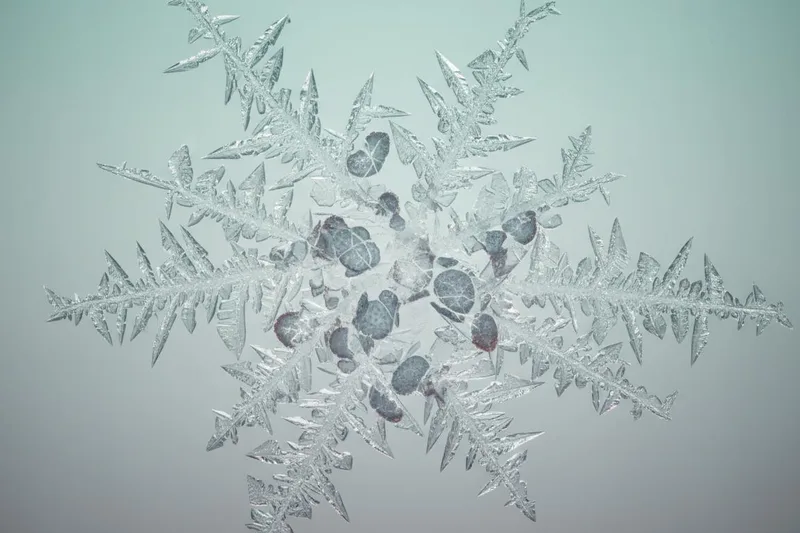
When we hear the word cancer, the first thing that comes to mind is to have an operation to remove the tumor, right? In fact, in most cases, that is the best and most successful solution. However, there are times when surgery is not always possible. Depending on the location of the cancer or your health condition, surgery can be risky. In such cases, today we are going to talk about a very advanced and special treatment method that doctors use. This is called Cryoablation .
Simply put, what is Cryoablation?
The name may sound a bit complicated, but what happens is very simple. Cryoablation is a treatment that uses extreme cold, like ice, to 'freeze' and destroy abnormal tissue in our bodies, such as cancer cells.
Imagine that a doctor uses a special device, such as a needle, and directs a very cold gas inside it to the cancerous tumor. This extreme cold freezes the cancer cells, causing them to lose their function and eventually die. This method is sometimes called ``cryosurgery`` or ``percutaneous cryotherapy``.
Surgery to remove a cancerous tumor is usually the first option. However, if that is not possible, your doctor may recommend this treatment if he or she feels it is the best and safest option for you.
In what cases would a doctor recommend this treatment?
There are several times when your doctor can tell you about this treatment method.
- If the cancer is in the early stages: This method is used if the cancer is still small, that is, in the early stages, and the tumor can be reached without making a large incision.
- Risks of surgical removal: Sometimes the tumor may be in a very sensitive location. This means that it may be too risky to remove it surgically without damaging the vital organs around it. This method is very useful in such cases.
- If the cancer has spread throughout the body: Sometimes the cancer can spread to other organs (metastatic cancer). In such cases, this treatment is used to reduce the pain caused by the spread of tumors and to shrink the size of the tumors. This is called palliative cryoablation . This means that it is done to help control symptoms and pain, rather than to cure the disease completely.
What types of cancer are treated with this method?
Cryoablation treatment can be used for various types of cancer. The table below will give you a good idea of what it can do.
| Several types of cancer that can be treated |
|---|
| Breast cancer |
| Cervical cancer |
| Kidney cancer |
| Liver cancer |
| Lung cancer |
| Prostate cancer |
| Soft tissue cancers (sarcomas) |
| Thyroid cancer |
How does this treatment work?
This is where something really interesting happens. The doctor makes a small hole in your skin. Then he inserts a special needle-like device called a cryoprobe through that hole and directs it to the area where the cancer is.
This `cryoprobe` contains a very cold gas inside. For example, something like `liquid nitrogen`, `liquid nitrous oxide`, or `compressed argon gas` can be used.
When the doctor applies the tip of this `cryoprobe` to the tumor, the extremely cold air causes ice cubes to form inside the tumor cells. Just like water freezes when you put it in the refrigerator. Then, when the cold is removed, the tissue begins to thaw. This `freeze-thaw` process damages the tumor cells and causes them to die. In this way, the tumor gradually shrinks and eventually disappears.
How should I prepare before treatment?
There is some preparation required before any medical procedure like this. Your doctor and medical team will give you clear instructions on what to do. But there are a few general things to prepare for:
- Arrange for someone to drive you home: You may not be able to drive after treatment, so it is important to arrange for someone to drive you home in advance.
- You may need to stop taking certain medications: If you are taking certain medications, such as aspirin, pain relievers (NSAIDs), and blood thinners, your doctor may ask you to stop taking them a few days before your treatment.
- Medication to relieve pain or prevent infection: Your doctor may recommend taking some medications to reduce pain or prevent infection before treatment.
- Fasting: If you are being given general anesthesia, meaning you are put completely to sleep, you will be told to avoid eating or drinking for a few hours before the treatment.
What actually happens during treatment?
Let's see how this process works step by step.
1. Anesthesia: First, the anesthesiologist will give you a numbing medicine so that you don't feel any pain. This may be local anesthesia, or you may be put to sleep completely (general anesthesia).
2. Making a small hole: The doctor makes a very small hole in the skin at the treatment site.
3. Inserting the cryoprobe: Next, the cryoprobe containing the extremely cold gas is inserted through that hole.
4. Freezing the cancer: The doctor touches the tip of the `cryoprobe` to the cancer for a few seconds or minutes. The extreme cold freezes the cancer cells and destroys them.
5. Observation through Scan: All this is not done for nothing. The doctor uses a technology like Ultrasound, MRI (Magnetic Resonance Imaging) or CT (Computed Tomography) scan and looks at a screen to see if the cryoprobe is exactly approaching the tumor and if the tumor is exactly solidifying.
6. Repeat: Sometimes this stone-making process may have to be repeated several times to destroy the entire fruit.
7. Removing the device: After the cancer cells have been destroyed to the desired extent, the cryoprobe is removed and something like a plaster is applied to the small hole.
This entire process can usually take a few hours, depending on your situation.
Can this also be done as a laparoscopic surgery?
Yes, it is possible. Laparoscopic surgery is a surgical procedure that uses a camera and special instruments to perform surgery through several small incisions instead of one large incision. Cryoablation treatment can also be done this way. This allows multiple cryoprobes to be used at the same time to destroy cancer cells.
What happens after treatment and what are the benefits?
If you have been given general anesthesia, you will be taken to a recovery room where the medical team will monitor things like your heart rate and blood pressure.
Most people can go home the same day after treatment. However, in some cases, you may need to stay in the hospital overnight if your condition needs to be monitored further.
Advantages of cryoablation treatment:
- It can be done without a big cut.
- Side effects and scarring are very rare.
- The damage to healthy tissue around the cancer is minimal.
What are the risks and complications of this?
Cryoablation is generally a very safe treatment, but as with any procedure that involves inserting a device through the skin, there are some risks.
| Risk | Description |
|---|---|
| Skin burns | Extreme cold can cause minor burns to the skin. |
| Complications due to anesthesia | Vomiting and nausea may occur. |
| Damage to surrounding tissues | If the cryoprobe hits nearby healthy organs or tissues, they may be damaged. |
| Infection | There is a small risk of germs entering the site where the device is inserted. |
| Nerve damage | If nerves near the treatment site are damaged, numbness or weakness may occur. |
How long does it take to heal?
Most people can return to their normal activities within two to seven days. However, your condition may vary, so be sure to ask your doctor what you should not do until you recover.
When should I call the doctor?
Your doctor will tell you when you should return to see your doctor after your treatment. However, if you develop any of the following symptoms, which could be signs of an infection, you should contact your doctor immediately.
| If you have these symptoms, tell your doctor immediately. | |
|---|---|
| Symptom | Description |
| Excessive swelling | If the treated area swells abnormally. |
| Fever | If the body temperature is above 101°F (38.4°C). |
| Pus discharge | If a pus-like fluid is draining from the insertion site. |
| Skin redness | If the skin around the area is red and discolored. |
What happens to the cancer after treatment?
This is also an important question. When the treatment is over, the hardened cancer tissue dissolves and gradually begins to shrink. Over time, our body's own natural cleansing system removes these dead cells. Just like when a wound heals, our body sheds dead skin. In this way, the cancer gradually disappears.
Cryoablation is not a treatment that can be used for all types of cancer, in all cases. However, it is a very good, safe, and effective option that can be considered when surgery is not possible.
If you have cancer, talk to your doctor about this treatment option. He or she can answer all your questions and help you decide which treatment is best for you.
Take-Home Message
- Cryoablation is an advanced treatment method that uses extreme cold to freeze and destroy cancer cells.
- This is a great option when major surgery is difficult or risky.
- This is less painful than regular surgery, with less scarring and less recovery time.
- As with all treatments, there are some risks, so it is important to discuss them thoroughly with your doctor before treatment.
- After treatment, following your doctor's instructions exactly is essential for a speedy recovery. If you experience any unusual symptoms, inform your doctor immediately.


💬 Comments (0)
No comments yet. Be the first to share your thoughts here.
Add Your Comment