
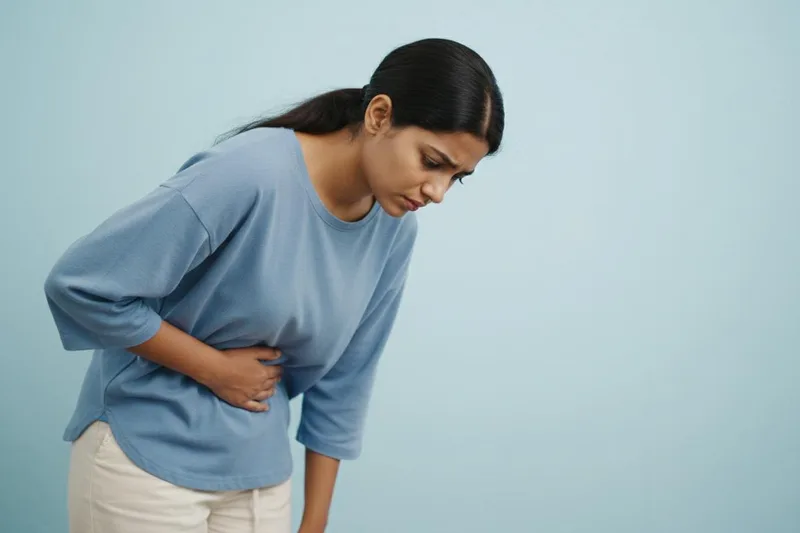
Have you been having a stomach ache for a few days now and it doesn't seem to be getting better? Not just a stomach ache, but a watery stomach, a feeling of fullness, and no desire to eat? Sometimes this can be something a little more than a normal stomach ache. Today we are talking about a condition that causes such a long-lasting, very annoying stomach ache. In medical terms, this is called Cyclosporiasis . Although the name may sound a bit strange, it is very important to know about it.
What is Cyclosporiasis?
Simply put, cyclosporiasis is a type of food poisoning. But it is not caused by a virus or bacteria. It is caused by a parasite that is too small to be seen by our eyes. To be precise, the name of this parasite is Cyclospora cayetanensis . Quite a long name, isn't it? Let's call it `(Cyclospora)` for short.
This `(Cyclospora)` parasite enters our body through the dirty, contaminated food or drink we consume. After entering the body, this parasite goes to our intestines and settles there, causing these annoying symptoms. The main symptom is watery diarrhea. For some people, this can also come in the form of explosive diarrhea . Therefore, the biggest risk is dehydration.
This is not a viral or bacterial infection. This is a condition caused by a parasite, a tiny organism that is invisible to the naked eye and can only be seen under a microscope.
What symptoms occur when this disease develops?
Symptoms usually begin to appear within two days to a week after the parasite enters the body. Not everyone will experience the same symptoms, but there are some common symptoms. Let's take a look at what they are.
| Symptom | Description |
|---|---|
| Severe diarrhea | The main symptom is watery diarrhea. This can happen several times a day. Sometimes, the diarrhea comes on suddenly and uncontrollably. |
| Appetite | You may not feel like eating anything. Even the sight of food may make you feel unpleasant. |
| Bloating and gas | The stomach feels full of air. The air can come out frequently. |
| Fatigue | I feel so weak and sleepy that I can't do anything. |
| Stomach ache and limping | The pain may feel like the stomach muscles are suddenly tightening. |
| Vomiting and nausea | You may vomit, or you may constantly feel nauseous, as if you are about to vomit. |
| Body aches and fever | The body aches, and you may also have a low-grade fever. |
If left untreated, these symptoms can last for weeks, maybe a month, or even longer . Sometimes the illness subsides, but then comes back again and again.
How does this disease spread to us?
This is the most important thing. How does this `(Cyclospora)` parasite get into our food and water?
Imagine what would happen if the feces of someone with this disease somehow got into the water we drink, or where vegetables and fruits are grown? Then that water and everything washed with that water, and everything grown with that water, would be contaminated with the spores of this parasite.
- Drinking dirty water: If you drink water that has not been purified, such as water from wells or streams, there is a high chance of developing this disease.
- Eating vegetables and fruits that are not thoroughly washed: This parasite can enter the body if you do not wash things like lettuce, cilantro, mint, strawberries, raspberries, especially when eaten raw. In foreign countries, this disease is spread by such imported fruits and vegetables.
Can this disease be spread from person to person by shaking hands?
No. The special thing about this is that it is not transmitted directly from one person to another. For example, if you have the disease, it cannot be transmitted by shaking hands, talking to, or sitting close to someone you are with. For it to be transmitted, as I said before, something (water or food) contaminated with the patient's feces must enter the body of another person.
How do you know for sure if you have the disease?
If you have any of the symptoms mentioned above, especially if your diarrhea persists for several days, you should definitely see a doctor. You cannot diagnose Cyclosporiasis on your own.
The doctor will ask you about your symptoms, your recent travel history, and what you've eaten. Then, they'll order a stool test to confirm the diagnosis.
Yes, the doctor will give you a small clean bottle and ask you to bring a stool sample into it. Don't be embarrassed or embarrassed about this. This is the only and best way to find out if this parasite is present by looking at it under a microscope. You may even have to give several days' worth of samples.
What are the treatments for this?
The good news is, there are effective treatments for this. The doctor will give you some treatments.
1. Antibiotics: There are specific antibiotics that can kill this parasite. The most commonly prescribed medication is Trimethoprim/sulfamethoxazole (TMP/SMX) . This is a combination of two antibiotics. If you are allergic to sulfa drugs, your doctor will give you an alternative.
2. Medications to stop diarrhea: Your doctor may prescribe medication to control diarrhea. This stops the body from losing water and nutrients unnecessarily.
3. Hydration: This is the most important thing. When you lose weight, your body loses a lot of water and salts. You need to replace that.
- In a normal situation, Jeevani tells people to drink a lot of things like orange juice, porridge, and soup .
- If the condition is severe and oral fluids are not absorbed, you may be hospitalized and given saline (IV fluids) .
What can you do at home when you are sick?
In addition to taking the medication your doctor prescribes, there are several things you can do at home.
- Drink plenty of water and fluids: Drink small amounts of water, juice, soup, and porridge throughout the day. Definitely avoid coffee, strong tea, alcohol, and sugary drinks during these days. They dehydrate you even more.
- Eat easily digestible foods: Eat small amounts of non-spicy, low-fat, easily digestible foods like rice, steamed vegetables, soup, and yogurt.
- Get plenty of rest: Your body is very tired during this time, so it's important to get as much rest as possible.
- Don't take any medicine you feel like without consulting your doctor: Don't go to the pharmacy and ask for medicine for an upset stomach. Some medicines are not suitable for this condition. Therefore, always follow your doctor's advice.
What should you do to stay safe from this disease?
It is always easier to prevent the disease than to treat it. If you follow these simple habits, you can avoid not only cyclosporiasis, but many other diseases.
| What to do | Why is that important? |
|---|---|
| Wash your hands thoroughly with soap before eating and after using the toilet. | You can prevent germs on your hands from entering your body. |
| Wash vegetables and fruits (especially those eaten raw) thoroughly under running water. | Parasites and germs in the soil and water are removed. If necessary, soak in water mixed with salt or vinegar for a while and then wash. |
| Always drink boiled water. | Any germs that may be in the water will be killed. If you drink water from outside, drink bottled water. |
| Keep raw meat, fish, and cooked foods separate. | Prevents cross-contamination of germs from raw ingredients into cooked foods. |
| Don't leave cooked food out too long. | Cooked food can grow if left out for more than two hours. Refrigerate it immediately. |
When should you go to a hospital (ETU) immediately?
This can usually be treated at home. However, if symptoms of severe dehydration develop, it can be life-threatening. Therefore, if you have any of the following symptoms, go to the nearest hospital's Emergency Department (ETU) immediately.
- If you cannot keep anything down by mouth (if you continue to vomit).
- If you have excessive watery diarrhea several times a day.
- If urine output is very low, or if urine is not passing at all.
- If the color of the urine you pass is dark yellow/brown.
- If you feel extremely weak and dizzy when you stand up.
- If you feel confused or faint.
These symptoms indicate that the amount of water and salts in the body has decreased to a dangerous level. At that time, things like saline should be given quickly to restore the balance.
Take-Home Message
- Cyclosporiasis is a stomach illness caused by a parasite that is transmitted through contaminated food or water.
- The main symptom is watery diarrhea that can last for weeks. In addition, there is loss of appetite, bloating, and fatigue.
- This is not transmitted directly from person to person.
- If you have symptoms, definitely see a doctor. Antibiotics can completely cure this condition.
- It is very important to stay hydrated during treatment. Drink fluids such as water and orange juice regularly.
- This disease can be prevented by washing hands thoroughly, washing fruits and vegetables thoroughly, and drinking clean water.


💬 Comments (0)
No comments yet. Be the first to share your thoughts here.
Add Your Comment