
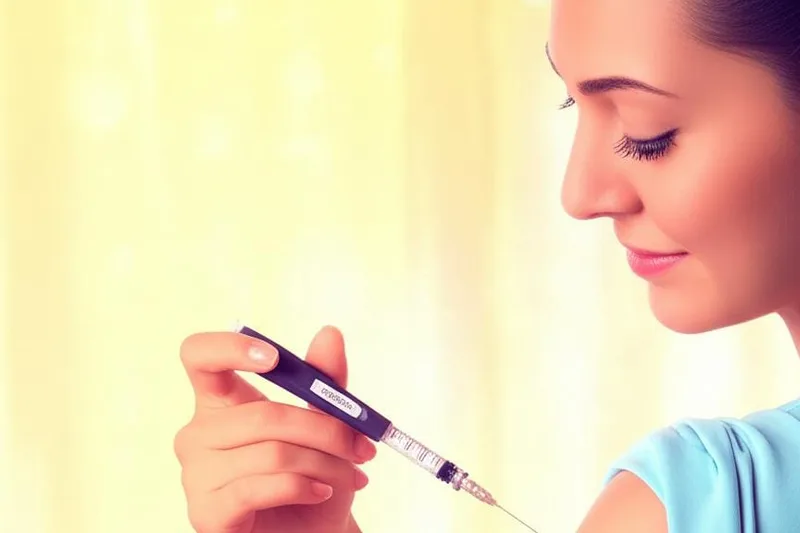
When your doctor told you that you need to start taking insulin to control your diabetes, were you a little scared or shocked? "Oh, will I have to inject myself every day now? Will it hurt? Will I be able to do it properly?" It's normal to have a lot of questions coming to mind. But to be honest, it's not as difficult or painful as you think. After a while, it will become a normal part of your daily routine.
What do we need to inject insulin?
It's much easier to inject insulin now than it used to be. The equipment used for it is also very simple. There are mainly two methods. You and your doctor can decide together which method is best for you.
1. Syringe: This is the method that has been used since ancient times and is known to many people. Simply put, we draw the required amount of insulin from the vial into the syringe and inject it. However, with this method, there is a higher chance of making a small mistake when drawing the insulin dose. Therefore, we need to be very careful.
2. Insulin Pen Injectors: These are the most convenient devices that many people use now. It looks like a pen. The insulin comes pre-filled. All we have to do is attach the needle to it, turn the 'dial' to the required dose, and press a button. In this case, the chance of getting the dose wrong is very low. Therefore, this can be called very 'user-friendly'.
In addition to these main tools, you should have a few other things.
- Glucometer: This is essential for measuring your blood sugar levels.
- Alcohol Wipes: Clean the insulin vial cap and the skin where the injection will be given.
- Sharps Container: A special container for safely disposing of used needles. If you can't find one, a sturdy plastic bottle with a lid can be used as a last resort.
It's very important to make a small bag (travel pack) that can hold all of this. Then you can easily take this with you wherever you go.
How to inject insulin correctly?
Your doctor will explain to you how many times a day you should take insulin and when. There are also several types of insulin. It is important to know which type you have been prescribed.
| Insulin Type | How it works |
|---|---|
| Rapid-acting | The vaccine starts working within about 15 minutes of being administered. It is usually taken before meals. |
| Short-acting / Regular | Take it about 30 minutes before meals. It helps control blood sugar after meals. |
| Intermediate-acting | It takes about 2-4 hours to work. It is active for about 12-18 hours. |
| Long-acting | It is taken at the same time of day. It helps control blood sugar levels throughout the day. |
| Ultra long-acting | Some strains remain active for 36 hours or more, so the frequency of vaccinations is reduced. |
Steps to get vaccinated
It may feel a little scary and awkward in the beginning, but after a while, this will become very normal for you. Think about it, it will become a daily habit, like putting on glasses or tying a tie.
1. Wash your hands: First, wash your hands thoroughly with soap and water. Cleanliness should be number one.
2. Prepare the equipment: If it's a syringe, wipe the rubber cap of the insulin vial with an alcohol swab. If it's a pen, attach a new needle.
3. Prepare the dose:
- If using a syringe: Draw the amount of air equal to your prescribed dose into the syringe and inject the air into the vial. Then turn the vial upside down and draw the required amount of insulin into the syringe. If there are air bubbles, tap the syringe gently to remove them.
- If using a pen: Attach the needle, inject one or two units of insulin ("air shot") to see if the pen works. Then turn the dial to your dose.
4. Inject: Hold the needle at a 90-degree angle to your skin and insert it into the fatty layer of your skin. Then press the plunger on a syringe or the button on a pen. Once the needle is in , mentally count to ten and then remove the needle.
5. Dispose of safely: Place the used needle directly into the Sharps Container.
Some people pinch the skin where they are going to inject. If you do this, release your hand after the needle is inserted. Otherwise, if you keep pinching the skin, some insulin may come out again.
Keep these things in mind for best results.
These little things will help you get the most out of your insulin treatment.
- Don't inject in the same place: This is very important. If you inject in the same place every day, you can develop fat deposits (lipohypertrophy) under the skin. Insulin is not absorbed properly by the body in those places. So change the place every day. The best way is to alternate between your stomach, arms, and legs. It is even better if you can write down the place and date you injected on a small piece of paper.
- Keep insulin cool: It's best to keep unused insulin in the fridge. You can leave the pen or vial you're using at room temperature for a while. But if you're going out, especially on a hot day, you can keep your insulin in an insulated lunch box to prevent it from getting too warm.
- Keep an eye on your blood sugar levels: The best way to know if your injections are working properly is to check your blood sugar levels regularly. If you have trouble controlling your blood sugar levels, or if they suddenly go too low or too high, it's time to check if there's something wrong with the way you're taking your injections. Be sure to talk to your doctor about this.
- Plan ahead: Especially if you are taking insulin before meals, you need to adjust your dose based on the amount of food you are eating. So plan your meals in advance. Also, keep something like peanuts, a biscuit, or a piece of toffee in your travel pack. This will be very useful in case you experience low blood sugar (hypoglycemia).
You are not alone in this journey. Your doctor and diabetes educators are all there to help you. Talk to them about any questions or concerns you may have.
Be honest about your treatment. Don't be shy or afraid of anything. Even if it's something like "I ate a little too much today" or "I forgot to get my shot," tell your doctor. That's when he or she can give you the best treatment for you. Remember, we're always learning new things. You can do this!
Take-Home Message
- Although insulin injections may seem scary at first, after a while they become a daily habit.
- For best results, rotate the injection site every day. Avoid injecting into the same area.
- Regularly measuring your blood sugar levels can help you monitor the success of your treatment. Talk to your doctor if you have any concerns.
- Always dispose of sharps, such as used needles, safely.
- Talk openly with your doctor about any concerns or fears you may have. You are not alone.


💬 Comments (0)
No comments yet. Be the first to share your thoughts here.
Add Your Comment