
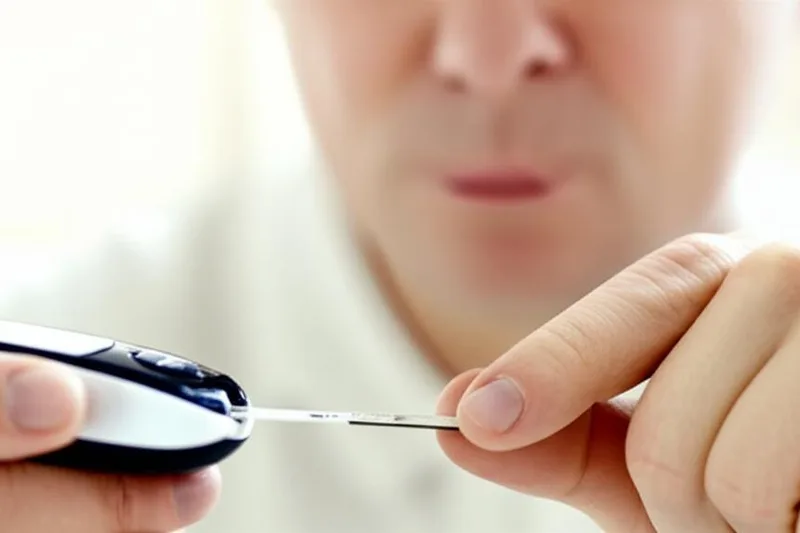
If you have diabetes, the most important thing in your life is your glucose meter, and the little test strips that go with it. We use it to check our blood sugar levels several times a day, right? Doing this correctly is the only way to understand exactly how things like your diet, medication, and exercise are affecting your blood sugar levels, for better or worse. But today we're going to talk about how exactly this little strip works, and what we need to be careful about to get an accurate reading from it.
How do you use this test strip correctly?
Testing your blood sugar levels is very simple, but you need to follow the steps exactly.
1. Clean your hands: First, wash your hands thoroughly with soap and water, then dry them thoroughly with a clean cloth. There should be no moisture on your hands.
2. Insert the strip into the meter: Take a new test strip and insert it into your glucose meter.
3. Prick your finger: Use the small needle that comes with the meter (we call this a ``Lancet'') to prick the side of your fingertip. Pricking the side of your fingertip is less painful than pricking the middle of your fingertip.
4. Obtain the blood drop: Squeeze your finger several times to produce a small drop of blood.
5. Apply blood to the strip: Now touch the drop of blood to the designated end of the strip. The strip will automatically absorb the required amount of blood.
Within a few seconds, your blood sugar level will appear on the screen of your glucose meter as a number.
Remember, a test strip can only be used once, so you need to get a new strip for each test.
Your doctor will decide how many times a day you should check your blood sugar. If you have Type 1 Diabetes, they may tell you to check about ten times a day. If you have Type 2 Diabetes, they may tell you to check only twice a day.
Take special care of these things to get accurate results.
Sometimes the results from the meter can be wrong. The main reason for this is the problems with the test strip and the small mistakes we make. So, always pay attention to these things to get an accurate result.
| Problem / What to pay attention to | What to do and explanation |
|---|---|
| Expired strips | Never use strips that have passed their expiration date. The chemicals in them have become less effective, and the results may be completely inaccurate. |
| Damaged strips | Do not use strips that are bent, broken, or scratched. They may have damaged their delicate electrical circuitry. |
| Improper storage | Store the strips in a cool, dry place away from excessive heat, moisture, and direct sunlight. Do not store them in places like the bathroom or on a windowsill. |
| Strips that do not fit the meter | Each glucose meter only works with its specific type of strip. Using a strip from another brand in your meter will not work, or the results will be incorrect. |
| Dirty hands | Be sure to wash your hands with soap and dry them thoroughly before taking blood. Things like sugar, food particles, and creams on your hands can greatly affect the results. |
| Insufficient blood drop | You need to apply the required amount of blood to the strip. If there is not enough, the meter may display an 'error' message or show an incorrect result. |
| Dirty meter | Check the meter strip area for blood or dirt. If so, clean it according to the manufacturer's instructions. |
Let's also learn about the accuracy of the meter.
You may have heard that sometimes these meters are not 100% accurate. There is some truth to that. Tests have shown that some types of meters are more accurate than others. But by today's standards, most new meters are very accurate. So if you are using a meter from a good brand that your doctor has recommended , you don't have much to worry about.
Every few weeks, check your meter with the 'Control Solution' that comes with your meter. This will help you make sure the meter is working properly. The instructions for doing this are in the meter's manual.
What technology is inside this little strip?
You wouldn't believe how much technology is packed into this tiny piece of plastic. Simply put, it has a very delicate electronic circuit made of gold.
There's a special chemical layer on one end of the strip. When your blood drop touches it, it acts like a sponge, absorbing the blood and converting the glucose in the blood into electricity.
The higher the blood sugar, the stronger this electrical signal becomes. That strength is what we see as a number on the meter. Isn't it amazing?
Be careful when buying strips.
You can buy these test strips at any pharmacy. But remember, always choose a reliable place, a well-sealed box, and one that still has its expiration date. Don't buy boxes with broken seals from places you don't know that sometimes offer cheaper prices. Because there may be issues with their quality. That directly affects your health.
If you have a problem with prices, talk to your doctor. There may be ways to get them at a discounted price through clinics in government hospitals.
Take-Home Message
- Always use the type of test strip recommended by your doctor, which is compatible with your glucose meter.
- Before using a strip, be sure to check its expiration date.
- After using the bottle with the strips, close it tightly and store it away from heat and moisture.
- Always wash your hands with soap and dry them thoroughly before drawing blood.
- If you are unsure about your meter results or if they are consistently changing in an unusual way, talk to your doctor immediately.


💬 Comments (0)
No comments yet. Be the first to share your thoughts here.
Add Your Comment