
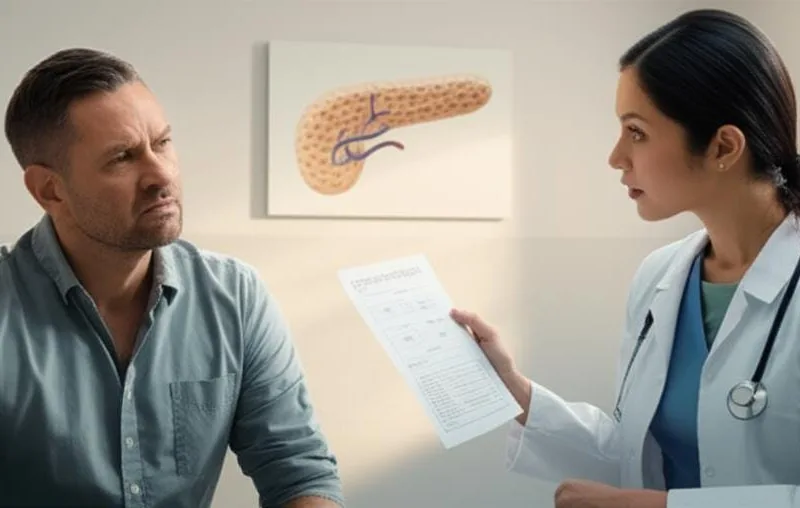
"I don't know if I'm developing diabetes..." Have you ever had this fear or question? It's normal to feel this way when you feel things like frequent urination, excessive thirst, and weight loss for no reason. But don't be afraid. Before you start imagining a disease in your mind just because someone says something, let's talk about how to medically confirm the condition of diabetes. This will give you a clear understanding.
What are the main tests used to diagnose diabetes?
Simply put, diabetes is a condition where the level of sugar (glucose) in our blood is higher than normal. So, several blood tests are done to check if you have this or not. Sometimes your doctor may not be satisfied with just one test and may want to do another test to confirm. Let's see what these tests are.
1. Fasting Plasma Glucose (FPG) test
This is the most common test. As the name suggests, this requires you to fast for at least 8 hours before giving a blood sample. It is okay to drink a little water. This test is usually done after dinner and the next morning. The results are very easy to interpret.
2. Oral Glucose Tolerance Test (OGTT)
This test is a little more sensitive than FPG, meaning it can detect even prediabetes. But it takes a little longer to perform.
This is what happens:
- First, you fast for at least 8 hours and then give a blood sample (just like for FPG).
- Then, you will be given a special liquid containing 75 grams of glucose dissolved in water to drink.
- Exactly 2 hours after drinking it, another blood sample is taken.
The decision is made by looking at the sugar levels in these two blood samples. This same OGTT test is also used to diagnose gestational diabetes. However, it involves taking blood several times over several hours.
3. Random Plasma Glucose Test
This test doesn't matter whether you're fasting or eating. A blood sample is taken at any time of the day to check your blood sugar levels. However, this test alone doesn't confirm diabetes. If a person with obvious symptoms of diabetes (such as frequent urination, excessive thirst) has a very high blood sugar level on this test, the doctor will order an FPG or OGTT test to confirm the diagnosis.
4. 3-month average test (Hemoglobin A1c - HbA1c)
This is a very important test. It does not measure the amount of sugar in your blood at one time. It gives an average of how well your blood sugar has been controlled over the past 2-3 months . It does not require fasting. It can be done at any time of the day. It is very useful for diagnosing diabetes, as well as for monitoring the control of someone who already has diabetes.
The most important thing is to not rely solely on the results of any of these tests, but to talk to your doctor about it and follow his advice.
How to understand the test results?
Okay, now let's see what the values of these tests mean. You can figure it out for yourself by looking at these tables.
| Diagnosing diabetes and prediabetes | |
|---|---|
| Name of the test | Result (mg/dL or %) |
| Healthy (normal) level | |
| HbA1c | Less than 5.7% |
| Fasting Plasma Glucose (FPG) | Less than 100 mg/dL |
| Oral Glucose Tolerance Test (OGTT) - After 2 hours | Less than 140 mg/dL |
| Prediabetes - a risk factor | |
| HbA1c | Between 5.7% and 6.4% |
| Fasting Plasma Glucose (FPG) | Between 100 mg/dL and 125 mg/dL |
| Oral Glucose Tolerance Test (OGTT) - After 2 hours | Between 140 mg/dL and 199 mg/dL |
| Diagnosed with Diabetes* | |
| HbA1c | 6.5% or more |
| Fasting Plasma Glucose (FPG) | 126 mg/dL or higher |
| Oral Glucose Tolerance Test (OGTT) - After 2 hours | 200 mg/dL or higher |
| Random Plasma Glucose + Symptoms | 200 mg/dL or higher |
*Note: Usually, if a high value is found in one test, the doctor will confirm it by performing another test on another day.
How do you know if this is Type 1 Diabetes?
Most people have type 2 diabetes. But some people, especially young people and children, can develop type 1 diabetes. The causes and treatments for these two types are different. So, after you have been diagnosed with diabetes, if you suspect you have type 1 diabetes, your doctor may order some special tests.
- Autoantibody Test: In type 1 diabetes, our body's own immune system attacks the cells in the pancreas that make insulin. This test looks for antibodies (`autoantibodies`) in the blood that attack this.
- C-peptide Test: This measures how much insulin our pancreas is producing. In `Type 1`, insulin production is very low or stops completely.
- Urine Ketones Test: When insulin is lost, the body cannot use sugar for energy. The body then burns fat for energy. During this process, a type of acid called `Ketones` is produced. Checking for these in the urine can help diagnose `Type 1 Diabetes`.
Take-Home Message
- Diabetes is not a disease to be feared and imagined. There are clear medical tests that can confirm it for sure.
- `Prediabetes` is a warning sign. If you make changes to your lifestyle (diet, exercise) at this point, you can prevent or delay the development of full-blown diabetes.
- If you have symptoms of diabetes, don't ignore them and definitely see a doctor.
- Don't worry if one test shows a slightly higher value. Your doctor will order another test to confirm it.
- If you are diagnosed with diabetes, it is not the end of your life. It is an opportunity to think about your health in a new way and manage it well. By following proper medical advice, you can live a healthy life.


💬 Comments (0)
No comments yet. Be the first to share your thoughts here.
Add Your Comment