

Ouch! Did you just slam your foot against a heavy table leg or a hard doorway? Or did something heavy fall right on top of your poor toe?
If this just happened to you, the sharp throbbing pain is probably hard to ignore. You might be wondering if you just have a bad bruise or if the bone is actually cracked or broken.
It is often very hard to tell the difference right away. In fact, doctors treat minor toe fractures and severe bruises in very similar ways. However, understanding what is going on inside your foot can help you heal faster and avoid long-term pain.
Simply put, a broken toe means one of the hard bones inside your digit has cracked or snapped. Your big toe has two small bones. This your other four smaller toes each have three tiny bones. Any one of these delicate bones can break during a sudden impact or accident.
Key Takeaways
- Stubbing your toe hard can easily cause a hairline fracture or a complete break in the bone.
- Common signs include sharp pain, rapid swelling, and dark purple bruising around the toe.
- Most simple broken toes heal well at home using buddy taping, rest, ice, and sturdy shoes.
- You must see a doctor right away if your skin is cut, your toe looks crooked, or you have diabetes.
- Recovery usually takes about four to six weeks if you follow medical advice and avoid high-impact sports.
Know your body mass index (BMI) and weight classification
Signs and Symptoms of a Broken Toe
When you break a toe, your body reacts quickly to protect the damaged area. If you experience a fracture, you will likely notice one or more of these clear warning signs:
- You feel a sharp, intense wave of pain right when the injury happens, followed by a dull ache.
- Touching the toe or trying to move it hurts greatly.
- Walking becomes very painful, especially when you push off your foot to take a step.
- The skin around the toe turns red, dark purple, or black and blue due to bleeding under the skin.
- The toe feels stiff and difficult to bend or straighten properly.
- Rapid swelling develops within the first few hours, making your foot feel tight inside your shoe.
Recognizing these symptoms early helps you decide whether to manage the injury at home or seek professional help. Never try to ignore severe pain that gets worse over time.
When to See a Doctor Right away
Many broken toes heal safely with basic home care. However, some fractures are serious and can lead to long-term joint pain, chronic arthritis, or bone infections if left untreated.
You must visit a doctor right away if you notice any of these serious red flags:
- Your big toe is injured, as it bears most of your body weight and requires precise alignment to heal.
- The broken bone has pushed through your skin, creating an open wound or bleeding cut.
- Your toe looks crooked, deformed, or points in a completely unnatural direction.
- You have diabetes or poor blood circulation, which slows down healing and raises infection risks.
- You develop a fever, chills, or feel generally unwell, which can signal a spreading infection.
- Your pain keeps getting worse instead of better, or strong pain relievers do not help at all.
- Your toe feels ice cold, looks pale, or feels completely numb. This blood flow is blocked.
- A painful pool of dark blood builds up underneath your toenail, causing intense throbbing.
- Swelling, redness, and bruising do not start to improve after a few days of resting your foot.
⚠️ Emergency Red Flags: Call 911 or 999
If you have an open fracture where bone is visible, severe bleeding that will not stop, or signs of a serious vascular injury where your foot turns blue and cold, seek emergency medical attention at your nearest hospital Emergency Department (ER) or Accident and Emergency (A&E) department right away.
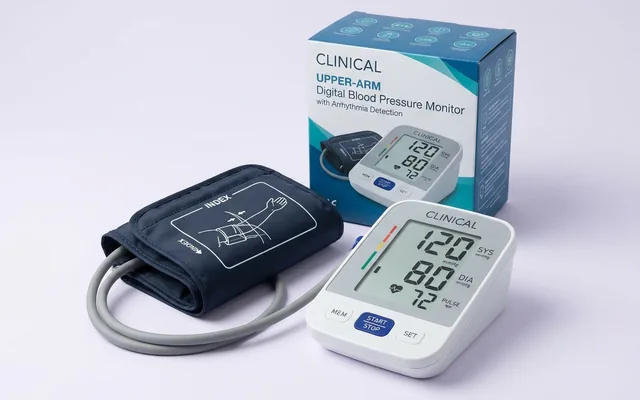
Clinically validated automatic upper-arm BP machine with wide adjustable cuff, 240-reading memory, hypertension indicator bar, and irregular heartbeat detector.
View Clinical Details →How Doctors Diagnose a Broken Toe
When you visit a clinic or hospital, the doctor will start by asking you a few simple questions. They want to know exactly how the injury happened and what symptoms you feel.
Next, the doctor will gently examine your foot. They will check your skin, test the blood circulation in your toe, and make sure your nerves are working properly.
If the doctor suspects a broken bone, they will order an X-ray imaging test. The X-ray lets the medical team see inside your foot to confirm the exact location, type, and severity of the fracture.
Getting an accurate diagnosis ensures that your toe is treated correctly from the very beginning. This prevents the bone from healing in a bad position.
Treatments for a Broken Toe
The exact treatment you receive depends entirely on which bone is broken and how severe the damage is. Simple cracks need minimal intervention. This complex breaks require expert medical care.
Common Treatments
Most minor toe fractures do not require surgery or casts. Your doctor will likely send you home with clear instructions and simple medical tools.
- Buddy Taping: This is the most common and effective treatment for minor toe breaks. Your doctor tapes your injured toe securely to the healthy toe right next to it. The healthy toe acts as a natural splint to keep the broken bone stable. Your care team will place a small piece of cotton or gauze between the toes to prevent skin irritation and blisters.
- Special Post-Surgical Shoes: Your doctor may give you a rigid, flat-bottomed shoe with an open toe. This special shoe keeps your foot stiff so your toe cannot bend while you walk. It also leaves plenty of room for swelling.
Treatments for Severe Fractures
If your injury is more complicated, standard taping will not be enough. Severe breaks require advanced medical procedures to heal properly.
- Manual Realignment (Reduction): If your bone pieces are out of place, the doctor must push them back into the correct position. They will numb your toe with local anesthesia first so you do not feel pain. This procedure is done in the office and is not a surgery.
- Casting: If the bone refuses to stay in place after realignment, your doctor may apply a small walking cast or rigid boot to immobilize your foot completely.
- Surgery: Very severe fractures with loose bone fragments require surgical repair. Orthopedic surgeons use tiny metal pins, screws, or plates to hold the broken bone firmly together while it heals.
- Additional Medical Care: If you have an open wound, your doctor will prescribe antibiotics to prevent bone infections and check your vaccination records for a tetanus shot. If blood pools under your toenail, a doctor can safely drain it to relieve the intense pressure.
Home Care and Self-Management Tips
The first few days and weeks at home are critical for your recovery. Following basic self-care steps helps reduce swelling and accelerates healing.
- Elevate Your Foot: Whenever you sit on the couch or lie down in bed, prop your foot up on soft pillows. Try to keep your foot raised slightly above the level of your heart. This simple action drains excess fluid away from your injured toe and minimizes swelling.
- Apply Ice Packs: During the first twenty-four hours, apply a cold pack to your toe for twenty minutes out of every hour while you are awake. After the first day, use the ice pack two to three times a day. Always wrap the ice pack in a clean towel. Never place raw ice directly against your bare skin.
- Rest Your Foot: Avoid any physical activities, sports, or heavy chores that trigger pain in your foot. Give your body the downtime it needs to repair the broken bone tissue.
- Take Pain Relievers: Talk to your doctor or pharmacist about safe over-the-counter pain medicines, such as ibuprofen, acetaminophen, or naproxen, to manage inflammation and discomfort.
- Wear Protective Footwear: Stick to stiff-soled shoes or supportive walking sandals recommended by your doctor. These shoes prevent your toe from flexing uncomfortably with every step you take.
Recovery Timeline and Healing Process
Most standard broken toes heal completely within four to six weeks. However, severe fractures or big toe injuries can take up to eight weeks or longer to mend.
You must wait until your doctor tells you it is completely safe before returning to running, jumping, or contact sports. Rushing back into high-impact activities too soon can cause the bone to re-fracture or heal improperly.
During your recovery period, avoid wearing high heels, tight fashion shoes, or narrow footwear that crowds your toes. Once your doctor confirms the bone is healed and you can walk in normal shoes without pain, you can gradually resume your daily routine.
You might notice slight stiffness or mild soreness when you first start moving again. This is entirely normal and will fade away as your foot regains its natural strength and flexibility.
To help you compare standard bruises with actual bone fractures, review the quick reference table below:
| Injury Feature | Simple Toe Bruise or Jam / Broken Toe (Fracture) |
|---|---|
| Pain Level | Simple Toe Bruise or Jam: Sharp at first, fades steadily within a few days. Broken Toe (Fracture): Severe, throbbing, and lasts for weeks when walking. |
| Swelling & Bruising | Simple Toe Bruise or Jam: Mild swelling, local discoloration around the impact spot. Broken Toe (Fracture): Rapid, extensive swelling, deep purple or black bruising. |
| Toe Alignment | Simple Toe Bruise or Jam: Straight, normal position and shape. Broken Toe (Fracture): May look crooked, rotated, or out of place. |
| Healing Time | Simple Toe Bruise or Jam: Resolves in 1 to 2 weeks with basic rest. Broken Toe (Fracture): Requires 4 to 8 weeks for complete bone union. |
💡 Take-Home Message
- Most simple broken toes heal successfully at home using basic first-aid steps like ice, rest, and elevation.
- Buddy taping provides wonderful stability by binding the injured toe to a healthy neighbor.
- Always seek professional medical care if your toe looks crooked, your skin is broken, or you have underlying health conditions like diabetes.
- Never ignore worsening pain, spreading swelling, or signs of poor circulation in your foot.
- Follow your doctor's rest guidelines strictly and avoid strenuous physical activities until your bones have fully mended.


No comments yet. Be the first to share your question or experience below.