

Have you ever thought about what actually happens to the rice, vegetables, and fish we eat inside our bodies while we eat them? Does it just disappear? No... It actually goes through a very complex and amazing journey. Today we are talking about that journey. That is, our digestive system, which works like an amazing factory in our body.
Simply put, what is this digestive system?
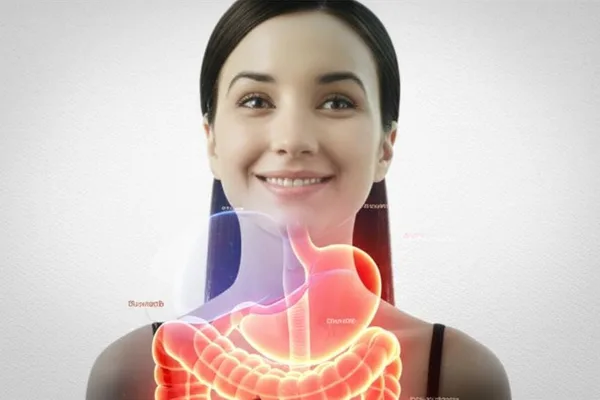
Think of your digestive system as a collection of interconnected organs. It's like a long tube. This tube starts at your mouth and ends at your anus. Its main job is to convert the food we eat into the nutrients our bodies need, which helps them grow, heal, and get rid of disease. It also removes waste products from the body.
This long tube is called the gastrointestinal (GI) tract. It has several other organs that help it along. We call them accessory organs . These organs include your liver, gallbladder, and pancreas. These are the ones that produce the chemicals, called enzymes, that help digest food.
Let's look at what happens step by step from the moment we take food into our mouths.
This is like a story. Let's see how the food you eat travels from your mouth.
1. The beginning of the journey: Mouth
The process of digestion begins before you even put food in your mouth. Imagine smelling a delicious food. Your mouth starts to salivate, right? That's where it starts. When we put food in our mouths and chew it, our salivary glands produce more saliva. The enzymes in this saliva begin to break down the starches in the food. In other words, the process of digestion begins in the mouth.
2. Next stop: Throat (Pharynx/Throat)
When we swallow food, it goes down through the throat. Something very important happens here. The throat divides into the trachea (the tube through which we breathe) and the esophagus (the tube through which we eat). When we swallow food, the trachea automatically closes, and the food goes straight into the esophagus.
3. The path down: Esophagus
It's like a tube made of muscles. It runs from the throat to the stomach. Food doesn't just move down this tube. It pushes food down in a special pattern of muscle contractions called `peristalsis` , like a wave. Where the esophagus connects to the stomach, there is a ring-shaped muscle. It's called the `Lower Esophageal Sphincter (LES) .` It's like a door. When food goes into the stomach, this door closes. If this door doesn't close properly, the acid in the stomach `(acid)` comes up and causes conditions like heartburn and gastritis `(GERD)`.
4. Best place to grind: Stomach
The stomach is like a strong bag. It is here that the food that enters it is thoroughly mixed and ground. The strong acids and enzymes secreted by the stomach further break down the food, turning it into a liquid or paste-like state.
5. The real workhorse: The small intestine
The small intestine is the workhorse of the digestive system. It is where most of the nutrients in the food we eat are absorbed into the body. It is a very long tube. If you open it out, it is more than 20 feet long! It is made up of three parts: the `Duodenum` , the `Jejunum` , and the `Ileum` .
- It is in the duodenum that enzymes from the pancreas and liver combine to further break down food.
- The absorption of broken down nutrients into the blood mainly occurs in the sections called `Jejunum` and `Ileum` .
Most importantly, these absorbed nutrients are what our bodies use to give us energy, protect us from disease, and grow.
6. Waste Management: Large Intestine/Colon
After the nutrients are absorbed, the indigestible parts of the food, called waste, enter the large intestine. This is a tube about 5-7 feet long and wider than the small intestine. The main thing that happens here is that the water in the waste is absorbed back into the body. Then the remaining waste becomes solid. We call it ``poop''. This process usually takes about 36 hours.
7. The End of the Journey: Rectum and Anus
The solidified stool is temporarily stored in the rectum, the last part of the large intestine. When the rectum is full, its walls stretch, sending a signal to the brain that it needs to go to the toilet. The anus is the last entrance to the digestive tract. The muscles around it allow us to control the passage of stool.
Helpers that help with the digestive process
In addition to the alimentary canal, there are three other organs that are essential to this process. Let's take a look at what they are and what their role is.
| Auxiliary organ | The work being done |
|---|---|
| Pancreas | It produces and releases powerful enzymes into the small intestine that break down the proteins, fats, and carbohydrates in the foods we eat. It also produces the hormone insulin , which controls blood sugar levels. |
| Liver | This is the largest organ in the body. It has two main functions related to digestion. One is to produce bile, which helps digest fats. The other is to process nutrients absorbed from the small intestine so that they can be used by the body. |
| Gallbladder | This is a small sac-like organ. It stores and holds extra bile produced by the liver. When food enters the small intestine, it releases bile needed to digest it. |
Diseases affecting the digestive system
Because this system is so complex, various diseases can occur. Some are minor, short-term, while others are long-term diseases.
Common problems that may arise:
- Constipation: Difficulty passing stool.
- Diarrhea: The passage of liquid stools.
- Heartburn: Inflammation caused by stomach acid coming up.
- Stomach upset (Gastroenteritis): Vomiting and diarrhea caused by viral or bacterial infections.
- Hemorrhoids: Swelling of the blood vessels in the rectum.
Serious conditions that require medical attention:
If you have frequent stomach upsets or changes in bowel habits, be sure to see your doctor . It could be a sign of a serious condition, such as:
- Irritable Bowel Syndrome (IBS): A condition that causes bloating, pain, constipation, or diarrhea due to a problem with the functioning of the large intestine.
- Inflammatory Bowel Disease (IBD): A chronic inflammation of the digestive tract. Examples include Crohn's Disease and Ulcerative Colitis.
- GERD (Gastroesophageal Reflux Disease): Stomach acid frequently flows back into the esophagus.
- Celiac Disease: An allergy in which the body reacts to a protein called ``gluten'' found in grains such as wheat and barley.
- Cancers: Cancers of the digestive system organs such as the stomach, colon, and liver.
How do you keep your digestive system healthy?
For this amazing system to work well, we need to help it along. Here are some simple tips:
1. A healthy diet: Reduce oil and processed foods and add fiber-rich vegetables, fruits, legumes, and whole grains to your diet. Fiber helps make bowel movements easier.
2. Exercise: Daily exercise helps the digestive tract function properly. At least get into the habit of taking a short walk after dinner.
3. Drink water: Not drinking enough water is a major cause of constipation. Drink at least 2-3 liters of water a day.
4. Chew your food well: Chewing your food well helps in the digestion process and also produces saliva.
5. Stay away from bad habits: Smoking and excessive alcohol consumption contribute to many diseases like gastritis and ulcers.
Take-Home Message
- Your digestive system is a long, complex system of organs that runs from your mouth to your anus.
- Its main function is to convert the food we eat into the energy and nutrition our body needs, and to dispose of unnecessary substances as waste.
- Auxiliary organs like the liver and pancreas provide essential assistance in this process.
- You can keep this system healthy by eating a balanced diet, getting enough exercise, and drinking enough water.
- If you have frequent symptoms such as stomach upset, constipation, or diarrhea, do not ignore them and see a doctor immediately.




💬 Comments (0)
No comments yet. Be the first to share your thoughts here.
Add Your Comment