
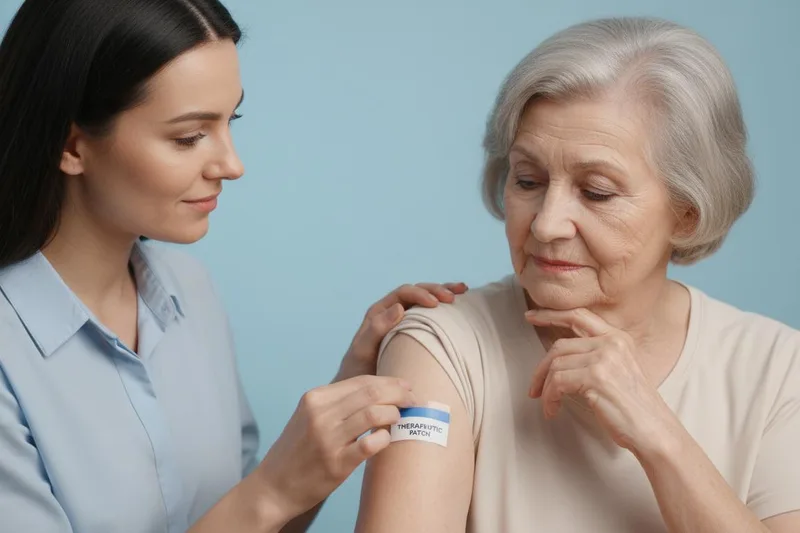
If you have a loved one, a parent, or a close relative who is suffering from Alzheimer's disease, you probably know how sensitive and challenging it can be to care for them. When their memory gradually fades, things get confusing, and they have difficulty performing daily tasks, it's as painful as it is for them. So, today we're talking about a patch that can be applied to the skin instead of taking pills.
Simply put, what is this Donepezil patch?
Donepezil is a medication used to treat memory loss and dementia in people with Alzheimer's disease. It works by increasing the levels of a chemical that helps nerve cells in the brain communicate. This can help the patient's attention, memory, and ability to perform daily tasks independently .
But the most important thing we all need to understand is that this is not a cure for Alzheimer's disease . It only controls the symptoms and slows down the progression of the disease. Using this patch is a very convenient way for patients who forget to take their medication every day.
Things your doctor should know before giving you this medicine
Before prescribing this patch to your patient, it is essential that they tell their doctor about their complete health history. In particular, be sure to tell them if they have any of the following conditions:
- Heart disease: If you have heart disease, irregular or slow heartbeat.
- Liver disease: If there is any impairment in liver function.
- Respiratory disease: If you have any breathing problems in your lungs, such as asthma or COPD.
- Seizures: If you have had seizures before.
- Stomach ulcers: If you have stomach ulcers or other related problems.
- Difficulty urinating: If there is any difficulty or obstruction while urinating.
- Allergic Reactions: If you have previously had an allergy to donepezil or any other medicine, food, or dye.
- Pregnancy or breastfeeding: If you are pregnant, trying to get pregnant, or are a breastfeeding mother.
When you state these things accurately, it will be easier for the doctor to decide whether this medication is suitable for your patient or not.
How exactly do I use this patch?
To get the most out of this patch, it's very important to use it correctly. This is just something that is applied externally to the skin.
1. Choose the right place: Choose a clean, dry, unbroken, and hairless area of skin to apply the patch. The best places are the upper back (avoiding the spine), the upper buttocks, or the upper outer thighs . Never apply to cuts, burns, or abrasions. Also, do not apply to areas that have been shaved.
2. Preparation: The patch is in the refrigerator. Only take out one packet at a time. Let it sit for a while until it reaches room temperature, then tear the packet open and take out the patch. If the packet is damaged, do not use the patch.
3. Apply the patch: Peel off the protective strip from the back of the patch, place the adhesive side on your skin, and press firmly with your palm for about 30 seconds . Then, wash your hands thoroughly with soap.
4. Changing patches: Only one patch should be applied at a time. Before applying a new patch, be sure to remove the old patch .
5. Change the place: Do not stick the patch in the same place every day. Doing so can damage the skin. When changing the patch once a week, stick it in a different place . You should wait at least 14 days before putting a patch back in the same place.
Very important: Never cut or fold the patch. It is designed to be used whole.
What if I forget to put on a patch?
Sometimes you may forget. If that happens, apply a patch as soon as you remember. However, if it is almost time for the next patch, do not apply the forgotten one, but apply the next patch at the scheduled time. Never apply two patches at the same time .
What to do if you overdose on medication?
If you think you may have accidentally taken too much medication, don't take it lightly. There are two things you should do immediately:
- If you can, call the National Poison Information Center at the Colombo National Hospital for advice.
- Otherwise, take the patient to the nearest hospital's Emergency Treatment Unit (ETU) immediately.
This is a medicine prescribed only for your patient. Therefore, do not share it with others.
Other medications that may interact with this medicine
If your patient is taking any other medications (whether prescribed by a doctor, purchased from a pharmacy, traditional medicine, or vitamins), it is imperative to tell the doctor about all of them. Some medications may interact with this patch and cause side effects.
In particular, you need to be very careful if you are taking the following medications:
- Medications for pain and swelling (e.g. NSAIDs like Ibuprofen, Naproxen)
- Some medicines for allergies, coughs, and colds (Antihistamines)
- Some medications for fungal infections
- Other medications that affect heart rhythm
- Some medications for Parkinson's disease
- Medicines for epilepsy (e.g. Carbamazepine, Phenytoin)
This list is not complete, so please tell your doctor about every medication your patient is taking.
Things to be careful about when using the patch
- Regular medical checkups: Visit your doctor on scheduled days to see if your symptoms are improving or worsening.
- Dizziness and drowsiness: This medication may cause dizziness and lightheadedness in some people. Therefore, the patient should be advised to avoid activities that require alertness, such as driving or operating machinery, until the body adjusts to this medication.
- Beware of temperature: This is the most important and dangerous thing . When the body temperature increases, more of the medicine from the patch starts to be absorbed into the skin faster. This can lead to an overdose of the medicine, which can be dangerous.
- Stomach bleeding: If your stools are black, tarry, or if you vomit something that looks like coffee grounds, these could be signs of stomach bleeding. If you notice this, tell your doctor immediately .
- Keep away from children and pets.
- Store in the refrigerator . Do not freeze .
- Keep in the original box until ready to use.
- Safely dispose of unused and expired patches. Ask your doctor for advice on the best way to do this.
- The Donepezil patch does not cure Alzheimer's disease, but it helps to control symptoms and make the patient's life easier.
- Always apply the patch to clean, dry, hairless skin. Change the area once a week. Never cut the patch.
- Inform the doctor about all other medications the patient is taking.
- While the patch is on, avoid activities that increase body temperature, such as hot baths or excessive sun exposure. This can lead to an overdose.
- If you notice black stools, vomit that looks like coffee grounds, or a severe allergic reaction, seek medical advice immediately.
- Store the patch in the refrigerator and keep it out of the reach of children.
Therefore, tell your doctor immediately if you have a fever. Also, completely prevent the patient from taking hot baths, saunas, heating pads, using electric blankets, and being in the sun .
| Possible side effects | |
|---|---|
| Serious side effects that should be reported to the doctor immediately | |
| Allergic reactions | Skin rash, itching, swelling of the face, lips, tongue or throat. |
| Stomach bleeding | Black or tarry stools, vomit that looks like coffee grounds. |
| Decreased heart rate | Dizziness, fainting, difficulty breathing, extreme fatigue. |
| Seizures | Seizures. |
| Difficulty urinating | Difficulty urinating or not urinating at all. |
| Side effects that are usually not serious, but should be reported to the doctor if they persist | |
| Digestive system problems | Stomach pain, nausea, vomiting, diarrhea, loss of appetite. |
| Other common problems | Extreme fatigue, muscle twitching, insomnia, redness or itching where the patch is applied. |
How to store the medicine correctly?
Caring for someone with Alzheimer's is a big commitment. Being well-informed about these treatments and using them correctly can bring great relief to both you and your loved one. If you have any questions about this medication, don't hold them in. Talk to your doctor about it openly.


💬 Comments (0)
No comments yet. Be the first to share your thoughts here.
Add Your Comment