

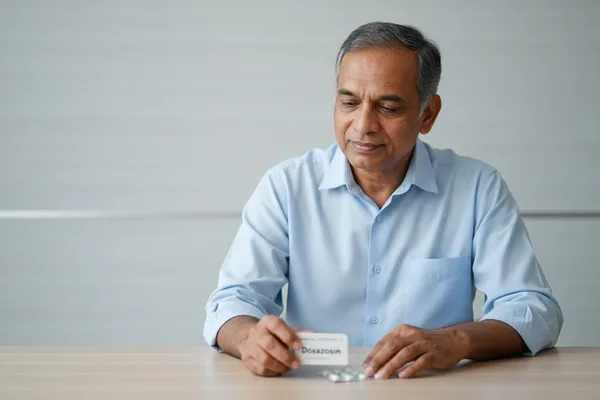
Do you have high blood pressure? Or if you're a man, do you suffer from symptoms of Benign Prostatic Hyperplasia (BPH), such as difficulty urinating and the need to urinate frequently? Then your doctor may have prescribed you a pill called Doxazosin. So, today we'll talk about what this medication is, what it does, and what you need to be careful about when using it.
What really happens with this medicine?
Simply put, doxazosin is a drug in a class of drugs called "alpha-blockers." It does two main things.
1. Controlling high blood pressure: This medicine relaxes the blood vessels in our body, which means that their walls are loosened. This increases the space inside the blood vessels and allows blood to flow more easily. This reduces the effort the heart has to pump blood, and blood pressure, or blood pressure, is controlled.
2. Reducing symptoms of benign prostatic hyperplasia (BPH): The prostate gland, located below the bladder, can enlarge with age. This can cause the urethra to become blocked and make it difficult to urinate. This medicine relaxes the muscles in the prostate and bladder neck. This opens the urethra and reduces the difficulty in urinating.
Things you need to tell your doctor before taking medicine
Before your doctor prescribes this medicine, he or she will need to know your complete medical history. Therefore, if you have any of the following conditions, be sure to tell your doctor.
- If you are going to have any eye surgery , such as cataract surgery.
- If you have a liver condition.
- Usually, low blood pressure is present.
- If you have prostate cancer (this information is very important because this medicine is given to treat non-cancerous prostate swelling).
- If you have any problems with your stomach or intestines.
- If you have an allergic reaction to this doxazosin medication, other medications, foods, or food dyes.
- If you are pregnant or trying to get pregnant.
- If you are a breastfeeding mother .
It is very important to tell your doctor about any other medications, vitamins, or even traditional medicines you are taking, as some medications may interact with this one.
How to use the medicine correctly?
- How to take: This is an oral tablet. Try to take the prescribed dose at the same time every day, as directed by your doctor.
- With food: This can be taken before or after meals. However, if you experience stomach upset, it is best to take it with food.
- Stopping: Never stop taking this medication suddenly without talking to your doctor. Doing so may cause your blood pressure to suddenly increase.
- If you miss a dose: If you forget to take a dose, take it as soon as you remember. However, if it is almost time for your next dose, skip the missed dose and take the next dose at the scheduled time. Do not take two doses at once, even for a reason.
- If you take too much: If you think you have taken too much of this medicine, immediately contact the National Poisons Information Centre at the Colombo National Hospital or go to the Emergency Department (ETU) of the nearest hospital.
Things to be especially careful about when taking medication
For your safety, be aware of these points while taking this medication.
Dizziness and drowsiness
You may experience dizziness and drowsiness when you start taking this medicine, especially after the first dose, when the dose is increased, or on hot days or during exercise. Therefore, avoid driving, operating machinery, or doing other tasks that require concentration until you know exactly how this medicine affects you.
Don't get up suddenly!
When you get up suddenly from a sitting position or from bed, stand up slowly. This is especially important if you are an elderly person. This can reduce the risk of dizziness and lightheadedness and falling.
Avoid alcohol.
Drinking alcohol can make dizziness and drowsiness worse. Therefore, it is best to stay away from alcohol completely while taking this medication.
Be careful with other medications
Do not take over-the-counter cough, cold, or pain medication without consulting your doctor, as some of the ingredients in them may increase your blood pressure.
Special notice for men
If you are a man, if your penis remains erect for more than 4 hours, or if it becomes painful, see a doctor immediately. This could be a serious condition called priapism. If not treated quickly, it can cause permanent damage.
What are the possible side effects?
Like any medication, doxazosin can cause side effects in some people. Let's break them down into two categories.
| Side effect | Description |
|---|---|
| Serious side effects that should be reported to your doctor immediately | |
| Allergic reactions | Skin rash, itching, swelling of the face, lips, tongue or throat. |
| Chest pain (Angina) | Pain, pressure, or tightness in the chest, neck, back, or arms. |
| Low blood pressure | Severe dizziness, fainting, blurred vision. |
| Prolonged or painful sexual arousal | Painful erection lasting more than 4 hours (men only). |
| Side effects that are usually not serious and should be reported to the doctor if they persist | |
| Dizziness | Especially when changing positions. |
| Fatigue | Feeling more tired than usual . |
| Headache | Mild to moderate headache. |
This list does not include all possible side effects. If you experience anything different, talk to your doctor about it.
Take-Home Message
- Take doxazosin exactly as prescribed by your doctor, at the right time, and in the right dosage.
- Avoid dangerous activities such as driving, as dizziness and drowsiness may occur during the initial period of taking the medication.
- Do not get up suddenly while sitting or sleeping. Get up slowly.
- Avoid drinking alcohol completely while taking this medicine.
- Inform your doctor about any other medications you are taking or any upcoming surgery.
- Men, if you experience prolonged, painful sexual arousal, it is an emergency. Seek medical advice immediately.
- If you have any questions about this medicine, ask your doctor.




💬 Comments (0)
No comments yet. Be the first to share your thoughts here.
Add Your Comment