
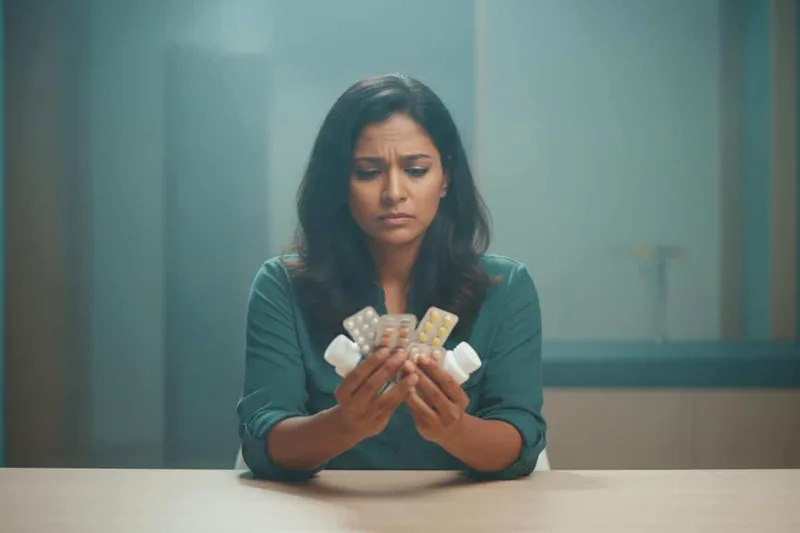
You probably take several types of medicine for different illnesses at the same time, right? Or you might take a medicine from a doctor along with a vitamin or some other supplement. Sometimes, without us realizing it, these medicines can "not work well" with the food we eat, or with another illness we have in our body. That's why we simply call them drug interactions . This is something we all need to be aware of. Because medicine is something that can be beneficial if taken correctly, but can cause us problems if taken incorrectly.
What are drug interactions? Let's understand them simply!
Simply put, drug interactions are when something you take (such as another medicine, food, drink, or supplement) interferes with the way a medicine works, or when something else you take (such as another medicine, food, drink, or supplement), or when you have another medical condition, can interfere with the way a medicine works. When this happens, the following things can happen to your medicine:
- Medication not working properly: This means that the effectiveness of the medication is reduced. You may lose the proper effect of the medication you are taking for your illness.
- Medication working too hard: Sometimes, a medication can become too strong and the body can't handle it.
- New side effects or toxicity: Unexpected side effects can occur, and sometimes the medicine can be toxic to the body.
Think about it, even if it's just one medication you take, the things you eat and drink can "conflict" not only with other medications you take, but also with these things:
- With another prescription drug prescribed by a doctor.
- With an over-the-counter (OTC) drug that you buy yourself from the pharmacy.
- You take vitamins, minerals, or dietary supplements, such as traditional herbs.
- Usually taken with a meal or drink.
- With alcohol.
- With tobacco.
- With recreational drugs.
Not only these things, but also certain medications may not be suitable for you due to certain medical conditions you already have. For example, a medication given for one condition may aggravate another condition.
However, most of the time, these drug interactions are temporary and manageable. Your doctor may change your medication dosage or tell you to stop eating certain foods for a while. However, in some cases, they can be serious and even life-threatening. Therefore, it is important to know if you are at risk and take steps to prevent them. Only then can you get the most out of your treatment.
Who is more likely to experience these (Drug Interactions)?
In fact, these drug interactions can happen to anyone, at any age. However, if you are taking multiple medications at the same time, or if you have more than one medical condition, the risk is even higher.
Typically, as we age, we develop more chronic conditions, and we need to take more medications. So, when there are more chemicals and processes going on inside your body, there's a greater chance that something will "burn up."
Imagine you're throwing a small party. If you only invite a few friends you know well, it's mostly successful, right? But if you invite a lot of people, there may be some disagreements and conflicts of opinion between them. Some people may not get along very well with each other. Medicines are like that. When you take different kinds of medicines and supplements at the same time, sometimes they can have a negative effect on each other, and the result you expect may be something else.
That's why it's so important to talk to your doctor before starting any new medication or supplement, or before making any changes to your current medication list. Your doctor will be the one to tell you exactly whether you need this medication or supplement, whether it's beneficial for you, whether it's safe, and whether it will cause problems when taken with other things.
What are the main types of drug interactions? Let's see!
Doctors usually divide these drug interactions into several main types:
- Drug-drug interactions: The interaction of one drug with another.
- Drug-supplement interactions: A drug that interacts with a supplement you are taking .
- Drug-food/beverage interaction: A drug that interacts with something you eat or drink.
- Drug-condition interaction: A condition in which a medication you take causes an unexpected effect.
Now let's talk about each of these types in a little more detail .
### Drug-drug interactions
This is when one drug changes the way another drug works in your body. This means:
- There may be a conflict between two medications prescribed by the doctor.
- There may be a conflict between two medications purchased at the pharmacy.
- There may be a conflict between a medicine prescribed by a doctor and a medicine purchased from the pharmacy.
Not only this, but things like tobacco, alcohol, or recreational drugs can also interact with the medication you are taking, which can lead to unexpected results.
Due to drug-to-drug interactions like this:
- Side effects can increase: Imagine if you take two medications with the same active ingredient at the same time. For example, you take a pain reliever and a cold reliever that also contains acetaminophen (similar to paracetamol). Then your body gets more acetaminophen than it needs, which can increase side effects and even cause toxicity.
- The effectiveness of the medicine may be reduced: Some medicines ``antagonize`` each other. This means that what one medicine does, the other medicine stops. Then one medicine may not work as well.
- The way the medicine is absorbed and cleared by the body can change: Some medications can increase or decrease the absorption of other medicines. Also, the process of clearing the medicine from our liver (metabolism) can be affected. Then, if a medicine is cleared from the liver too quickly, the quality of the medicine will decrease, and if it is cleared too slowly, the medicine will become more potent and side effects may occur.
It's hard to imagine how many different medications can interact with each other. So, it's important to talk to your doctor about any new medication you're taking, whether it's prescribed by a doctor or bought over the counter. You should also tell your doctor about any medications you're currently taking, as well as if you use alcohol, tobacco, or drugs. The more information you provide, the better able your doctor can be to protect you.
### Drug-supplement interactions
Dietary supplements are things like vitamins, minerals, or herbs that you take to help your health. Some of these can reduce the effectiveness of the medications you take. When a medication becomes less effective, it doesn't work properly. On the other hand, some supplements can make your medication more potent than it needs to be. This can lead to side effects, some of which can be serious.
So, what supplements are most likely to interact with this medication?
One is `(St. John's wort)` . This is a traditional herb. It interacts with many medications, sometimes dangerously. For example, if you take `(St. John's wort)` with `(SSRIs - Selective Serotonin Reuptake Inhibitors)`, a medication used to treat mental illnesses, you can develop a life-threatening condition called `(Serotonin syndrome)`.
Here are a few other supplements that can cause problems:
- Garlic extracts: Because these are blood thinners, they may increase bleeding when taken with blood-thinning medications like Warfarin, or after surgery.
- Goldenseal: This is also an herb. It can interact with many medications because it changes the way the liver detoxifies drugs.
- Concentrated green tea supplements: These can interact with pseudoephedrine, which is found in many over-the-counter cold and flu medications.
These are just a few examples. Before you take any supplement, it's important to ask a doctor if it's safe for you.
You should tell your doctor about any supplements you are taking, especially in these cases:
- If you are taking a medicine with a ``narrow therapeutic range'' (even a small amount of this medicine can cause big problems).
- If you are getting ready for surgery .
What are these ``narrow therapeutic range'' medications?
There are some medications that need to be in the body in exactly the right amount. Even a little deviation, that is, too much or too little, can cause big problems, sometimes even life-threatening. That's what we call a ``narrow therapeutic range'' for such medications. Some ``supplements'' can cause this amount to fluctuate.
Examples:
- `(Carbamazepine)` or `(Phenytoin)` or (medicine for epilepsy and seizures)
- `(Cyclosporine)` (A medicine given to prevent rejection of an organ transplant)
- `(Digoxin)` (medicine given for heart disease, irregular heartbeat)
- `(Warfarin)` (medicine that prevents blood clotting)
Supplements and Surgery
Some supplements may increase your risk of having surgery. How?
- It affects the way other medications, such as anesthesia, work.
- Increased risk of bleeding.
- It affects your blood pressure and heart rate.
Even if a supplement is generally safe for you, it may not be safe when you are preparing for surgery. Your doctor will tell you which medications you should stop taking before surgery.
### How to avoid drug-food/beverage interactions
Some of the things you eat and drink can also change the way a medicine you take works in your body. Here are some things that can happen because of something you eat or drink:
- It can prevent the medicine from being absorbed properly.
- You can change the way the medicine gets to the right place in the body.
- By increasing the rate at which the medicine is cleared (metabolism), the effectiveness of the medicine can be reduced .
- The medicine can slow down the rate of clearance and cause side effects .
- The medicine may not be eliminated from the body in the time it should be, causing toxicity .
You want your medication to work exactly as it's supposed to. If food and drink interfere with it, you could have side effects, and even serious complications. For example, if you take warfarin (a blood thinner), you rely on that medication to keep your blood from clotting. However, if you suddenly eat a lot of foods high in vitamin K (like spinach), the warfarin may stop working properly, increasing your risk of blood clots.
Some of the main foods and drinks that can interact with medications are:
- Grapefruit: Whether eaten as a fruit or as juice, it interacts with more than 85 medications, including some statins (cholesterol-lowering drugs) and organ transplant medications.
- Dairy: These can interact with levothyroxine (thyroid hormone medication), bisphosphonates (bone medications), and some antibiotics.
- Vitamin K: This is found in many foods, such as green leafy vegetables. However, it should only be taken under the guidance of a doctor because it can interact with Warfarin.
- Tyramine: Found in aged, fermented foods (e.g., some cheeses, aged meats). It may interact with Linezolid, Isoniazid (a medicine for tuberculosis), and MAOIs (a medicine for mental illness).
- Alcohol: Alcohol is actually a type of medicine. It interacts with many medications. For example: Metronidazole (a medicine used to treat certain infections), barbiturates (a medicine that helps you sleep), Warfarin, and Acetaminophen (paracetamol).
Sometimes, you have to fast for a few hours before or after taking a medicine. This is because some medicines do not work properly with any food. Other medicines need to be taken with food to work properly. Some work best with high-fat food.
Your doctor may advise you to stop taking certain foods or drinks, or to change the time and amount of time you take them. They may also tell you whether to take some medications with food or on an empty stomach.
### A medicine not working properly because of a condition you have (Drug-condition interactions)
This is also called ``drug-disease interactions.'' What happens is that a medicine you take for one illness worsens another illness you have, or causes an unexpected side effect.
For example, many medications can increase blood pressure. If you already have high blood pressure, this increase can be especially dangerous for you. Nasal decongestants are a prime example. Also, things like amphetamines, NSAIDs (such as ibuprofen and naproxen), and some steroids (such as prednisone) can cause this.
In general, if you have any of these conditions, you are at higher risk of developing an illness from a medication:
- Bladder control issues
- Diabetes `(Diabetes Mellitus)`
- Enlarged prostate
- Glaucoma (eye disease)
- High or low blood pressure
- Insomnia
- Stomach ulcer
What should we do to prevent these (Drug Interactions)?
Okay, now let's see what we can do to prevent these drug conflicts. These are very simple, but very important things.
### Keep a detailed list of all the medications and supplements you take.
Your doctor will probably give you a format for this, or a chart to fill out. Typically, your list should include the following information:
- The full name of the medicine or excipient.
- The main active ingredients it contains are:
- The reason you bought it.
- The amount (dose) and time you take.
- How long you need to take it (e.g. short-term antibiotics, or lifelong blood thinners).
- Special instructions (e.g. whether to take with food).
- If applicable, the name of the doctor who prescribed the medication.
This list may change from time to time. Therefore, it is very important to update it as soon as something changes. Give everyone involved in your care (primary doctor, specialists, pharmacists) a copy of this latest one. If possible, try to get all your medications from the same pharmacy, which will make things easier.
For your own convenience, keep several copies of this list – one at home where you can refer to it at any time, and one to take with you.
### Before starting a new medication, talk to your doctor.
To avoid medication conflicts, good communication is key. Every doctor who treats you, even the pharmacist you consult, should be aware of the medications and supplements you take. Always talk to a doctor about:
- Before starting a new medication or supplement.
- Before making any changes to your medications or supplements.
- If you do not understand the medication instructions or precautions.
- If you miss a dose of medicine.
- It's okay if new side effects appear, or if existing ones change .
- If you feel like a medicine isn't working as expected.
- If you have any questions or concerns about the items you are purchasing.
I want to reiterate the point I made earlier – it’s very, very important to ask your doctor before starting anything new. It doesn’t matter if it’s an over-the-counter medication or something you’ve taken before. Our bodies and our health needs change over time. Your doctor is the one who can advise you on what is safe and beneficial for you, based on your current needs.
If your doctor prescribes a medication, over-the-counter medication, or supplement, make sure you understand exactly how to take it. You can ask questions like these:
- How much and how often should I take it?
- Should I take this with food or on an empty stomach? What exactly does "on an empty stomach" mean?
- What foods and drinks should I avoid?
- Do I need to stop taking any medications or supplements I am currently taking?
- What side effects can you expect? When should you talk about them?
### Take your medication regularly and according to a daily routine.
Working in an organized manner, creating a routine, can help you remember to take your medication on time. For example:
- Keep a calendar somewhere you can see it – like on your desk or on the fridge – with a list of what medications you need to take and when.
- Use a pill box. But remember to keep it out of reach of children and pets.
- Set reminders (alerts) on your phone. But we all know that technology can't be trusted 100%. It's also a good idea to keep a written record in case something happens.
- Tell someone else in your home when you need to take your medicine. They can remind you if you forget or are busy with other things.
A word about the online Drug Interaction Checker...
Nowadays, there are many things on the Internet like ``drug interaction checkers'' that allow you to type in a medicine name and see if it interacts with other things. But you have to be very careful when using these. Online checkers and charts can be useful, but they are never a substitute for talking to a doctor.
Your doctor is the one who can provide the most up-to-date information about drug interactions. Also, because he knows you and your medical history, he can give you advice that is tailored to your needs.
Finally, things to remember (Take-Home Message)
Life is never easy, especially when you're taking multiple medications, and things can get even more complicated. It's not always easy to predict exactly when and how medication interactions will occur – especially since your body and your health needs change over time.
Before taking any new medication or supplement, be sure to talk to your doctor. It's the most important thing you can do to avoid drug interactions and their potential side effects. Also, make sure that all of your doctors have an up-to-date list of your medications. Staying organized will go a long way in protecting your health. Wishing you good health!
` Medication conflicts, drug interactions, side effects, medications and food, medication safety, medical advice, health


💬 Comments (0)
No comments yet. Be the first to share your thoughts here.
Add Your Comment