
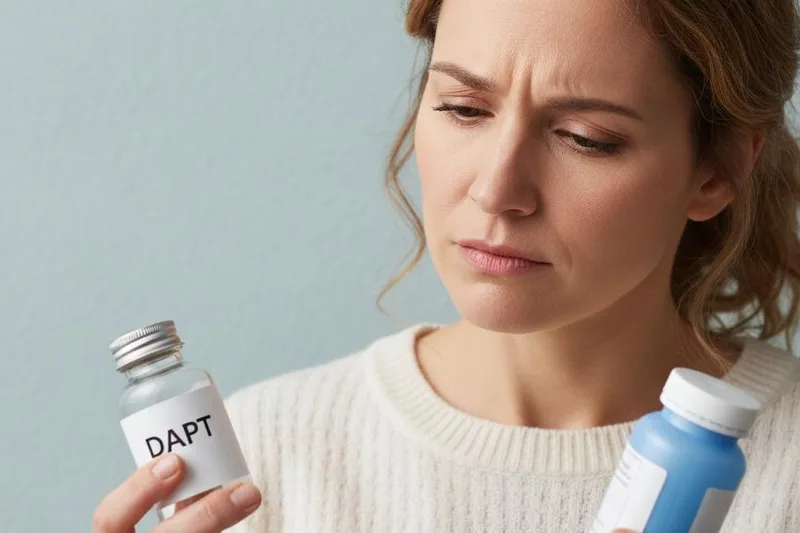
Have you had a heart attack, or have you had a stent inserted, or perhaps bypass surgery, and your doctor has prescribed you to take two medications at the same time? Many people are a little worried about this. It is normal for questions like "Why have I been given two medications?" and "Will this cause any problems?" to come to mind. So, today we will talk about this medication treatment method, namely Dual Antiplatelet Therapy (DAPT).
Simply put, what is DAPT?
DAPT is a combination therapy that uses two types of blood-thinning drugs. Specifically, you are given aspirin along with another drug called a P2Y12 inhibitor .
Now look, when we get injured somewhere in our body, the bleeding stops because the blood clots and the wound closes. That's a good thing. But, what happens if blood clots form in our blood vessels for no reason? Imagine a traffic jam on the road, like cars stuck together, these blood clots can get stuck in our blood vessels. If such a blood clot gets stuck in a blood vessel leading to the heart, a heart attack occurs. If it gets stuck in a blood vessel leading to the brain, a stroke occurs.
So what this DAPT treatment does is prevent the platelets, small cells in our blood, from sticking together and clotting. In this way, this treatment can stop the formation of dangerous blood clots (thrombosis).
Who needs DAPT treatment the most?
Doctors usually prescribe this treatment after a health event and for people who are at risk of having it happen again. See the table below.
| When treatment is needed | A simple explanation |
|---|---|
| After a heart attack (Myocardial Infarction) | To prevent complications caused by a heart attack or blood clot again. |
| After a stroke or TIA ('mini-stroke') | To reduce the risk of having another stroke. A TIA is a temporary condition in which symptoms come and go. |
| After stent placement | This is essential to prevent blood clots from forming inside this small mesh-like device that is placed to keep the blood vessels of the heart open. |
| After Angioplasty | When a blocked blood vessel is widened with something like a balloon, it prevents blood clots from forming again at that site. |
| After Coronary Artery Bypass Surgery | To prevent blood clots from forming in newly connected blood vessels after surgery. |
What are the benefits and risks of DAPT treatment?
Like any treatment, this has benefits as well as some risks.
The most important thing is that the doctor is prescribing this treatment for you because the benefits far outweigh the risks.
- The main benefit: By preventing blood clots, the risk of having another heart attack or stroke is significantly reduced . This medication is lifesaving, especially for someone who has had a stent placed.
- Main risk: Because these medications prevent blood clotting, there is a risk of bleeding.
- The most common symptom is gastrointestinal bleeding .
- Even a minor wound or cut can cause more bleeding than normal.
- Very rarely, serious conditions such as bleeding inside the brain can occur.
Side effects and problems with other medications
Commonly seen side effects
Some people may experience the following while taking this medicine:
- Difficulty breathing
- Blood in the urine (Hematuria)
- Unexplained bruising on the body
- Nosebleed (Epistaxis)
- Decreased platelet count in the blood (Thrombocytopenia)
- Nasal polyps
If this continues, talk to your doctor.
Other drugs that may interact with this medicine
If you are taking DAPT, you need to be very careful when taking other medications, especially these:
- Anticoagulants (other blood thinners): Medicines like Warfarin and Apixaban. Taking these together increases the risk of bleeding.
- NSAIDs (painkillers): Medications like Ibuprofen, Diclofenac, and Mefenamic Acid that we usually take for headaches and body aches. These increase the risk of stomach bleeding when combined with DAPT.
- Antidepressants: Some medications are taken for depression.
- Proton Pump Inhibitors (PPIs): Medications like Omeprazole that we often use for gastritis.
Therefore, it is essential to tell your doctor about every medication you take (even a painkiller you buy from the pharmacy).
How long should DAPT be taken?
This is not the same for everyone. Your doctor will decide how long you need DAPT. There are several factors that affect this:
- Your age and overall health.
- What is your risk of bleeding?
- The risk of having another heart attack or stroke.
- The reason for starting DAPT in the first place (because of a stent? because of a heart attack?).
While some people may need this treatment for a month or two, many others may need it for a year or more . Your doctor may recommend that you take aspirin only for the rest of your life, even after stopping DAPT.
When to seek immediate medical advice
Since someone taking DAPT is at risk of bleeding, you should be very careful about the following symptoms. If you have any of these, see a doctor immediately or go to the Emergency Department (ETU) of the nearest hospital.
| Warning Signs | |
|---|---|
| Vomiting with blood | Vomiting red blood or brownish urine that looks like coffee grounds. |
| Change in stool | Tar-like, black stools or blood in the stool. |
| Sudden severe headache | A sudden, unbearable headache unlike anything I've ever experienced. |
| Other features | Severe stomach pain, chest pain, loss of consciousness, extreme dizziness, confusion. |
Take-Home Message
- DAPT is a life-saving treatment that combines aspirin and another drug to prevent heart attacks and strokes.
- Do not stop taking this medication without your doctor's advice for any reason . Missing even one day greatly increases the risk of developing a blood clot.
- The main risk of this treatment is bleeding, so always be aware of the warning signs (black stools, vomiting blood).
- Whether you go to see a dentist or any other doctor, tell them first that you are taking DAPT.
- You may need to temporarily stop taking this medication before having surgery or having a tooth extracted, but this should only be done under the advice of your cardiologist.


💬 Comments (0)
No comments yet. Be the first to share your thoughts here.
Add Your Comment