
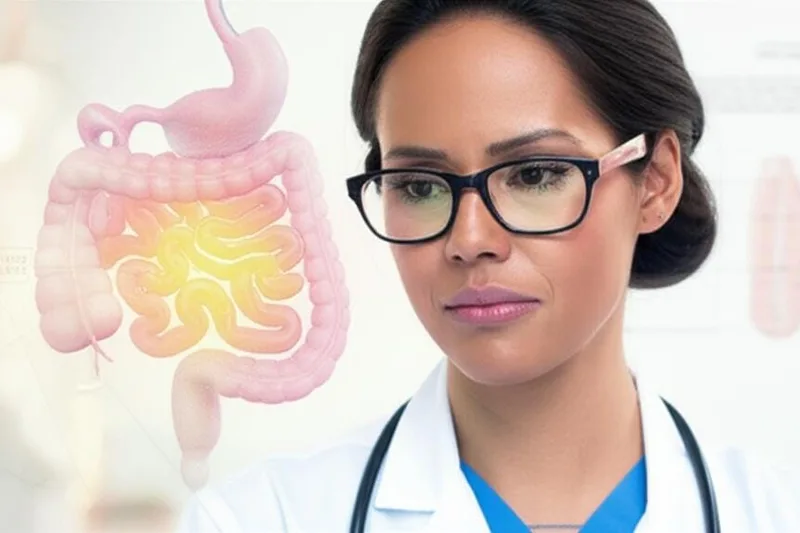
Have you ever wondered how the food we eat provides energy and nourishment to our bodies? This is a really complex, amazing journey that takes place inside our bodies. So, there is a small but very powerful part that plays a very important role in this journey, but which we sometimes don't talk about much. That is the duodenum . Simply put, this is the first part of our small intestine. In this article, we will talk about this silent worker of our digestive system.
What is the main function of the duodenum?
Think of the duodenum as a very busy, important junction on the food chain. It is the first place where food from the stomach meets. Three main functions take place here:
1. Reducing the acidity of food coming from the stomach:
When the food we eat goes into the stomach, it mixes with the acidic juices there, breaks it down, and becomes a liquid porridge. In medicine, we call this 'chyme' . This 'chyme' is very acidic. So, if it goes directly to the rest of the small intestine, it can be damaged. The duodenum releases a hormone called 'secretin' . This hormone goes and signals our pancreas to release an enzyme called 'bicarbonate' . Just like diluting something acidic with water, this bicarbonate comes in and reduces the acidity of that highly acidic 'chyme' to a tolerable level. This not only protects our small intestine, but also helps it absorb nutrients properly.
2. The conversion of 'chyme' into nutrients that can be absorbed by the body:
The duodenum releases another important hormone, cholecystokinin (CCK) . This hormone stimulates our liver, gallbladder, and pancreas to send their digestive juices into the duodenum.
- Bile, which comes from the liver and gallbladder, helps break down fats.
- The enzyme 'lipase' from the pancreas also breaks down fats. The enzyme 'amylase' breaks down carbohydrates, and the enzyme 'protease' breaks down proteins.
Nutrients that are finely ground in this way are absorbed into our blood.
3. Pushing the digested food forward:
Unabsorbed food particles and waste are pushed from the duodenum into the next part of the small intestine, the jejunum. This happens because the muscles in the walls of the duodenum contract and relax. This wave-like process that moves food forward is called peristalsis .
How big is the duodenum? And where is it located?
The duodenum is the shortest of the three parts of our small intestine (duodenum, jejunum, and ileum). It is approximately 10 inches long – that is, a little less than a foot in a ruler. Interestingly, the Latin word "duodenum" means "12 fingers." This means that in the past, its length was measured by thinking that it was equal to the width of 12 fingers placed side by side.
Imagine, if we stretched out our entire small intestine, it would be about 22 feet long! That's about the length of a tennis court. However, the duodenum, a tiny portion of this total length, about 10 inches, is where the most important nutrient absorption occurs.
The duodenum is located below our stomach. It curves in the shape of the English letter 'C', or horseshoe, to the right, back, down, and then to the left. The head of the pancreas is located right inside this 'C'-shaped curve.
What are the main parts of the duodenum?
The duodenum has four main parts, named for their location and shape.
1. Superior segment: This is the part at the top that connects to the stomach. It is about 2 inches long. The area where it connects directly to the pylorus, the valve that lets food out of the stomach, is also called the duodenal bulb. This is where ulcers often form in the small intestine, because stomach acid is most likely to hit it.
2. Descending segment: As the name suggests, this is the 'C' shaped part that goes down. It is about 4 inches long. This part is connected to the pancreas, gallbladder, and liver via the ducts that carry their juices.
3. Horizontal (inferior) segment: This is also about 4 inches long. It extends from right to left. This section passes over the aorta and inferior vena cava, which are the main blood vessels in our body.
4. Ascending segment: This is the smallest part of the duodenum, a little less than an inch long. It goes up a little and connects to the jejunum.
What types of tissue layers is the duodenum made up of?
Like the rest of our digestive tract (GI tract), the duodenum is made up of four main layers of tissue. From the innermost layer to the outermost layer, these are:
1. Mucosa: This is the innermost layer. It contains glands and tiny finger-like projections called 'microvilli' . These microvilli greatly increase the surface area of the duodenum, allowing it to absorb more nutrients than if it were flat.
2. Submucosa: This layer contains blood vessels and connective tissue. In particular, Brunner's glands are found in this layer. These glands produce a secretion that reduces the acidity of the chyme.
3. Muscularis: This is mostly made up of smooth muscle. Its main function is to mix and propel food forward. When these muscles contract, the 'chyme' is mixed well with enzymes and bile.
4. Serosa: This is the outermost protective covering of the duodenum. It is made up of squamous epithelial cells.
What problems can occur in the duodenum?
Because the duodenum is located close to the stomach, it is more likely to be damaged if the amount of stomach acid increases. This acid can cause ulcers, also known as 'peptic ulcers' , in the duodenum, as well as in the stomach. There are two main reasons for this:
- Infection with a bacteria called H. pylori . Think of it like a small, bad bacterium in your stomach. It can damage the protective lining of our stomach and duodenum and cause ulcers.
- Overuse of painkillers called 'NSAIDs' (nonsteroidal anti-inflammatory drugs) . That means drugs like aspirin and ibuprofen. We sometimes take these for body aches and headaches. But if we take them too much and continuously, these kinds of injuries can develop.
Important: If an untreated ulcer breaks through the protective lining of the duodenum and damages the blood vessel behind it, called the gastroduodenal artery, it can cause severe bleeding. This is a condition that requires emergency treatment.
In addition, many diseases that commonly affect the small intestine can also affect the duodenum. Some examples are:
- Brunner's gland adenomas: These are non-cancerous (benign) tumors.
- Crohn's disease: This is a disease that causes inflammation and swelling of the intestines.
- Celiac disease: A condition that causes digestive problems when eating foods containing gluten.
- Duodenal atresia: A condition in which the duodenum is completely closed at birth.
- Duodenal stenosis: A condition in which the duodenum is narrowed (but not completely closed) at birth.
- Duodenal cancer: Cancer that begins in the duodenum.
- Duodenal diverticulum: A small pouch-like protrusion from the wall of the duodenum. These usually do not cause problems or require treatment unless they become infected and inflamed (diverticulitis).
- Duodenitis: Inflammation of the duodenum.
- Small bowel obstruction: This is a medical emergency. A part of the small intestine, including the duodenum, becomes completely or partially blocked.
What are the symptoms of a problem with the duodenum?
Symptoms depend on the type of condition you have. But in general, symptoms of a problem in the duodenum are similar to symptoms of other problems in our digestive system (`(GI tract)`). They can include:
- Abdominal pain
- Bloating and gas
- Constipation
- Diarrhea
- Nausea and vomiting
- Indigestion after eating
- Vomiting blood or passing blood in the stool (this could be a sign of bleeding from a wound)
What are the common tests done to check the health of the duodenum?
If a doctor thinks you have a problem with your duodenum, they may do tests like these:
- Breath test to check for H. pylori infection.
- Imaging procedures to look for lumps and inflammation inside the duodenum – for example, ultrasound, X-ray, CT scan, and MRI.
- Tests that involve inserting a tube with a camera (a `scope`) into the duodenum to look inside it – such as ``enteroscopy`` and ``upper endoscopy``.
- Biopsy tests (which involve taking a small piece of tissue and examining it) are done to check for abnormal growths, such as cancer.
What are the common treatments for duodenal diseases?
Treatment also depends on the condition. The most common treatments are:
- Antibiotics are given for infections like H. pylori.
- Corticosteroids are given to reduce severe inflammation.
- Medicines that reduce the amount of acid in the stomach or reduce the acidity of the stomach – for example , proton pump inhibitors (PPIs) , histamine receptor blockers (H2 blockers) , and antacids .
- Surgeries to correct structural problems or treat cancer – an example is the Whipple procedure .
What can I do to keep my duodenum healthy? (Take-Home Message)
The duodenum is part of our entire digestive system. So, good habits that keep the entire system healthy are also good for the duodenum. Here are some simple things you can do:
- Choose a meal that helps your digestive system function well.
- Eat more fiber-rich foods (vegetables, fruits, legumes, whole grains).
- Drink plenty of water. Both of these will help regularize your bowel movements and prevent blockages in your small intestine.
- Eating non-acidic foods and vegetables can help maintain a healthy acidity level in the gut.
- Avoid things that are harmful to your gut.
- Smoking and drinking too much alcohol can damage the organs of our digestive system, including the duodenum.
- Taking painkillers like NSAIDs too often and in excess can cause painful sores.
- If you have digestive system problems, don't ignore the symptoms.
- Things like a change in your bowel habits, stomach discomfort, or indigestion may get better in a few days. However, sometimes it can be a warning sign that you need to make a change in your lifestyle or see a doctor.
- If you have persistent digestive problems that don't get better, don't delay seeking help.
In conclusion: Our digestive system is what helps us digest the food we eat, absorb the nutrients, and eliminate the remaining waste products from our bodies. Although the duodenum is a small part of this system, it plays a major role in two of those major functions – digestion and nutrient absorption . So, take care of your duodenum. The best way to do that is to take care of your overall digestive health. Feed your body nutritious food. Then the duodenum can digest that food, absorb it, and help your body get energy.
` Duodenum, small intestine, digestion, nutrient absorption, stomach, duodenum, diseases of the duodenum


💬 Comments (0)
No comments yet. Be the first to share your thoughts here.
Add Your Comment